
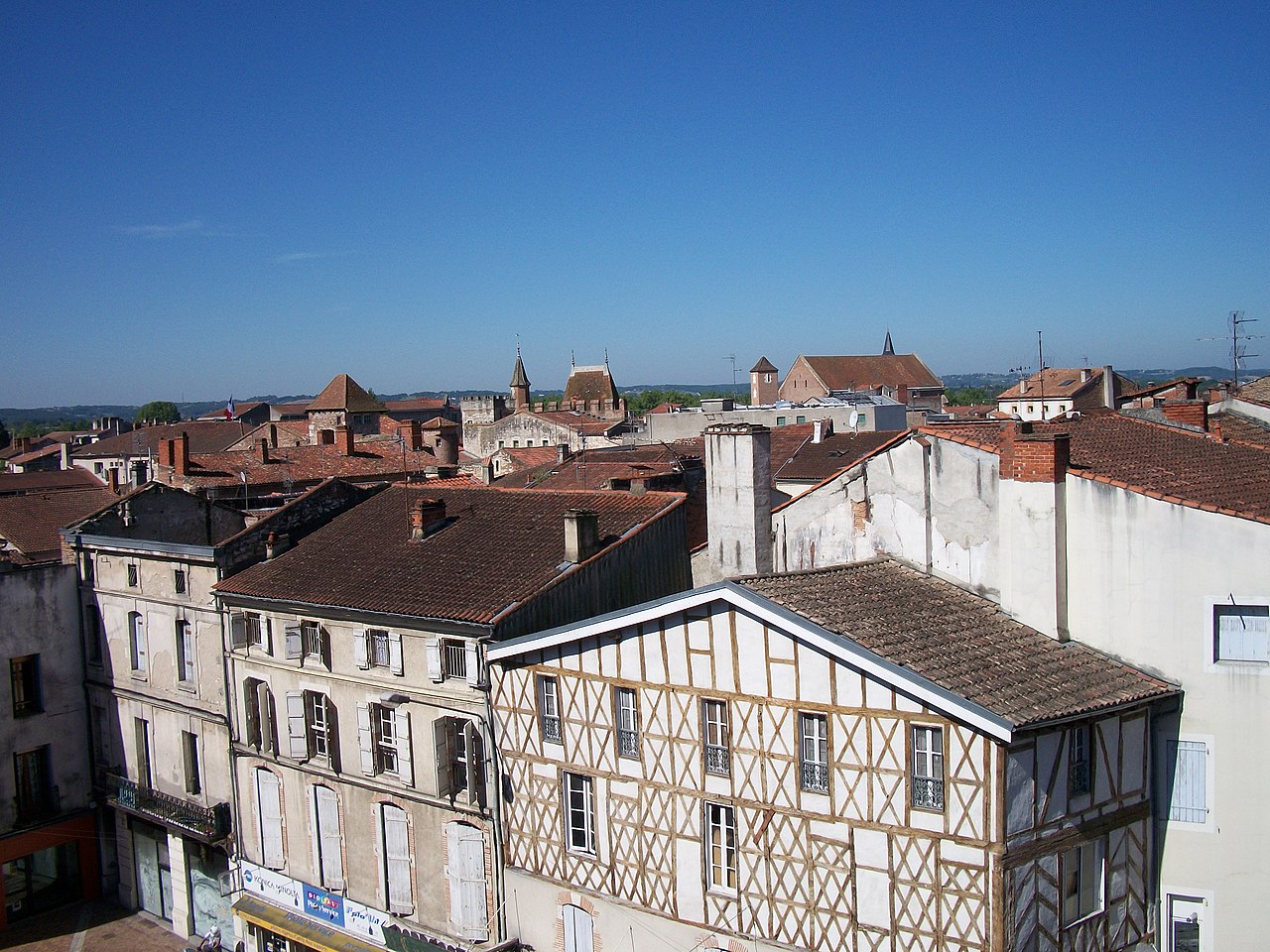
Agen, prefecture of Lot-et-Garonne in southwestern France
Agen is a historic town in southwestern France, capital of Lot-et-Garonne, known for its location on the Garonne, its Roman origins, and the famous pruneau d'Agen (Agen prunes).
Overview
Agen is a medium-sized French commune and the administrative centre (prefecture) of the Lot-et-Garonne department. It occupies a strategic position on the Garonne River in the historical region of Aquitaine, today administered within the region of Nouvelle-Aquitaine. The town serves as the capital of its arrondissement and as a local hub for commerce, services and regional government.
Image gallery
10 Images


Geography and administration
Set on the banks of the Garonne, Agen lies between larger cities to the west and east, making it an inland crossroads with road and rail connections to Bordeaux and Toulouse. Its surrounding countryside, called the Agenais, is a gently rolling agricultural zone that was part of the old province of Aquitaine. Administratively the town appears in regional and departmental structures and hosts several municipal and prefectural institutions: see the regional page at Nouvelle-Aquitaine and the department reference at southwestern France.
History
Evidence of settlement at Agen goes back to antiquity when the site was known in Latin sources as Aginnum, a Romanized town on important communication routes. During the medieval period Agen developed as a fortified market centre and later grew with trade along the river. Over centuries it has shifted between local lords, provincial authorities and the modern French state, preserving a variety of architectural layers from Romanesque churches to 19th-century civic buildings.
Economy, culture and specialities
Agen combines light industry, services and agriculture. The surrounding orchards are famous for the dried plums marketed as pruneau d'Agen (Agen prunes), a culinary product with long regional significance. Cultural life includes museums, a cathedral with Romanesque and Gothic elements, and annual local festivals that celebrate gastronomy and regional heritage. For more on the natural region and its traditions see regional overview and local cultural resources at regional heritage.
Landmarks and transport
- Religious and historic sites: the cathedral and several medieval churches and civic buildings reflecting the town's long history; see municipal guides at prefecture services.
- Museums and galleries: collections of fine and local arts, as noted in cultural listings at departmental culture.
- Transport: Agen has a principal railway station on the main axis between Bordeaux and Toulouse and is linked by regional roads and canals; travel information is available via local transport and arrondissement services.
Notable facts and distinctions
The term Agenais designates both the people and the traditional natural region around the town; this area is often referenced in historical studies of Aquitaine. Visitors often seek local culinary specialities, riverfront promenades and historical architecture. Administrative and tourism details can be found through official resources at Agen capital, regional economic profiles at arrondissement profile, and further background material at natural region, old province and civic listings at provincial archives.
Questions and answers
Q: What is Agen?
A: Agen is a commune in southwestern France, located in the region of Nouvelle-Aquitaine.
Q: What is the prefecture of the Lot-et-Garonne department?
A: The prefecture of the Lot-et-Garonne department is Agen.
Q: What is the capital of the arrondissement of Agen?
A: The capital of the arrondissement of Agen is also Agen.
Q: What was the old province that makes up part of Nouvelle-Aquitaine today?
A: The old province that makes up part of Nouvelle-Aquitaine today is Aquitaine.
Q: Where is this commune located?
A: This commune is located in southwestern France.
Q: What region does it belong to now?
A: It belongs to Nouvelle-Aquitaine now.
Q: Is there a natural region associated with this commune?
A: Yes, there is a natural region associated with this commune called "The Agenais".
Related articles
Author
AlegsaOnline.com Agen, prefecture of Lot-et-Garonne in southwestern France Leandro Alegsa
URL: https://en.alegsaonline.com/art/1365
Sources
- agen.fr : "Les élus"
- insee.fr : "Commune d'Agen (47001)"
- map-france.com : "Agen"
- annuaire-mairie.fr : "Ville d'Agen"
- habitants.fr : "Agen (47000)"
- insee.fr : "Régions, départements, arrondissements, cantons et communes"
- insee.fr : "Unité urbaine d'Agen (47501)"
- insee.fr : "Aire urbaine d'Agen (079)"
- insee.fr : "Commune d'Agen (47001)"
- agen.fr : "Jumelages & Coopérations"