
Charles K. Kao — pioneer of modern fiber‑optic communications
Electrical engineer and physicist Charles K. Kao (1933–2018) pioneered low‑loss optical fibres for telecommunications, winning the 2009 Nobel Prize and transforming global communications.
Overview
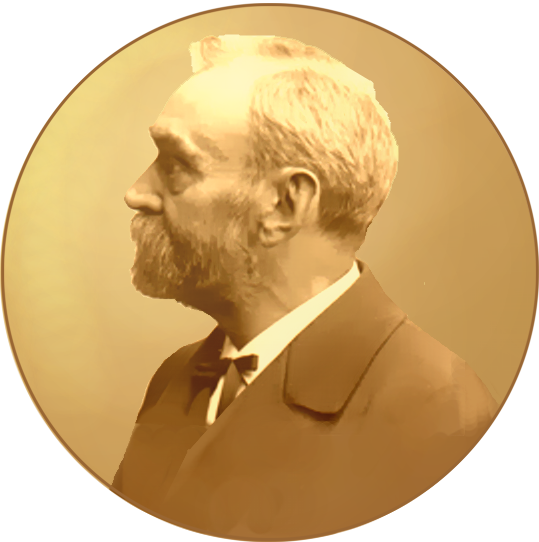
Charles Kuen Kao (November 4, 1933 – September 23, 2018) was a Chinese‑born electrical engineer and physicist whose research established the foundations of modern fibre‑optic communication. Born in China, he later held British and American citizenship and spent much of his career in the United Kingdom and Hong Kong. For his decisive work on transmitting light through glass fibres he was awarded the 2009 Nobel Prize in Physics and is widely regarded as a principal architect of today’s high‑capacity networks.
Image gallery
5 Images


Scientific contribution and principles
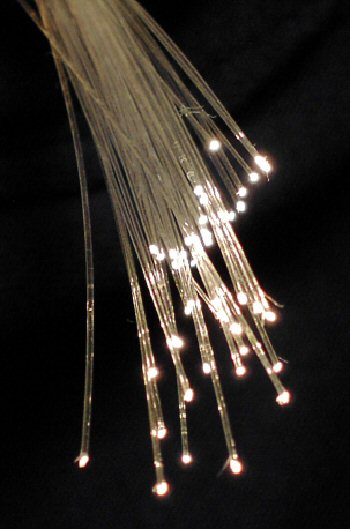
Kao demonstrated that long‑distance transmission of information by light was practical if optical fibres could be manufactured with extremely low attenuation. He showed that loss in glass fibres was dominated by material impurities and scattering, not by an intrinsic impossibility, and that properly purified silica could guide light over long distances using total internal reflection. This insight shifted industry effort toward developing new glass manufacturing methods and resulted in fibres suitable for telecommunications, radar‑like sensors, and many other optical systems.
Key contributions
- Recognition that attenuation in glass could be reduced sufficiently for communications — a change of perspective that launched large‑scale research and commercial deployment.
- Promotion of single‑mode silica fibres as the preferred medium for long‑range, high‑bandwidth links used in undersea cables and backbone networks.
- Inspiration and direction for industry standards and manufacturing that enabled the global spread of broadband services.
Career, honors and influence
Kao carried out much of his seminal work at research facilities and later combined academic and public service roles to promote science and technology. His discoveries led to a wave of industrial innovation, from submarine links spanning oceans to the fiber‑rich infrastructure inside data centres. He received major honours from scientific and civic institutions, was knighted and granted fellowships in engineering and scientific academies. He is often called the "Godfather of Broadband" or the "Father of Fibre Optics" for his central role in enabling modern telecommunications.
Uses and legacy
The technologies that grew from Kao’s work underpin the internet, international telephony, cable television, and large parts of the modern economy. Optical fibres enable vast data transmission with low loss and immunity to electromagnetic interference, and they are used in medical instruments (endoscopes), distributed sensing for infrastructure and oil exploration, and in fast links that connect cloud services. The transition from copper to fibre in many applications is one of the most significant infrastructure shifts of the late 20th and early 21st centuries.
Personal life and later years
Kao’s heritage and career bridged continents: he was born in China (birthplace) and later became a dual national (British and American). His defining scientific work concerned fibre optics. In 2002 he was diagnosed with Alzheimer's disease, which over time affected his speech and mobility; reports noted associated speech difficulties. He died in Sha Tin, Hong Kong, where he had strong personal and professional ties (death place). His legacy endures in the worldwide networks that carry information across continents every day.
Further reading: His Nobel Lecture and many accessible summaries explain the physical mechanisms and industrial developments that followed his insight; these resources outline why reducing material impurities in glass was the turning point that made global optical networks feasible.
Questions and answers
Q: Who was Sir Charles Kuen Kao?
A: Sir Charles Kuen Kao was an electrical engineer and physicist, born in China and holding dual citizenship of the United Kingdom and the United States.
Q: What was Kao's contribution to technology?
A: Kao helped discover the development and use of fiber optics in telecommunications.
Q: What was Kao awarded the Nobel Prize in Physics for?
A: Kao was awarded the 2009 Nobel Prize in Physics for "groundbreaking achievements concerning the transmission of light in fibers for optical communication".
Q: What is Kao known as?
A: Kao is known as the "Godfather of Broadband".
Q: When was Kao diagnosed with Alzheimer's disease?
A: Kao was diagnosed with Alzheimer's disease in 2002.
Q: What difficulties did Kao experience as a result of his illness?
A: Kao had speech difficulty as a result of his Alzheimer's disease.
Q: When and where did Sir Charles Kuen Kao pass away?
A: Sir Charles Kuen Kao passed away on September 23, 2018 from complications of Alzheimer's disease in Sha Tin, Hong Kong at the age of 84.
Author
AlegsaOnline.com Charles K. Kao — pioneer of modern fiber‑optic communications Leandro Alegsa
URL: https://en.alegsaonline.com/art/136358