
Arthur C. Clarke: Writer, Futurist and Advocate for Space
Concise encyclopedia entry on Sir Arthur C. Clarke: life, major works, technical contributions (satellite communications), time in Sri Lanka, honors, ideas such as Clarke’s Three Laws, and legacy.
Sir Arthur C. Clarke (6 December 1917 – 19 March 2008) was a British writer, inventor and populariser of science whose career combined speculative fiction with concrete technical proposals. Born in Minehead, Somerset, he became internationally known through novels, short stories and non‑fiction that explored the implications of spaceflight, communications and long‑range technological change. Clarke is often remembered for his ability to present complex scientific ideas clearly while also asking philosophical questions about humanity's place in the universe.
Image gallery
10 Images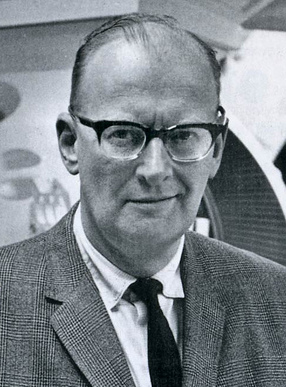





Early life, wartime service and technical ideas
Clarke's early education in England led to study in mathematics and physics, and during World War II he served in the Royal Air Force as a radar instructor and technician. That technical background shaped much of his later work, including a well‑known 1945 proposal describing the use of geostationary satellites for global communications. The suggestion — that satellites placed over the equator could relay signals around the globe — anticipated modern communications infrastructure and brought Clarke honours in later decades, including recognition from institutions such as the Franklin Institute. He remained an active advocate for space development and served in organisations that promoted rocketry and astronautics.
Literary career and major works
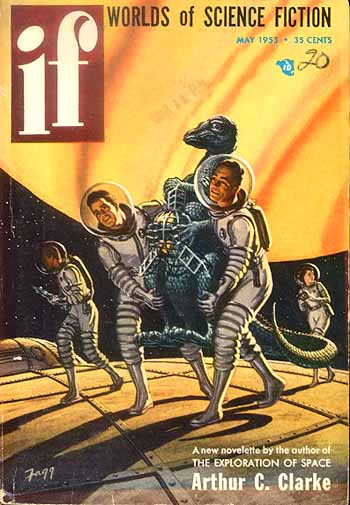
Clarke wrote both science fiction and serious science essays, producing novels, short stories and popular science volumes. His collaboration with director Stanley Kubrick on the film 2001: A Space Odyssey is one of the most famous author‑filmmaker partnerships in the genre; the novel and film explored themes of human evolution, artificial intelligence and contact with intelligences beyond Earth. Other notable works include Childhood's End, The Songs of Distant Earth, A Fall of Moondust, The Sands of Mars and the novella Meeting with Medusa. As a contemporary of writers such as Isaac Asimov, Clarke helped shape the so‑called Golden Age and later developments of science fiction by combining plausible science with broad, often philosophical questions.
Leadership, institutions and advocacy
Outside his books, Clarke contributed to scientific organisations and public education about space. He served in leadership roles, including chairing the British Interplanetary Society, and wrote numerous non‑fiction essays intended to make space science accessible to general readers. Clarke's practical suggestions and public advocacy influenced engineers, policy makers and enthusiasts interested in satellites, spaceflight and related technologies.
Life in Sri Lanka and personal interests
In 1956 Clarke emigrated to Sri Lanka (then Ceylon), drawn by an interest in tropical life and underwater exploration. An enthusiastic scuba diving practitioner, he reported on marine sites and local archaeological remains, and he made Trincomalee and its waters a focus of his underwater activities. Clarke lived in Sri Lanka for the remainder of his life, became a well‑known local figure and continued publishing fiction and essays there.
Honours, later years and death
Clarke received a variety of honours during his lifetime. He was awarded formal recognition for his technical proposals and was knighted by Queen Elizabeth II in 1998. Sri Lanka conferred one of its highest civilian distinctions on him in recognition of his connection to the country. In later years he continued to write and to appear in broadcast programmes about the future and science. Clarke died in Colombo in 2008 of complications described as heart and respiratory failure.
Key ideas and legacy
- Clarke's Three Laws: a set of aphorisms often quoted in discussions of technology and discovery, emphasizing both the predictability and the mystery of technological progress.
- Satellite communications: Clarke's public proposal about satellites placed in geostationary orbits provided an accessible way of thinking about global telecommunications and inspired later engineering work.
- Science and imagination: Clarke bridged rigorous non‑fiction and speculative fiction, influencing public imagination about space, artificial intelligence, deep time and the ethical questions raised by contact with other intelligences.
Selected bibliography and further reading
Clarke's output included many novels, short story collections and essay volumes. Readers commonly begin with 2001: A Space Odyssey and Childhood's End, while collections of shorter work reveal his range from hard‑science extrapolation to lyrical speculation. Selected titles and essays remain in print and are held in libraries and archives for study. For curated resources, biographical collections and critical studies consult institutional lists, literary guides and specialist bibliographies; further online and physical holdings can be found via national and regional repositories and research portals (regional collections, national archives).
Research, archives and commemorations
Scholars investigating Clarke's influence on science, literature and media often cite his correspondence, drafts and interviews, which are preserved in several institutional archives and private collections. Exhibitions, retrospectives and media documentaries have examined both his role in science fiction and his concrete technical influence on fields such as satellite communications. For introductions to Clarke's thought and listings of primary works and commentary, consult biographical essays and academic surveys as starting points. Additional public‑facing materials, interviews and film histories provide context for his collaborations in cinema and television (film studies, Colombo‑based remembrances).
Further information and curated bibliographies are available through literary societies, university holdings and specialist collections; enthusiasts and researchers can follow citations in Clarke's own non‑fiction to trace the technical and cultural history behind many of the ideas he popularised (British sources, author bibliographies, inventor records, genre archives, short story indexes, satellite communication references, radar histories).
Questions and answers
Q: Who was Sir Arthur Charles Clarke?
A: Sir Arthur Charles Clarke was a British author and inventor most famous for his science fiction novel 2001: A Space Odyssey, and for working with director Stanley Kubrick on the movie of the same name.
Q: What other works did he write?
A: He wrote many short stories, several serious works on science, and novels such as Childhood's End, A Fall of Moondust, The Songs of Distant Earth, The Sands of Mars, and Meeting with Medusa.
Q: What military service did he do during World War II?
A: During World War II he served in the Royal Air Force as a radar instructor and technician from 1941–1946.
Q: What award did he win in 1963?
A: In 1963 he won the Franklin Institute Gold Medal for proposing a satellite communication system in 1945.
Q: When did Clarke emigrate to Sri Lanka?
A: He emigrated to Sri Lanka in 1956 largely to pursue his interest in scuba diving.
Q: What civil honour was awarded to him by Queen Elizabeth II?
A: He was knighted by Queen Elizabeth II in 1998.
Q: How old was Clarke when he died?
A; He died at the age of 90 from heart and respiratory failure.
Author
AlegsaOnline.com Arthur C. Clarke: Writer, Futurist and Advocate for Space Leandro Alegsa
URL: https://en.alegsaonline.com/art/134666