
Bow (musical tool for bowed string instruments)
A bow is a handheld stick with hair used to set the strings of bowed instruments into vibration; its design, materials, and handling shape tone, articulation, and repertoire.
A bow is a slender implement, traditionally a wooden stick strung with hair, used to excite the strings of bowed instruments. By drawing the hair across a string the player creates friction that causes the string to vibrate; the character of the resulting tone depends on pressure, speed, contact point and the bow's construction. The term applies across members of the violin family and to many other bowed instruments.
Image gallery
7 Images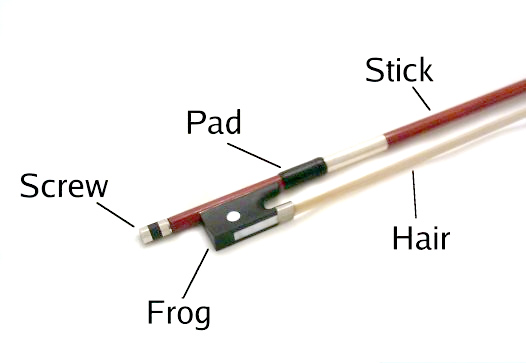


Characteristics and parts
A typical orchestral bow has several distinct components. The stick provides shape and camber; the hair (usually horsehair) contacts the string; the frog secures and tensions the hair; the tip finishes the opposite end. Other features include the winding, grip, and button used to adjust tension. Weight, balance point, stiffness and curve (camber) influence responsiveness and sound color.
- Stick materials: traditional pernambuco wood or modern alternatives such as carbon fiber.
- Hair: horsehair is most common; synthetic hair is used in some bows.
- Accessories: rosin is applied to hair to increase friction; leather or rubber grips protect the hand.
History and development
Bowed instruments appeared in various forms across Asia and Europe. In Western art music the bow evolved from early, often shorter designs into the longer, concave-sticked bows used in the Baroque era and later. The modern classical bow reached its familiar proportions and balance in the late 18th and early 19th centuries through makers who standardized camber and weight; François Tourte is widely credited with shaping the modern bow's form and playing qualities.
Technique, uses and varieties
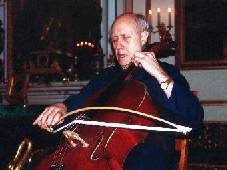
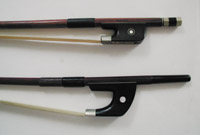
Bowing technique is central to expression: legato, spiccato, sautillé, col legno, sul ponticello and many other effects arise from controlled interaction between hair and string. Different bows suit different instruments: a violin bow differs in length and weight from a viola, cello or double bass bow. Players choose wood, stiffness and balance to match repertoire and personal preference. The basic action applies across instruments such as the string instrument family, including the violin, viola, cello and double bass, and is often discussed under the generic term bow.
Maintenance matters: periodic rehairing, occasional reshaping by a luthier, and careful storage preserve playability. Contemporary makers also produce specialized bows (baroque, continuo, modern alloy) to meet stylistic and practical needs, expanding the toolset available to performers and composers.
Questions and answers
Q: What is a bow in music?
A: A bow in music is a stick that is strung with hair used to play stringed instruments.
Q: What is the purpose of a bow in music?
A: The purpose of a bow in music is to pull across the strings of a string instrument to produce sound.
Q: What are some examples of stringed instruments that use a bow?
A: Some examples of stringed instruments that use a bow include the violin, viola, cello, and double bass.
Q: Can a bow be used on any instrument?
A: No, a bow can only be used on stringed instruments.
Q: What is the stick of a bow made of?
A: The stick of a bow is typically made of wood.
Q: What is the hair of a bow made of?
A: The hair of a bow is made from horsehair.
Q: Can a bow be used without hair on it?
A: No, a bow cannot be used without hair as the hair is what creates the friction needed to pull across the strings.
Related articles
Author
AlegsaOnline.com Bow (musical tool for bowed string instruments) Leandro Alegsa
URL: https://en.alegsaonline.com/art/13444