
Alvin E. Roth — economist and market designer
Alvin E. Roth, American economist and 2012 Nobel laureate, known for matching theory and market design with practical applications in kidney exchange, school choice, and medical residency matches.
Overview
Alvin E. Roth (born December 18, 1951) is an American economist whose work bridges theoretical game theory and practical market design. He is the Craig and Susan McCaw Professor of Economics at Stanford University and Gund Professor Emeritus of Economics and Business Administration at Harvard University. Roth served as president of the American Economic Association in 2017 and was awarded the Nobel Prize in Economic Sciences in 2012 together with Lloyd Shapley for contributions to the theory of stable allocations and practical market design.
Image gallery
4 Images


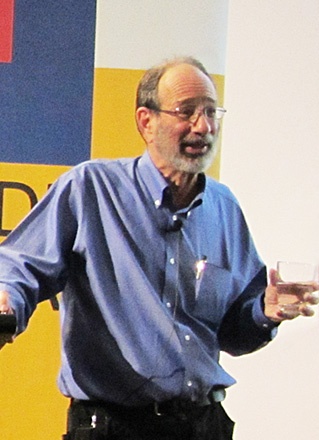
Research and contributions
Roth's research focuses on matching markets where prices do not equilibrate supply and demand in the usual way. He helped develop models and mechanisms that produce stable, incentive-compatible matches among agents with preferences — for example, students to schools, medical residents to hospitals, and organ donors to recipients. His approach blends formal analysis with careful attention to institutional detail and the constraints that arise in real-world implementations.
Applications and examples
Roth has been notable for translating theory into working systems. His collaborations with policymakers, hospitals, and school districts led to redesigned clearinghouses and exchange programs. Representative applications include:
- Kidney paired donation and exchange programs that increase the number of transplants by coordinating donor–recipient pairs.
- School choice mechanisms used by several urban districts to assign students to public schools more fairly and efficiently.
- Improvements to medical residency matching and other professional placement systems to reduce strategic manipulation and instability.
Career and influence
Roth has held prominent academic positions and worked closely with government agencies and nonprofit organizations to apply market design ideas. He is currently based at Stanford; his professional profiles can be found on institutional pages such as Stanford and his Harvard emeritus page Harvard. He has supervised students who continued work on experimental economics, matching theory, and market institutions, and he has emphasized the interplay between laboratory experiments, theoretical models, and policy deployment.
Notable facts and publications
Among Roth's notable recognitions is the Nobel Prize in Economic Sciences (2012), awarded for combining deep theoretical insight with practical market design. He is also the author of a widely read book aimed at general audiences describing how matching and market design affect everyday allocation problems. His career is often cited as an example of economics that both explains institutions and actively reshapes them.
Further reading
For an introduction to his ideas and implementations, readers may consult summaries of his Nobel citation, introductions to market design, and institutional webpages for current appointments: see Stanford and Harvard for official information and links to selected publications.
Questions and answers
Q: Who is Alvin E. Roth?
A: Alvin E. Roth is an American academic.
Q: What is Alvin E. Roth's profession?
A: Alvin E. Roth is a professor of economics at Stanford University and a professor of economics and business administration emeritus at Harvard University.
Q: When was Alvin E. Roth born?
A: Alvin E. Roth was born on December 18, 1951.
Q: What is Alvin E. Roth's current position?
A: Alvin E. Roth is currently the Craig and Susan McCaw professor of economics at Stanford University.
Q: What is Alvin E. Roth's former position?
A: Alvin E. Roth used to be the Gund professor of economics and business administration at Harvard University.
Q: Was Alvin E. Roth ever President of the American Economics Association?
A: Yes, Alvin E. Roth was President of the American Economics Association in 2017.
Q: What is Alvin E. Roth's area of expertise?
A: Alvin E. Roth's area of expertise is economics.
Author
AlegsaOnline.com Alvin E. Roth — economist and market designer Leandro Alegsa
URL: https://en.alegsaonline.com/art/134394