
Bouvet Island
Bouvet Island (Bouvetøya) is an uninhabited, subantarctic volcanic island administered by Norway. It is noted for extreme remoteness, heavy glaciation, steep coastal cliffs and limited scientific visits.
Overview
Bouvet Island (Norwegian: Bouvetøya) is a small, uninhabited island in the southern reaches of the Atlantic Ocean. Located in subantarctic waters, it is administered by Norway and is famous for being one of the most isolated pieces of land on Earth. The island lies in the southern Atlantic Ocean roughly south-southwest of the Cape of Good Hope near South Africa, and its nearest substantial landmass is part of Antarctica. Because of its position north of 60°S it is not covered by the Antarctic Treaty and remains a Norwegian dependency.
Image gallery
10 Images

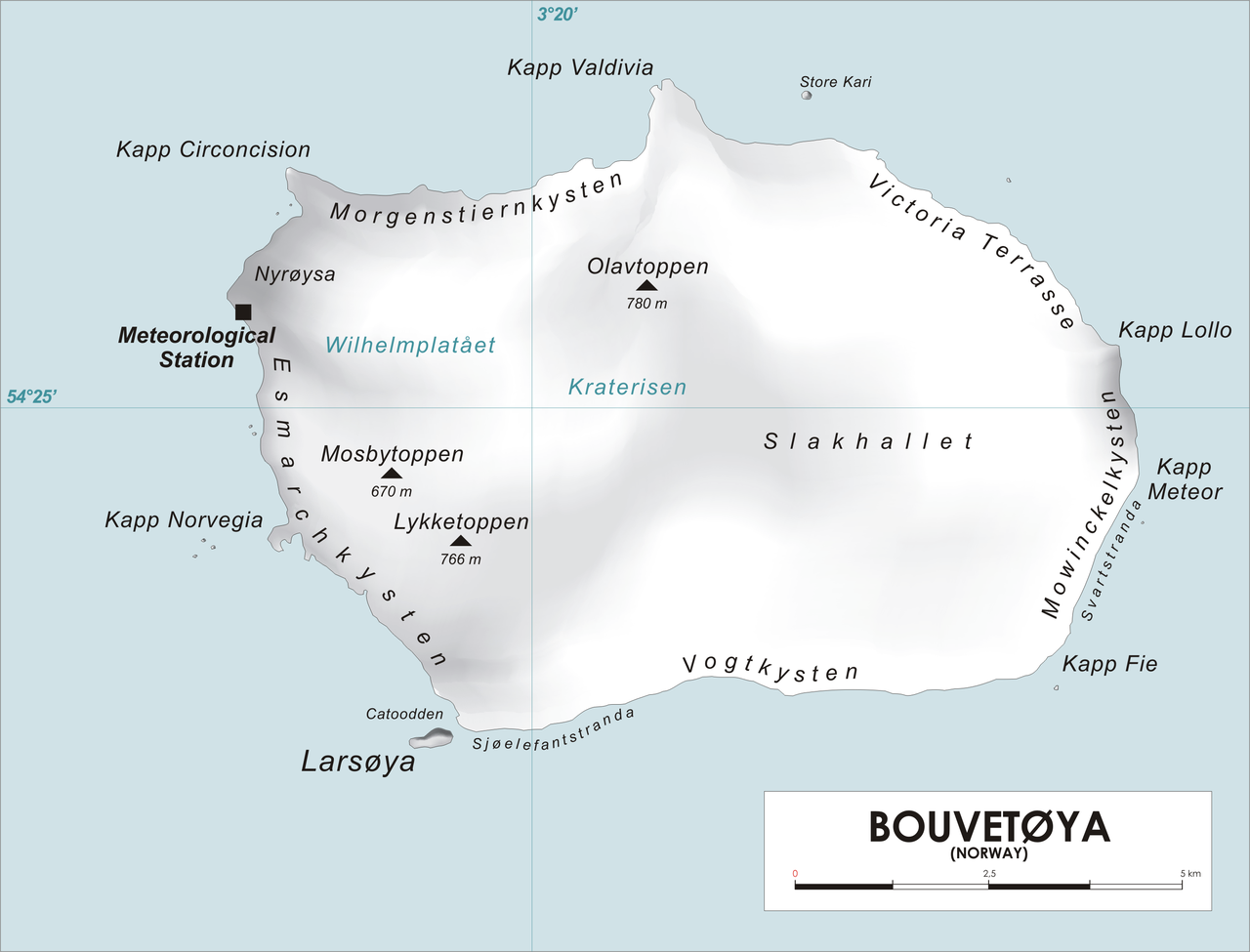


Geography and physical features
Bouvet is volcanic in origin and is largely encased in ice and permanent snow. Most of the surface is steep, with cliffs that drop directly into the sea and only a few narrow coastal areas where landing is remotely possible. The island’s terrain includes rocky outcrops, glaciers and intermittent exposed volcanic rock. Its remoteness and harsh weather create difficult conditions for navigation and human activity.
History and administration
The island was first recorded by European navigators in the 18th century and has appeared under several historical names such as Liverpool Island and Lindsay Island. Norway established sovereignty in the early 20th century and retains administrative responsibility; Norwegian laws and conservation rules apply. Because it lies north of the Antarctic Treaty zone, Bouvet remains under national control rather than international treaty governance.
Climate, ecology and wildlife
The climate is cold, windy and maritime, with frequent storms and low temperatures year-round. Vegetation is sparse and typically limited to hardy mosses, lichens and algal mats on exposed rock. The island supports colonies of seabirds and marine mammals: various species of penguins, petrels, and seals are known to breed or haul out on the shores. These ecosystems are fragile and largely undisturbed because human presence is so rare.
Visits, research and protection
No permanent population inhabits Bouvet. Visits are infrequent and generally undertaken for scientific research or maintenance of automated instruments. Landings are difficult and depend on favorable sea and weather conditions; small boats must navigate surf and steep cliffs. Norway has taken measures to protect the island’s environment and often restricts activities to minimize disturbance to wildlife.
Notable facts and distinctions
- The island is widely cited as the most remote island in the world in terms of distance to other land.
- Its remoteness makes it an important natural laboratory for studies of subantarctic ecology, island biogeography and the effects of isolation.
- Because of its location north of the 60°S Antarctic Treaty limit, Bouvet’s administration remains under national authority rather than treaty regulation; see general Antarctic context at Antarctica.
- For further contextual information about the island’s name, location and administration see regional and national sources such as Norwegian official pages and maritime reference works.
Questions and answers
Q: Where is Bouvet Island located?
A: Bouvet Island is located in the southern part of the Atlantic Ocean, in the sub-antarctic areas, 2500 km south-southwest of the Cape of Good Hope (South Africa).
Q: What is the distance between Bouvet Island and the closest piece of land?
A: The closest piece of land to Bouvet Island is Queen Maud Land in Antarctica, which is more than 1600 km away.
Q: Which country does Bouvet Island belong to?
A: Bouvet Island belongs to Norway.
Q: Is Bouvet Island subject to the Antarctic Treaty?
A: No, Bouvet Island is not subject to the Antarctic Treaty, which says that land south of 60°S, including Antarctica, does not belong to any country.
Q: What are the historical names of Bouvet Island?
A: Bouvet Island is historically known as Liverpool Island or Lindsay Island.
Q: Does anyone live on Bouvet Island?
A: No, nobody lives on Bouvet Island.
Q: Are there many visitors to Bouvet Island?
A: No, there are rarely any visitors to Bouvet Island.
Related articles
Author
AlegsaOnline.com Bouvet Island Leandro Alegsa
URL: https://en.alegsaonline.com/art/13427
Sources
- cia.gov : "Bouvet Island" at CIA World Factbook
- volcano.si.edu : "Global Volcanism Program - Volcanoes of the World - Volcanoes of the Atlantic Ocean - Volcanology Highlights"
- associatedcontent.com : "Most Remote Places in the World - Associated Content from Yahoo! - associatedcontent.com"
- nasa.gov : "NASA - Bouvet Island, South Atlantic Ocean"
- npolar.no : "Bouvetøya"
- phys.ucalgary.ca : "The Unofficial Bouvet Island Pages"
- commons.wikimedia.org : Bouvet Island