
50 First Dates (2004 film)
2004 romantic comedy starring Adam Sandler and Drew Barrymore about a man who falls for a woman with short-term memory loss. Directed by Peter Segal; a commercial hit with mixed reviews.
Overview
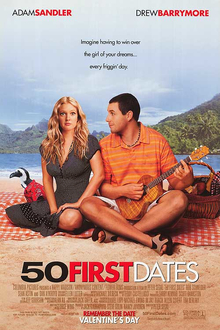
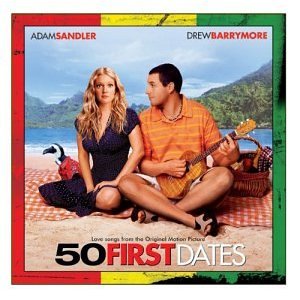
50 First Dates is a 2004 American romantic comedy that pairs Adam Sandler and Drew Barrymore in a story about love and memory. The film was directed by Peter Segal and produced by a team that included Jack Giarraputo, Steve Golin, and Nancy Juvonen. It was released on February 13, 2004 and is set in a tropical Hawaiian community, where the setting plays an important role in the tone and visual style of the picture.
Image gallery
4 Images

Premise and characters
The central premise follows Henry (Adam Sandler), a local who falls for Lucy (Drew Barrymore), a woman who suffers an anterograde-like memory condition after an accident: she cannot form new long-term memories and effectively 'resets' to the previous day each morning. The film explores how Henry and Lucy, along with her family and friends, adapt to that condition. The story mixes comedic set pieces with sentimental moments as Henry tries creative and persistent ways to build and sustain a relationship day by day.
Key contributors and cast
- Lead actors: Adam Sandler and Drew Barrymore.
- Supporting performances include a roster of familiar comedic actors and character players.
- Direction: Peter Segal; Producers: Jack Giarraputo, Steve Golin, Nancy Juvonen.
Production, release, and style
The film uses its Hawaiian setting for both scenic backdrops and plot points related to the characters' lifestyles. Visually bright and glossy, it balances slapstick and romantic beats, leaning on Sandler's comedic timing and Barrymore's warmth. The narrative design—repeating days in the life of Lucy—creates opportunities for running gags and variations on the same scenes, while also asking questions about care, consent, and what it means to love someone with a cognitive disability.
Reception and legacy
Critical reaction to the film was mixed. Some reviewers praised the lead performances and emotional core, while others found the premise handled unevenly. Among critics in general, responses varied: mainstream critics pointed to both sentimental strengths and tonal inconsistencies. The aggregate site Rotten Tomatoes shows a middling approval rating that reflects this split reaction. Notably, film critic Roger Ebert gave the picture three out of four stars, observing that Sandler displayed a warmer, less abrasive side and calling the film "ingratiating and lovable" even if it did not match the philosophical depth of films like Groundhog Day.
Importance and notable facts
Although reviewers were divided, the film became a commercial success and helped solidify the on-screen chemistry between Sandler and Barrymore, which would be revisited in later collaborations. It remains a widely recognized example of early-2000s mainstream romantic comedy that mixes high-concept premise with star-driven humor. The movie is often referenced in discussions about cinematic portrayals of memory impairment and about how comedy and sentimentality can be combined for mainstream audiences.
Further reading
For more on the film's production, cast interviews, and contemporary reviews, see studio press materials and major film critics' archives linked through the references above.
Questions and answers
Q: What is 50 First Dates?
A: 50 First Dates is an American romantic comedy movie released in 2004, directed by Peter Segal and produced by Jack Giarraputo, Steve Golin, and Nancy Juvonen.
Q: When was 50 First Dates released?
A: 50 First Dates was released on February 13, 2004.
Q: Who directed 50 First Dates?
A: 50 First Dates was directed by Peter Segal.
Q: What was the response of critics to 50 First Dates?
A: The movie got negative reviews from critics, having a 44% rating on Rotten Tomatoes.
Q: What was the opinion of Roger Ebert about 50 First Dates?
A: Movie critic Roger Ebert gave the movie three out of four stars. He praised Sandler's warm portrayal of his character and the movie's overall entertainment value, despite acknowledging that it lacks the complexity and depth of Groundhog Day.
Q: Who produced 50 First Dates?
A: 50 First Dates was produced by Jack Giarraputo, Steve Golin, and Nancy Juvonen.
Q: What kind of humor did Adam Sandler leave behind in 50 First Dates?
A: According to Roger Ebert's review, Adam Sandler left behind his trademark hostility, anger, and gross-out humor in 50 First Dates and revealed a more warm and endearing side of his personality.
Author
AlegsaOnline.com 50 First Dates (2004 film) Leandro Alegsa
URL: https://en.alegsaonline.com/art/133928