
2014 FIFA World Cup — Group D overview and outcomes
Summary of Group D at the 2014 FIFA World Cup: teams, expectations, results, notable moments and the group’s legacy, including Costa Rica’s unexpected run and elimination of England and Italy.
Overview
Group D at the 2014 FIFA World Cup brought together four national teams with very different pedigrees: Uruguay, Costa Rica, England and Italy. Entering the tournament, the group was widely regarded as competitive because it contained former world champions alongside a smaller CONCACAF nation. The group page and schedule are summarized on the tournament site here.
Image gallery
4 Images


Teams and expectations
Pre-tournament forecasts placed Uruguay, Italy and England as favourites to advance based on history, player reputations and qualifying records. Costa Rica was generally viewed as the underdog, a team with solid defensive organisation but without the same star power. Observers highlighted Uruguay’s experienced pro players and England’s squad depth, while Italy’s tactical approach made them a traditional dark horse.
Results and standings
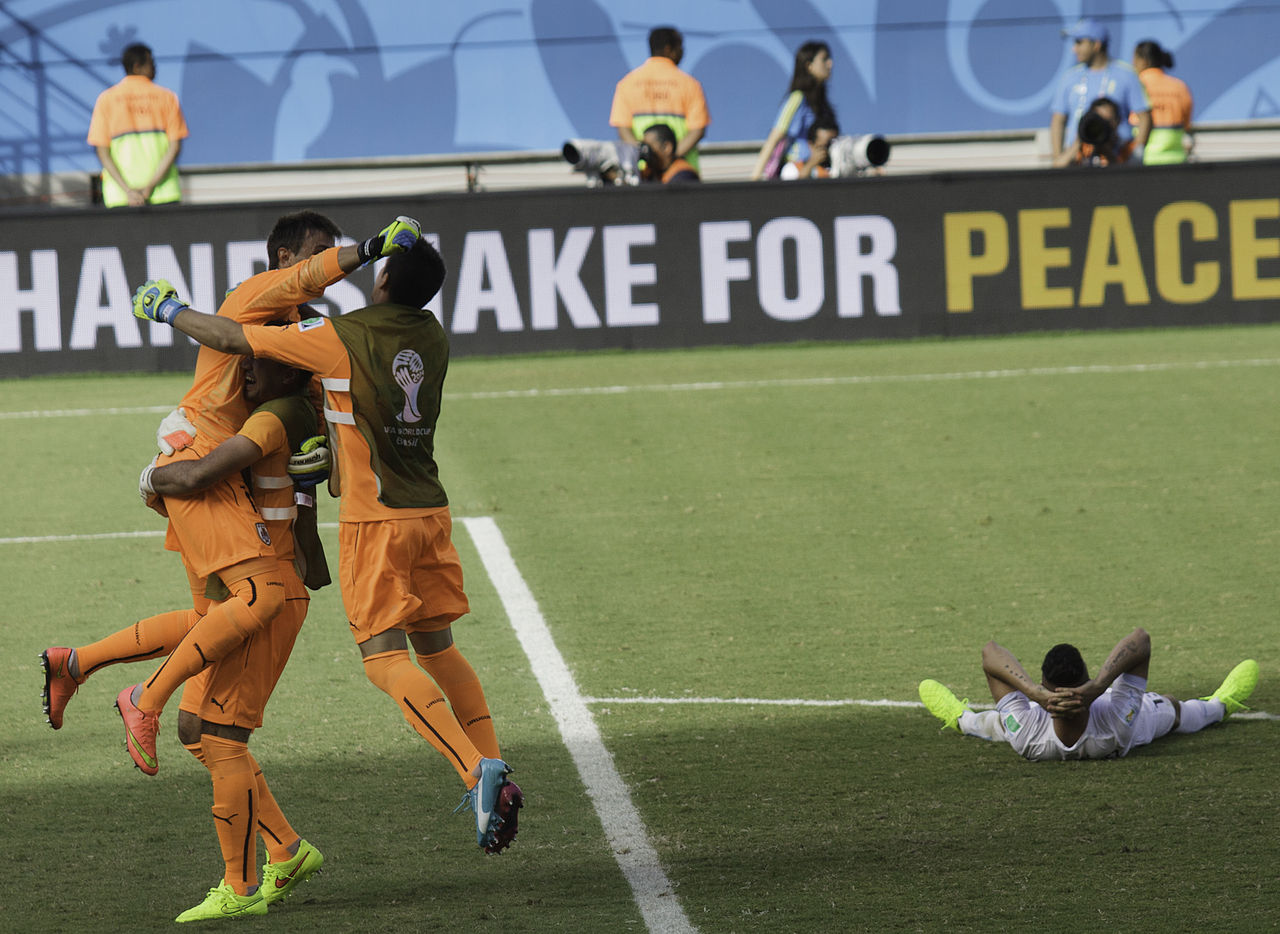
The group produced one of the tournament’s biggest surprises: Costa Rica topped the group and progressed to the knockout stage, ahead of established teams. Uruguay secured the other qualifying place. England and Italy were both eliminated at the group phase, a disappointing outcome for two nations with long World Cup histories.
Notable moments
Matches in this group featured tense, low-scoring encounters and decisive defensive performances. Costa Rica’s disciplined organisation and effective counterattacking were repeatedly singled out by analysts. The group also included individual storylines involving leading players and controversies that attracted widespread media attention during the event.
Legacy and significance
Group D is often cited as an example of how World Cup groups can defy rankings and expectations. Costa Rica’s progression, in particular, became a touchstone for discussions about tournament preparation, team spirit and the importance of tactical flexibility. The outcome had consequences for managers, players and national football programmes in the months that followed.
- Teams: Uruguay, Costa Rica, England, Italy
- Tournament reference: 2014 World Cup Group D
Questions and answers
Q: Which teams were part of Group D in the 2014 FIFA World Cup?
A: Uruguay, Costa Rica, England, and Italy were the teams that participated in Group D of the 2014 FIFA World Cup.
Q: What was the significance of Group D in the 2014 FIFA World Cup?
A: Group D was one of the groups in the 2014 FIFA World Cup, and it had some of the most competitive teams in the tournament.
Q: Did all four teams in Group D advance to the knockout stage?
A: No, not all four teams in Group D advanced to the knockout stage. Uruguay and Costa Rica advanced, while England and Italy were knocked out.
Q: Which team from Group D went on to become the overall champions of the 2014 FIFA World Cup?
A: None of the teams from Group D ended up winning the tournament, but Germany was crowned the overall champions of the 2014 FIFA World Cup.
Q: Did any team from Group D make it to the semifinals of the 2014 FIFA World Cup?
A: No team from Group D made it to the semifinals of the 2014 FIFA World Cup.
Q: Was there any upset or surprise in the matches played by Group D teams in the 2014 FIFA World Cup?
A: Yes, Costa Rica, which was an underdog in the tournament, surprised many by beating both Uruguay and Italy to qualify for the knockout stage.
Q: Did Group D teams have any standout players or performances in the 2014 FIFA World Cup?
A: Yes, Luis Suarez, who played for Uruguay, had a memorable tournament, scoring two goals against England in their match. Costa Rican goalkeeper Keylor Navas also had some standout performances throughout the tournament.
Author
AlegsaOnline.com 2014 FIFA World Cup — Group D overview and outcomes Leandro Alegsa
URL: https://en.alegsaonline.com/art/133677