
2010 Pacific hurricane season
A notably quiet Eastern and Central Pacific hurricane season (May–November 2010) marked by few storms, a deadly early-season tropical storm in Central America, and a rare Category 5 hurricane that stayed at sea.
Overview
The 2010 Pacific hurricane season covered the Eastern and Central Pacific basins during the official period from mid-May (Eastern Pacific) and June 1 (Central Pacific) through November 30. Activity in this season was unusually low; it has been described as the least active Pacific season since 1977 at the time, reflecting far fewer organized tropical systems than typically expected for the basin source. Seasonal counts were abbreviated: only a handful of tropical depressions developed, a smaller number reached named-storm strength, and only one system intensified into a hurricane.
Image gallery
10 Images



Storms and impacts
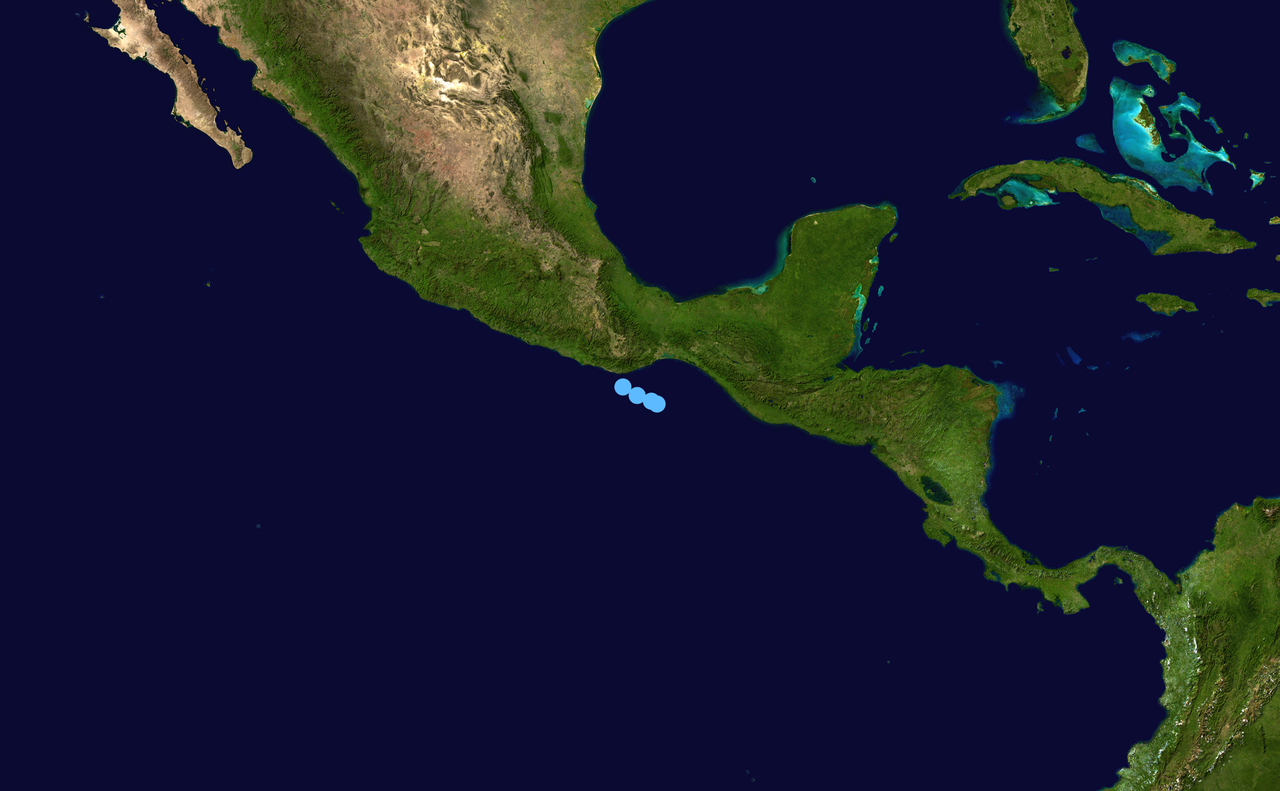
Despite the low overall activity, the season produced at least two notable systems for contrasting reasons. Tropical Storm Agatha was the first named storm of 2010 and produced deadly impacts in Central America; heavy rainfall associated with Agatha triggered floods and landslides that resulted in many fatalities and widespread damage, making it the season's most consequential storm for human lives and infrastructure source. Another system, Hurricane Celia, became the season's strongest event, reaching Category 5 intensity over open water and ranking as one of the earliest storms to reach that peak intensity in the historical record for the basin. The first storm of 2010 also formed earlier relative to the comparable first storm of 2009, arriving roughly two weeks sooner in the calendar context.
Selected storms
- Tropical Storm Agatha — The season's initial named storm; notable for heavy rains and the humanitarian consequences in parts of Central America, with dozens to hundreds of fatalities reported.
- Hurricane Celia — The only system to reach hurricane strength in 2010; intensified to Category 5 over the ocean but did not produce comparable land impacts.
Causes and seasonal context
Tropical cyclone formation in the Pacific is governed by a combination of warm sea surface temperatures, atmospheric moisture, instability, and relatively low vertical wind shear. Seasonal variability is heavily influenced by the El Niño–Southern Oscillation (ENSO) and other large-scale patterns. In 2010, conditions across the Pacific were unfavorable for the sustained development of many tropical cyclones, which helped produce the unusually low count of storms. Researchers and forecasters study such quiet seasons to better understand how oceanic and atmospheric trends modulate hurricane activity.
Consequences and response
Because most 2010 storms remained weak or did not approach land, the overall economic impact across the Pacific region was limited compared with more active years. The exception was Agatha, which prompted local and international emergency relief efforts due to flood damage and loss of life. The season reinforced the need for flood preparedness and landslide mitigation in vulnerable Central American communities, where intense rainfall events can produce disproportionate damage even from otherwise modest tropical systems.
Notable distinctions
Key distinguishing features of the 2010 Pacific hurricane season include its classification as one of the least active seasons in decades, the small number of systems that reached hurricane strength, and the paradox of producing both a deadly early-season tropical storm and a powerful Category 5 hurricane that remained at sea. These contrasts highlight how seasonal activity and human impacts do not always correlate directly: a season with few storms can still produce severe local disasters if a single storm brings intense rainfall to populated, vulnerable areas.
For detailed storm tracks, post-season analyses, and official statistics, consult operational summaries and reports from the responsible forecasting centers and post-storm reports agency summaries and regional reviews seasonal analyses. For humanitarian and impact assessments linked to individual storms such as Agatha, refer to emergency response documentation and consolidated damage reports impact reports.
Questions and answers
Q: What was the start date for the 2010 Pacific hurricane season?
A: The 2010 Pacific hurricane season officially started on May 15, 2010 and on June 1st for the Central Pacific.
Q: How many storms formed during this season?
A: Five tropical depressions formed during this season, four of which became a tropical storm and one became a hurricane.
Q: What was the name of the first storm in this season?
A: The first storm in this season was Tropical Storm Agatha.
Q: How many people were killed by Tropical Storm Agatha?
A: At least 196 people were killed by Tropical Storm Agatha in Central America.
Q: Was any other storm in this season known to affect land?
A: No other storms in the 2010 Pacific hurricane season have affected land yet.
Q: What is special about Hurricane Celia from this season?
A: Hurricane Celia was the second earliest category 5 hurricane on record.
Q: When did the 2010 Pacific hurricane season end?
A: The 2010 Pacific hurricane season officially ended on November 30, 2010.
Author
AlegsaOnline.com 2010 Pacific hurricane season Leandro Alegsa
URL: https://en.alegsaonline.com/art/133644