
Boulton & Watt: Pioneers of Steam Engineering in the Industrial Revolution
Boulton & Watt was an influential British engineering firm founded by Matthew Boulton and James Watt in 1775. They developed key steam‑engine improvements that helped power mining, manufacturing and transport.
Boulton & Watt was an influential British engineering and manufacturing partnership founded in 1775 by the industrialist Matthew Boulton and the inventor James Watt. Based in the English Midlands, the firm combined capital, workshops and skilled manufacture with mechanical innovation to produce steam engines that played a central role in the early Industrial Revolution.
Image gallery
6 Images

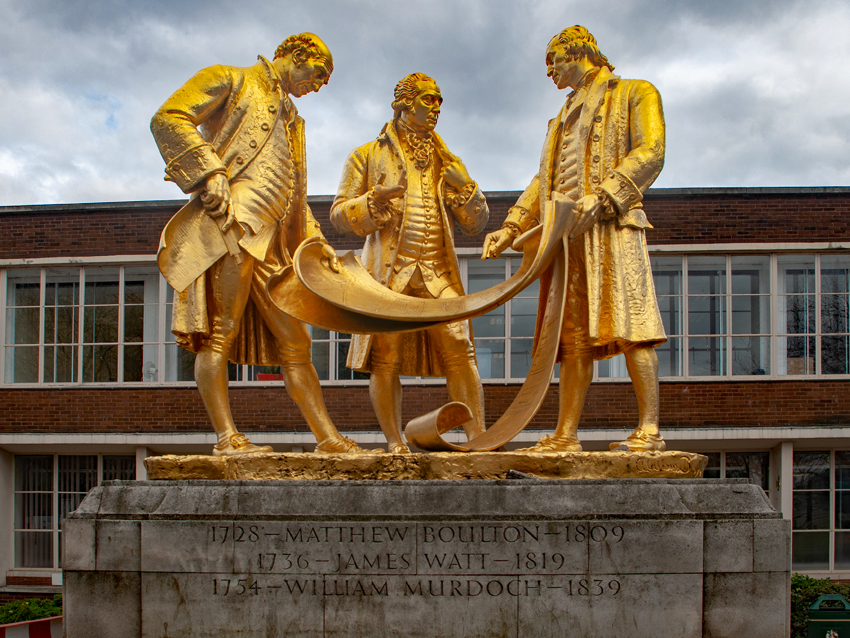

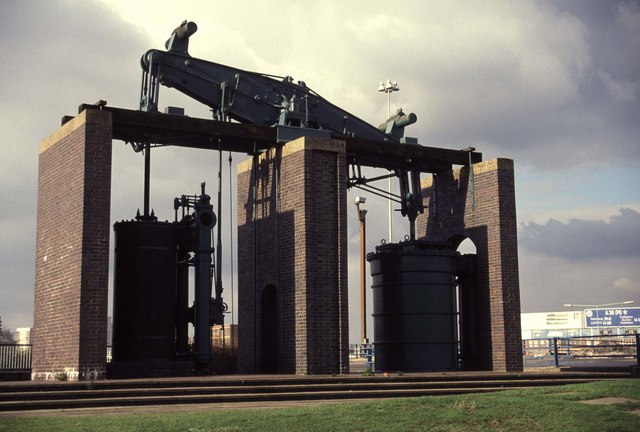

Origins and organisation
The partnership began when Boulton, who ran the Soho manufactory in the West Midlands region near Birmingham, recognised the commercial potential of Watt’s improvements to the existing Newcomen engines. Boulton supplied investment, workshop facilities and business experience while Watt contributed technical designs and patents. Together they organised manufacture, installation and servicing of engines for a range of customers, moving from bespoke, site‑specific builds toward more systematic production methods.
Major technical innovations
The firm is best known for a set of practical refinements that made steam power far more efficient and versatile. The most important early innovation was Watt’s separate condenser, which allowed the main cylinder to remain hot while condensation occurred elsewhere; this greatly reduced fuel consumption compared with earlier atmospheric engines. Watt also developed improved valve gear and guidance mechanisms (often described as the parallel motion) to produce smoother piston action and enable more reliable operation.
To drive mills and other rotary machinery, Watt’s developments included arrangements for converting reciprocating motion into rotation, so engines could power textiles, metalworking and other factory equipment. Over time the company adapted designs for both low‑pressure condensing engines and for applications that required higher steam pressures, reflecting broader technical change in the 19th century (steam pressure innovations).
Applications and impact
- Pumping and drainage: engines were widely used to remove water from mines and to supply municipal waterworks and docks.
- Industry: stationary power for textile mills, foundries and workshops replaced or supplemented water wheels and animal power.
- Transport and marine use: the firm supplied stationary and adapted engines for vessels and for infrastructure such as canal pumps and dock machinery (marine and other mobile applications).
These applications helped free industry from location constraints imposed by water power and enabled factories to concentrate where labour and raw materials were available. The increased efficiency and wider availability of steam power contributed to faster industrial growth, urbanisation and changes in transport networks.
Business practices and legacy
Boulton & Watt did more than sell hardware: they licensed their technology, supervised installations, and provided maintenance and spare parts, a model that helped protect the firm’s patents and ensure reliable operation. The commercial success of the partnership made it one of the most important engineering firms of the late 18th and early 19th centuries, and it influenced later engine builders and manufacturing practice.
The legacy of the firm survives in several ways. James Watt’s name is commemorated by the international unit of power, the watt, and original engines and drawings are preserved in museum and archival collections for study. For general overviews and curated material about the company and its products see a firm overview at firm overview, technical galleries for stationary engines and examples of marine installations, accounts of steam innovations, regional industry studies in the West Midlands, and biographical resources on Watt and Boulton. Original case studies include mining, canal and urban pumping projects that illustrate how their machines were applied in practice.
Questions and answers
Q: Who were the partners of Boulton & Watt?
A: The partners of Boulton & Watt were Matthew Boulton and James Watt.
Q: What did Boulton & Watt design and make?
A: Boulton & Watt designed and made marine and stationary steam engines.
Q: When and where was Boulton & Watt founded?
A: Boulton & Watt was founded in the English West Midlands around Birmingham in 1775.
Q: What was significant about the Boulton and Watt steam engine?
A: The Boulton and Watt steam engine was the first to use steam at above atmospheric pressure, which was a great step in the development of the steam engine.
Q: What was the main use of Boulton & Watt's engines?
A: Boulton & Watt's engines were used for pumping water in canals, mines, and waterworks, and for driving machines.
Q: Why was Watt's invention significant in the Industrial Revolution?
A: Watt's invention was a key point in the Industrial Revolution, as it led to the development and growth of steam power as a major energy source for industry.
Q: In what century did Boulton & Watt grow to be a major producer of steam engines?
A: Boulton & Watt grew to be a major producer of steam engines in the 19th century.
Related articles
Author
AlegsaOnline.com Boulton & Watt: Pioneers of Steam Engineering in the Industrial Revolution Leandro Alegsa
URL: https://en.alegsaonline.com/art/13343