
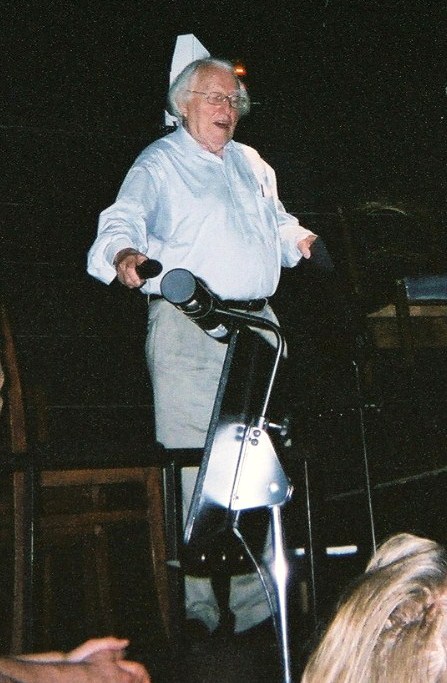
Wolfgang Wagner (1919–2010), long-time director of the Bayreuth Festival
German opera director and grandson of Richard Wagner who led the Bayreuth Festival for 42 years, promoting symbolic, minimalist stagings and working to confront the festival’s difficult wartime legacy.
Wolfgang Wagner (30 August 1919 – 21 March 2010) was a prominent German figure in twentieth-century musical theatre best known as an opera director and administrator. A direct descendant of the composer Richard Wagner (Richard Wagner) and a great-grandson of the pianist-composer Franz Liszt, he spent much of his life shaping the performance tradition connected to his family’s works. Over four decades he served as the guiding force of the Bayreuth Festival, the institution founded by his grandfather for staging the Wagnerian repertoire.
Image gallery
3 Images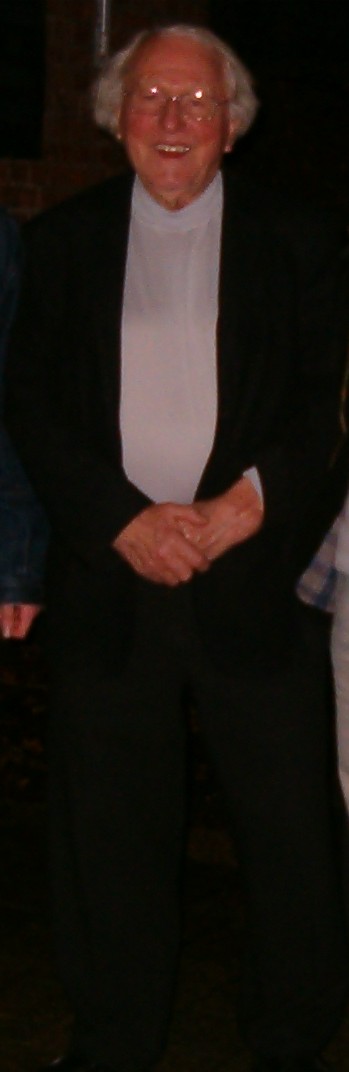

Early life and family background
Born into the Wagner dynasty, Wolfgang’s upbringing was marked by close exposure to musical culture and the responsibilities attached to a famous name. The family legacy shaped his opportunities and obligations: Bayreuth and the preservation of the Wagner canon were central concerns. He initially worked alongside his younger brother Wieland; together they participated in the post‑war revival of Bayreuth and helped to reestablish the festival’s international profile.
Artistic approach and innovations
Wolfgang Wagner became associated with a modernizing aesthetic that moved away from lavish, literal scenic reconstructions toward a more suggestive and symbolic theatrical language. Productions under his supervision often emphasized lighting, abstract forms and pared-down sets rather than heavy period costumes and elaborate machinery. This restrained approach prioritized psychological atmosphere and ritual over detailed realism, a shift that influenced broader trends in opera staging and contributed to debates about fidelity to original stage directions and textual interpretation. Many reviewers described these shows as intentionally symbolic in effect.
Leadership at Bayreuth and historical responsibility
For forty‑two years Wolfgang held a central administrative and artistic role at Bayreuth. He and Wieland played key roles in rebuilding the festival after World War II, navigating the complex task of restoring a major cultural institution whose prestige had been compromised by association with Nazi-era politics. Throughout his tenure Wolfgang took steps to acknowledge and distance the festival from its wartime connections, while also defending its artistic mission. His management combined a commitment to the repertoire with frequent controversies over programming, staging choices and governance of the family estate.
Controversies and later years
Wolfgang’s long stewardship was not without dispute: family disagreements over succession, occasional public rows about artistic decisions, and debates about how to present Wagner’s works in a modern context received considerable attention. He continued directing and overseeing festival affairs until his retirement in 2008, after which leadership and renewal continued under a new generation. The mark of his tenure remains visible in Bayreuth’s institutional structures and in the performance practices he helped popularize.
Legacy and notable facts
- Grandson of Richard Wagner and great‑grandson of Franz Liszt, linking him to a major European musical lineage.
- Shared early post‑war direction with his brother Wieland before becoming sole leader; he led the festival for 42 years and formally stepped down in 2008.
- Associated with the move toward minimalist, suggestion‑based stagecraft and pioneering use of light as a dramatic element.
- Played a visible role in efforts to confront and mitigate the festival’s association with Nazi cultural politics while maintaining the institution’s international standing.
For further reading on related topics such as staging methods, the Bayreuth Festival’s history, and the Wagner family dynamics, see entries and resources linked here: Germany and music, operatic direction, institutional histories of Bayreuth, and critical studies of Wagnerian performance practice and heritage. Additional contextual sources include writings on Franz Liszt and broader nineteenth‑century European musical culture; discussions of symbolic staging and modern opera production provide useful perspectives on his artistic influence here and on debates about the festival’s historical responsibilities and after.
Questions and answers
Q: Who was Wolfgang Wagner?
A: Wolfgang Wagner was a German opera director who was the grandson of the opera composer Richard Wagner and great-grandson of the composer Franz Liszt.
Q: What was the Bayreuth Festival?
A: The Bayreuth Festival was created by Richard Wagner for the performances of his operas, and Wolfgang Wagner was director of the festival for 42 years.
Q: Who was Wolfgang Wagner's brother?
A: Wolfgang Wagner's brother was Wieland.
Q: What happened after Wieland died?
A: After Wieland died, Wolfgang Wagner continued to be the director of the Bayreuth Festival until he retired in 2008.
Q: What did Wolfgang Wagner try to do during his time as director of the Bayreuth Festival?
A: Wolfgang Wagner tried to get rid of the festival’s Nazi past and put on productions which were very symbolic, using lighting effects instead of complicated scenery and heavy costumes.
Q: Who created the Bayreuth Festival?
A: The Bayreuth Festival was created by Richard Wagner.
Q: What was Wolfgang Wagner's connection to Richard Wagner and Franz Liszt?
A: Wolfgang Wagner was the grandson of the opera composer Richard Wagner and great-grandson of the composer Franz Liszt.
Author
AlegsaOnline.com Wolfgang Wagner (1919–2010), long-time director of the Bayreuth Festival Leandro Alegsa
URL: https://en.alegsaonline.com/art/133083