
William Ramsay — Scottish chemist and discoverer of the noble gases
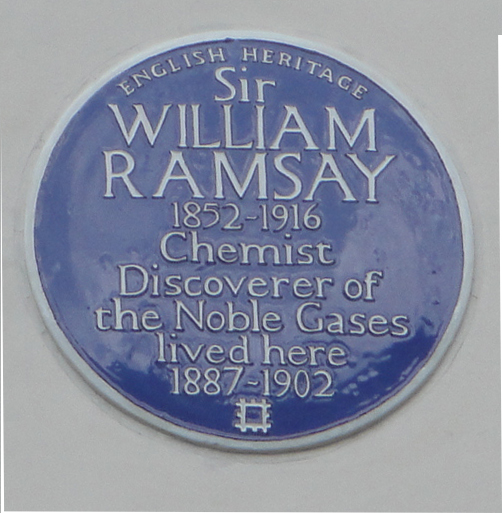
Sir William Ramsay (1852–1916) was a Scottish chemist who identified the noble gases and extended the periodic table. He shared the 1904 Nobel Prize for his work on inert gaseous elements.
Overview
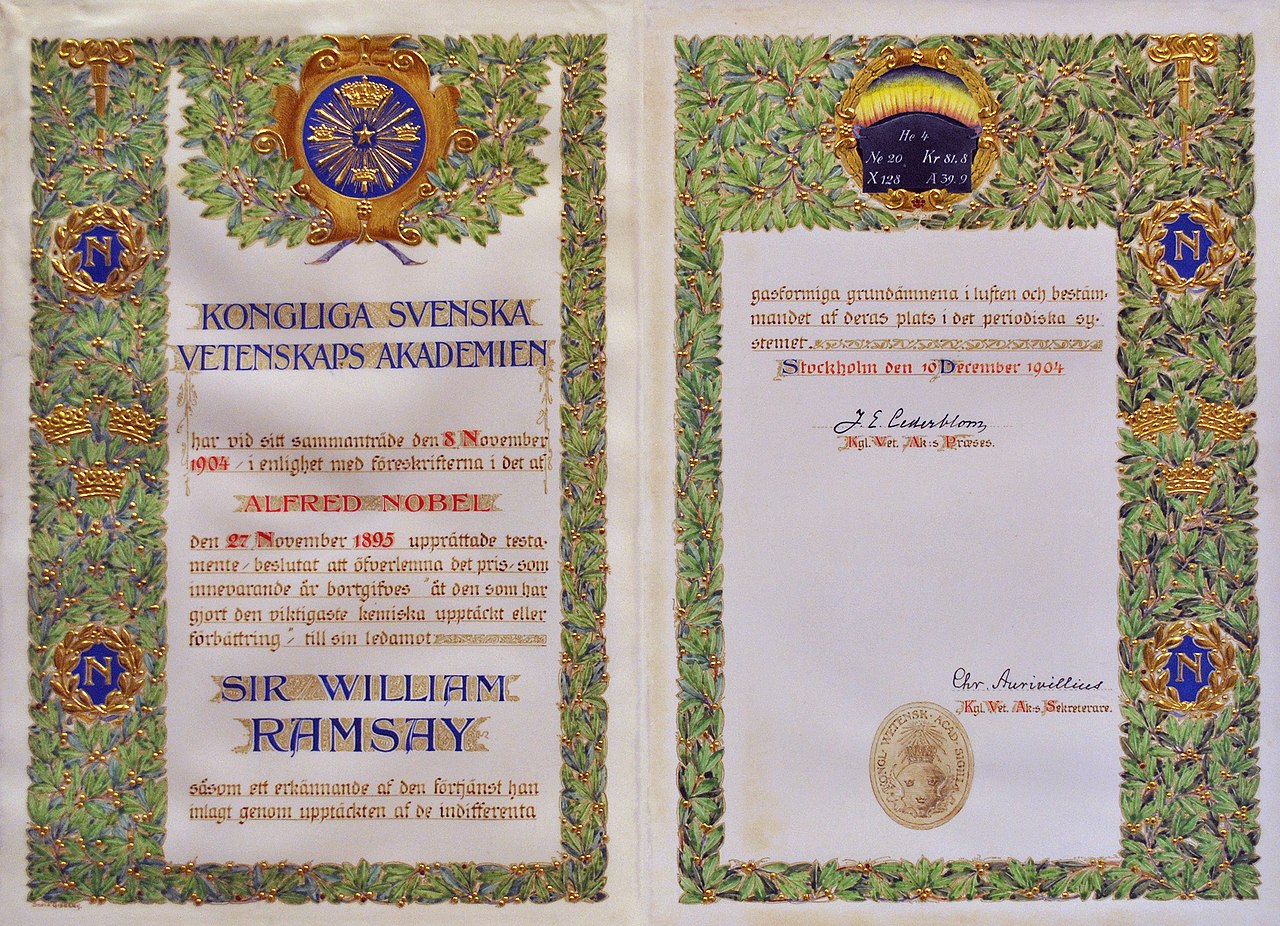
Sir William Ramsay (2 October 1852 – 23 July 1916) was a Scottish chemist celebrated for the discovery of the noble gases and for expanding the known elements of the periodic table. His work transformed understanding of atmospheric composition and led to the addition of a new group of chemically inert elements. Ramsay's discoveries earned him the Nobel Prize in Chemistry in 1904, awarded jointly with Lord Rayleigh.
Image gallery
5 Images


Early career and scientific approach
Ramsay trained as a chemist and built a career in chemical research and teaching. He combined careful laboratory technique with emerging physical methods—especially the liquefaction and fractional distillation of air and spectroscopic analysis—to isolate and identify previously unrecognized components of the atmosphere. His experimental approach emphasized purification, repeated analysis, and corroboration by spectroscopy and chemical reactivity.
Major discoveries
Working first with Lord Rayleigh and later with colleagues such as Morris Travers, Ramsay identified a family of inert gases that did not fit into existing chemical categories. The principal gases associated with his research are listed below.
- Argon — isolated after Rayleigh and Ramsay showed a dense residue in air that was chemically inert.
- Helium — identified on Earth after it had been observed in the solar spectrum; Ramsay isolated helium from terrestrial sources.
- Neon, krypton, xenon — discovered in collaboration with Morris Travers by fractionating liquid air and analyzing the spectral lines of components.
Scientific significance and applications
The discovery of the noble gases required adding a new group to the periodic table and clarified why these elements show extremely low chemical reactivity. Practical consequences followed: noble gases found uses in lighting (neon signs), inert gas atmospheres for chemical and metallurgical processes, cryogenics, and specialized lighting and detection technologies. The fundamental shift in chemical classification influenced both theoretical and applied chemistry.
Recognition and legacy
Ramsay received wide recognition during his lifetime, including the Nobel Prize in Chemistry in 1904, shared with Lord Rayleigh, and later honors for his contributions to the chemical sciences. His methods and discoveries remain foundational in physical chemistry and atmospheric chemistry, and the inert gases he helped characterize continue to be important in industry and research.
Further reading
For summaries and archival material on Ramsay's life and work, see linked resources: biographical overview, a collection of lectures and memorials at institutional pages, an account of the discovery of the noble gases at historical chemistry pages, and a detailed timeline of chemical discoveries at reference sites.
Questions and answers
Q: Who is William Ramsay?
A: William Ramsay was a Scottish chemist known for discovering the noble gases and assisting in the discovery of several elements on the periodic table.
Q: What did William Ramsay discover?
A: William Ramsay discovered the noble gases and helped discover several elements on the periodic table.
Q: When was William Ramsay born and when did he pass away?
A: William Ramsay was born on October 2, 1852, and he passed away on July 23, 1916.
Q: What is William Ramsay's notable achievement?
A: William Ramsay's notable achievement was winning the Nobel Prize in Chemistry in 1904 "in recognition of his services in the discovery of the inert gaseous elements in air" (along with Lord Rayleigh).
Q: What is the reason for which William Ramsay was awarded the Nobel Prize?
A: William Ramsay was awarded the Nobel Prize in Chemistry in 1904 "in recognition of his services in the discovery of the inert gaseous elements in air" (along with Lord Rayleigh).
Q: Who did William Ramsay share the Nobel Prize with?
A: William Ramsay shared the Nobel Prize in Chemistry in 1904 with Lord Rayleigh.
Q: What were the contributions of William Ramsay to the field of chemistry?
A: William Ramsay's contributions to the field of chemistry include discovering the noble gases and assisting in the discovery of several elements on the periodic table.
Author
AlegsaOnline.com William Ramsay — Scottish chemist and discoverer of the noble gases Leandro Alegsa
URL: https://en.alegsaonline.com/art/132975