
Werner Heisenberg
German theoretical physicist who formulated matrix mechanics and the uncertainty principle; Nobel laureate and a central figure in the development of quantum theory.
Overview
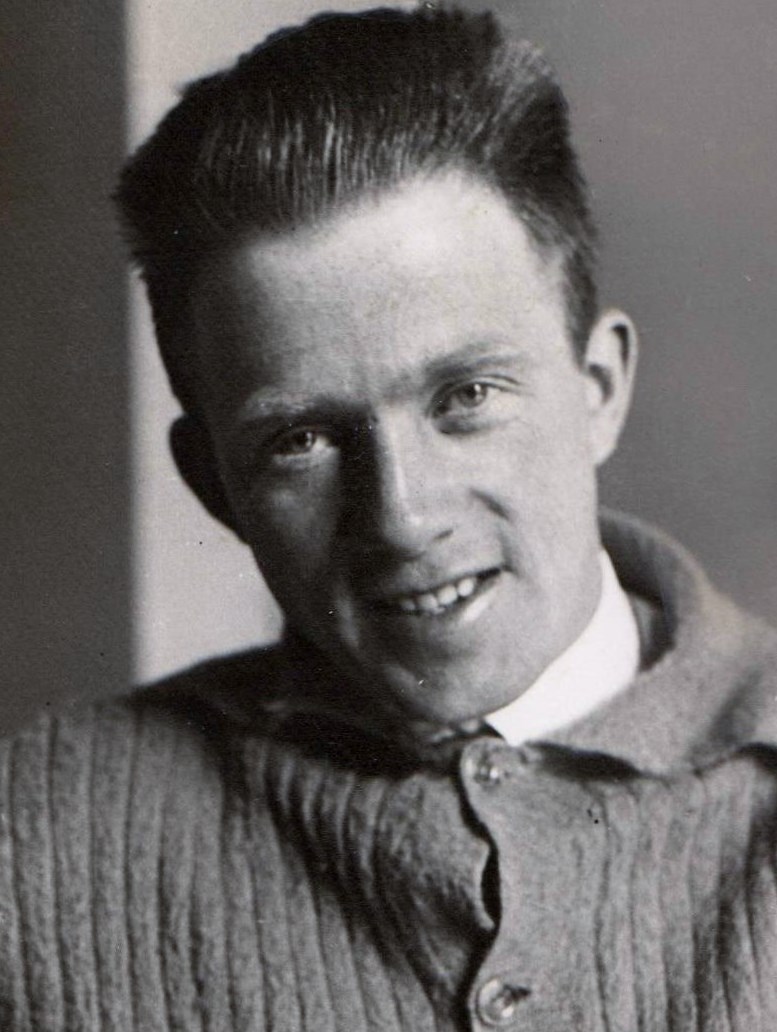
Werner Karl Heisenberg (5 December 1901 – 1 February 1976) was a German theoretical physicist who played a leading role in the creation of quantum mechanics. He is best known for developing matrix mechanics and for formulating the uncertainty principle, fundamental ideas that reshaped 20th‑century physics. Heisenberg received the Nobel Prize in Physics for his contributions to quantum theory and remained an influential scientist and public figure throughout his life. For a concise biography, see the linked resource.
Image gallery
10 Images


Major contributions
Heisenberg's work introduced new mathematical formulations and conceptual foundations for describing atomic-scale phenomena. His 1925 formulation of matrix mechanics provided an algebraic approach to quantum systems that complemented Schrödinger's later wave mechanics. In 1927 he presented the uncertainty principle, which states a fundamental limit to the simultaneous precision of canonical pairs such as position and momentum (commonly expressed as Δx·Δp ≥ ħ/2). These ideas underlie the standard Copenhagen interpretation of quantum mechanics and influenced later developments in quantum field theory and particle physics. For more on his technical work, see quantum mechanics resources.
Life and career
Trained under Arnold Sommerfeld and active in the vibrant European physics community of the 1920s, Heisenberg collaborated with figures such as Niels Bohr and Wolfgang Pauli. He held academic positions in several German universities and became a leading figure in theoretical physics before and after World War II. Heisenberg was awarded the Nobel Prize in Physics in 1932 for the creation of quantum mechanics. His professional correspondence and meetings with other physicists, including Bohr, are notable episodes in the history of ideas.
Wartime work and controversies
During the Second World War Heisenberg was involved in German atomic research. The precise aims and outcomes of that work have been the subject of historical debate: some describe it as focused on basic research under wartime constraints, while others have examined whether it was intended to produce weapons. After the war he and other German scientists were interned briefly by Allied authorities; their conversations during detention were recorded and later analyzed by historians. For discussion of these episodes see sources on Heisenberg and wartime science.
Legacy and influence
Heisenberg's concepts remain central to both practical and philosophical aspects of physics. The uncertainty principle affects how measurements are interpreted in experiments ranging from atomic spectroscopy to electron microscopy. His work influenced generations of physicists and motivated reflection on the limits of knowledge and the role of observers in science. He also engaged in public discourse about science policy and the reconstruction of research institutions after the war; further reading is available via related resources.
- Key ideas: matrix mechanics; uncertainty principle; quantum foundations.
- Awards: Nobel Prize in Physics (1932) for creation of quantum mechanics.
- Notable relationships: collaborations and debates with Niels Bohr and other contemporaries.
Questions and answers
Q: Who was Werner Karl Heisenberg?
A: Werner Karl Heisenberg was a German physicist who won the Nobel Prize in Physics for his discovery of quantum mechanics.
Q: What did Heisenberg discover?
A: Heisenberg discovered the Heisenberg uncertainty principle, which shows there is a limit on how well position and velocity of a particle can be measured.
Q: When was Werner Karl Heisenberg born?
A: Werner Karl Heisenberg was born on 5 December 1901.
Q: When did he win the Nobel Prize in Physics?
A: He won the Nobel Prize in Physics for his discovery of quantum mechanics.
Q: When did he die?
A: He died on 1 February 1976.
Q: What is the Heisenberg uncertainty principle?
A: The Heisenberg uncertainty principle states that there is a limit on how well position and velocity of a particle can be measured.
Author
AlegsaOnline.com Werner Heisenberg Leandro Alegsa
URL: https://en.alegsaonline.com/art/132824