
Wendelin Werner — stochastic Loewner evolution, planar Brownian motion and probability
Profile of Wendelin Werner, a German-born French mathematician renowned for work on stochastic Loewner evolution (SLE), planar Brownian motion, scaling limits and links between probability and conformal field theory.
Wendelin Werner (born 23 September 1968) is a German-born, French mathematician whose rigorous work has had a major influence on modern probability theory and mathematical physics. He is professor at ETH Zürich and is widely known as a leading mathematician in the study of two-dimensional random systems. Werner's research connects probabilistic methods with complex analysis and ideas from theoretical physics.
Image gallery
1 Image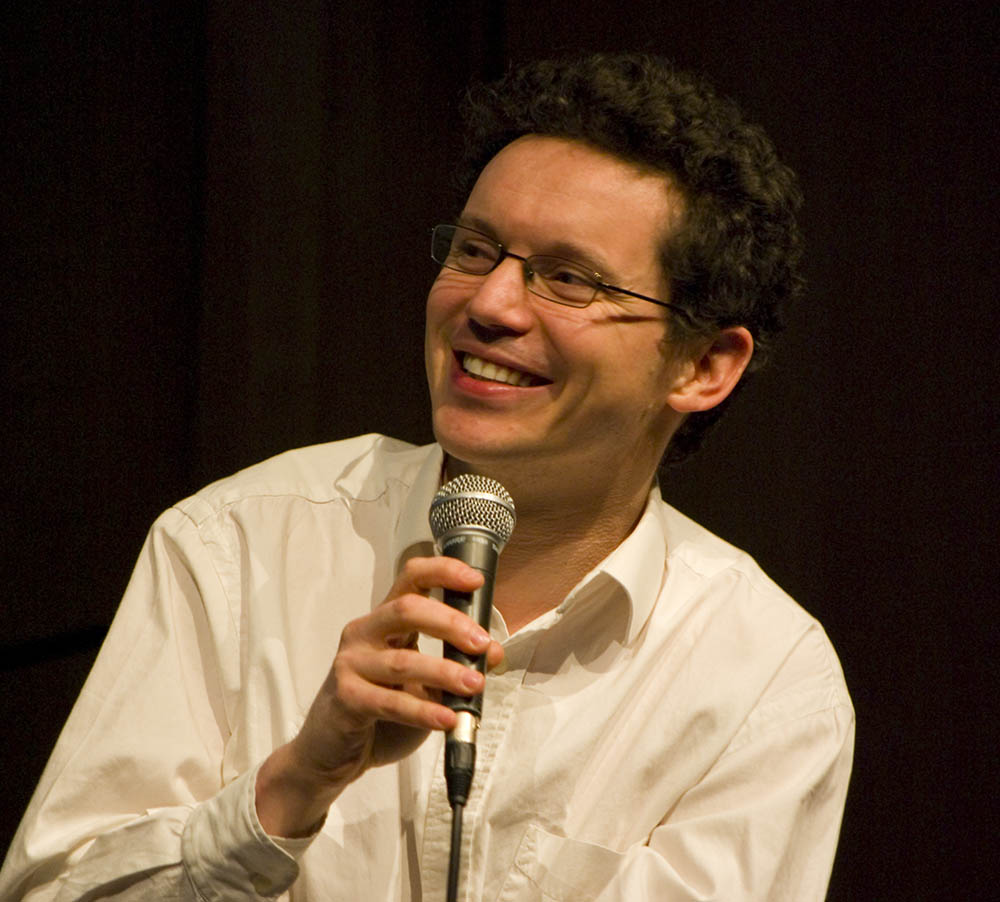
Research areas and methods
Werner's research focuses on random processes and their continuum limits, with particular emphasis on two dimensions. Principal topics include:
- Brownian motion in the plane, including fine geometric properties of Brownian paths and the structure of the Brownian frontier;
- stochastic Loewner evolution (SLE), a family of random fractal curves that describe conformally invariant scaling limits of lattice models;
- self-avoiding random walks and other discrete models, studied via scaling and their conjectured continuum descriptions;
- interactions between probability theory and mathematical physics, especially the rigorous aspects of conformal invariance and conformal field theory in two dimensions.
Major contributions and impact
Werner made central contributions to the mathematical development of SLE and to understanding the geometry of planar Brownian motion. His work clarified why certain critical models from statistical mechanics have conformally invariant scaling limits, and it provided rigorous descriptions of fractal dimensions, intersection exponents and boundary behaviour for random curves and clusters. For this body of work he was awarded the Fields Medal in 2006.
Explanatory notes on key concepts
SLE is a stochastic process that produces random curves in the plane by solving a differential equation driven by Brownian motion; it provides a unified framework to describe scaling limits of interfaces in two-dimensional models. The study of planar Brownian motion examines properties such as the Hausdorff dimension of path portions, the nature of cut points and the outer boundary. Self-avoiding walks are discrete paths that do not visit the same point twice; their scaling limits in two dimensions are conjectured to be describable via SLE-type objects in many cases.
Career and recognition
Born in Germany and later associated with France as his nationality and academic base, Werner is often described as a German-born, French researcher (German-born, French). His research has been influential across pure probability, rigorous statistical mechanics and mathematical approaches to quantum field theoretic ideas. Beyond the Fields Medal, his work appears frequently in survey articles and graduate-level expositions on random geometry.
Influence and further resources
Werner's results continue to shape ongoing research into critical phenomena, random planar maps and conformal invariance. Readers interested in technical introductions can consult institutional pages, review articles and lecture notes available through university repositories; for basic context see standard introductions to Brownian motion, SLE and scaling limits. Representative starting points include profiles and collected materials linked from institutional pages and survey literature (biographical, national, professional, discrete models, diffusions, probability, physics connections, awards, home institution).
Questions and answers
Q: Who is Wendelin Werner?
A: Wendelin Werner is a mathematician who was born in Germany and is now based in France.
Q: What does Wendelin Werner work on?
A: Wendelin Werner works on random processes such as self-avoiding random walks, Brownian motion, Schramm–Loewner evolution, and probability theory and mathematical physics.
Q: What is the Fields Medal?
A: The Fields Medal is a prestigious award in mathematics, given every four years to mathematicians under the age of 40.
Q: Why did Wendelin Werner win the Fields Medal in 2006?
A: Wendelin Werner won the Fields Medal in 2006 for his contributions to the development of stochastic Loewner evolution, the geometry of two-dimensional Brownian motion, and conformal field theory.
Q: Where does Wendelin Werner work?
A: Wendelin Werner is a professor at ETH Zürich.
Q: What is self-avoiding random walk?
A: Self-avoiding random walk is a mathematical concept that involves studying the movement of a particle or object that randomly moves in a particular direction but tries to avoid crossing its own trajectory.
Q: What is Brownian motion?
A: Brownian motion is the random movement of particles in a fluid or gas, caused by collisions with other particles. It is named after the Scottish botanist Robert Brown, who first observed the phenomenon in 1827.
Author
AlegsaOnline.com Wendelin Werner — stochastic Loewner evolution, planar Brownian motion and probability Leandro Alegsa
URL: https://en.alegsaonline.com/art/132809