
Viktor Yushchenko: President of Ukraine and Leader of the Orange Revolution
Biography and overview of Viktor Yushchenko, his political career, the Orange Revolution, presidency (2005–2010), public health episode, and legacy in Ukrainian politics.
Overview
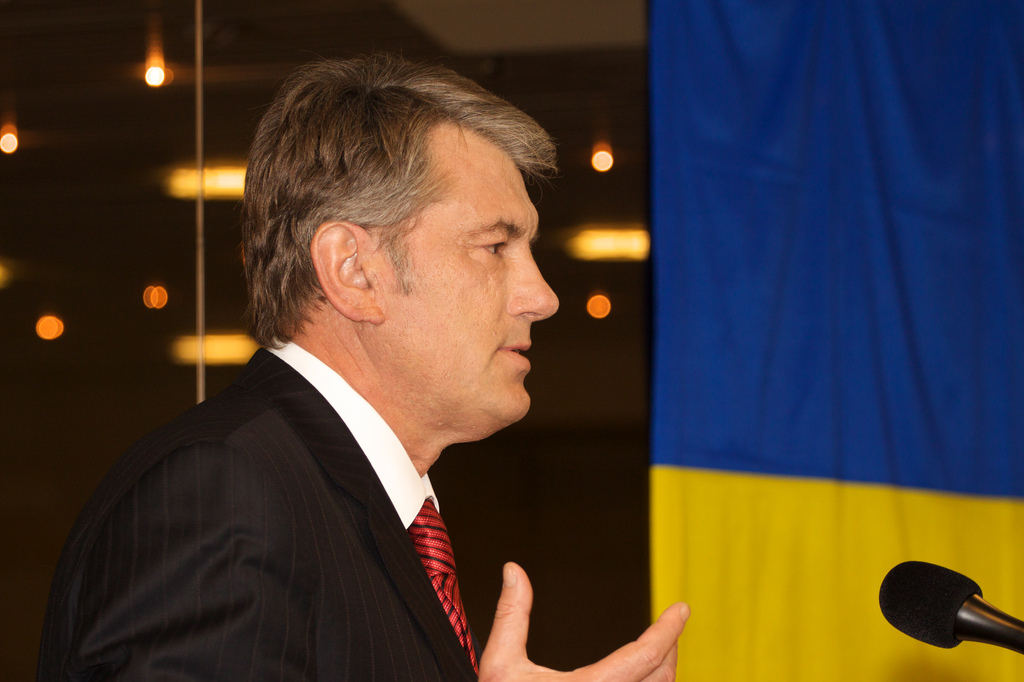
Viktor Andriyovych Yushchenko (born February 23, 1954) is a Ukrainian politician and economist who served as President of Ukraine from 2005 to 2010. He emerged as a central figure in the 2004 protests known as the Orange Revolution, which forced a re-run of a disputed presidential vote and led to his election. Yushchenko's public profile was shaped both by his pro-Western political orientation and by a severe illness that altered his appearance and became a matter of international attention.
Image gallery
10 Images


Early life and career
Trained as an economist, Yushchenko built his early career in banking and government finance. He was head of the National Bank of Ukraine during much of the 1990s, a period when the newly independent country was establishing monetary and fiscal institutions. Later he served as prime minister from December 1999 until May 2001. His background in economics and public administration was an important part of his political appeal to voters who wanted reform and stability.
2004 election and the Orange Revolution
In the presidential election of 2004 Yushchenko was the main challenger to Viktor Yanukovych. Official results in the initial count declared Yanukovych the winner, but widespread allegations of electoral fraud prompted mass protests across Ukraine. Millions of citizens took part in demonstrations that emphasized nonviolent resistance and demands for transparent elections; this movement became known as the Orange Revolution. The Constitutional Court ordered a repeat of the runoff, which Yushchenko won and after which he assumed the presidency in early 2005.
Health crisis and public image
Soon after the 2004 campaign Yushchenko fell seriously ill. Medical examinations and reporting pointed to poisoning by dioxin as a likely cause, though some details remained contested. The illness produced marked changes in his facial appearance and required prolonged medical treatment. The episode was widely interpreted in Ukraine and abroad as an example of the intense personal and political risks of the country's post-Soviet transition.
Presidency and political challenges
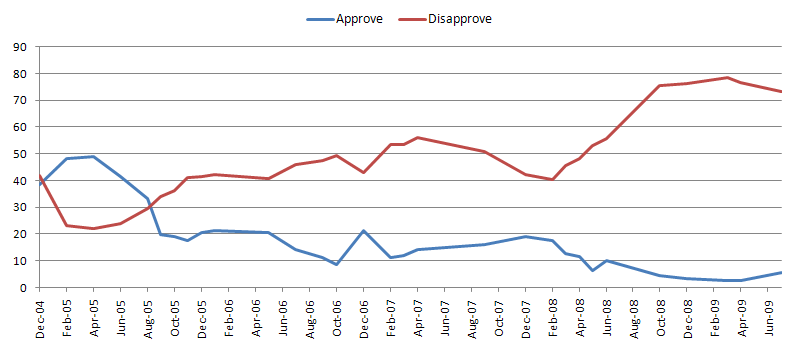
As president, Yushchenko pursued a foreign policy oriented toward closer ties with the European Union and NATO, while also managing relations with Russia. Domestically, his term was marked by efforts to promote democratic reforms, reduce corruption, and stabilize the economy, but these goals were often constrained by political fragmentation. Coalition disagreements, competing interests among oligarchs, and a strained relationship with former ally Yulia Tymoshenko resulted in frequent political instability and limited the administration's ability to implement deep structural changes.
Later elections and legacy
Yushchenko ran for re-election in 2010 but was defeated by Viktor Yanukovych. After leaving the presidency he remained a figure in Ukrainian public life, active in civic initiatives and sometimes critical of successive governments. His role in the Orange Revolution made him a symbol of the post-2004 push for democratic processes in Ukraine, even as assessments of his record as president are mixed: praised for democratic aspirations, criticized for limited policy accomplishments.
Roles and chronology
- Head of the National Bank of Ukraine (1993–1999)
- Prime Minister of Ukraine (December 1999–May 2001)
- Presidential candidate and leader of the Orange Revolution (2004)
- President of Ukraine (2005–2010)
Notable facts and distinctions
Yushchenko is often remembered for his prominent role in peaceful mass mobilization for electoral integrity, for his advocacy of a European orientation for Ukraine, and for his public battle with a serious health crisis linked by many sources to poisoning. His career demonstrates both the possibilities and limits of democratic reform in a transitional political environment.
Further reading and sources
Questions and answers
Q: Who was the previous President of Ukraine?
A: Viktor Andriyovych Yushchenko was the previous President of Ukraine.
Q: What happened in November 2004?
A: In November 2004, Viktor Yushchenko lost the Ukrainian presidential election.
Q: What did Yushchenko and his followers argue about the election results?
A: Yushchenko and his followers argued that the election results had been falsified by the Ukrainian government, in support of the opposing candidate Viktor Yanukovych.
Q: What were these political demonstrations called?
A: These political demonstrations were called The Orange Revolution.
Q: How did Yushchenko win the second round of elections?
A: The Constitutional Court ordered a second round of elections, which Yuschenko won.
Q: What happened to Yushchenko during this time period? A: During this time period, Yushchenko claimed to have been poisoned by political enemies and he was hospitalized with signs of a serious illness.
Q: What is the current relationship between Tymoshenko and Yushchencko?
A: There is a lot of political misunderstanding between Tymoshenko and Yushchencko today.
Author
AlegsaOnline.com Viktor Yushchenko: President of Ukraine and Leader of the Orange Revolution Leandro Alegsa
URL: https://en.alegsaonline.com/art/132588