
Tycho Brahe: Danish astronomer and pioneer of precise naked-eye observation
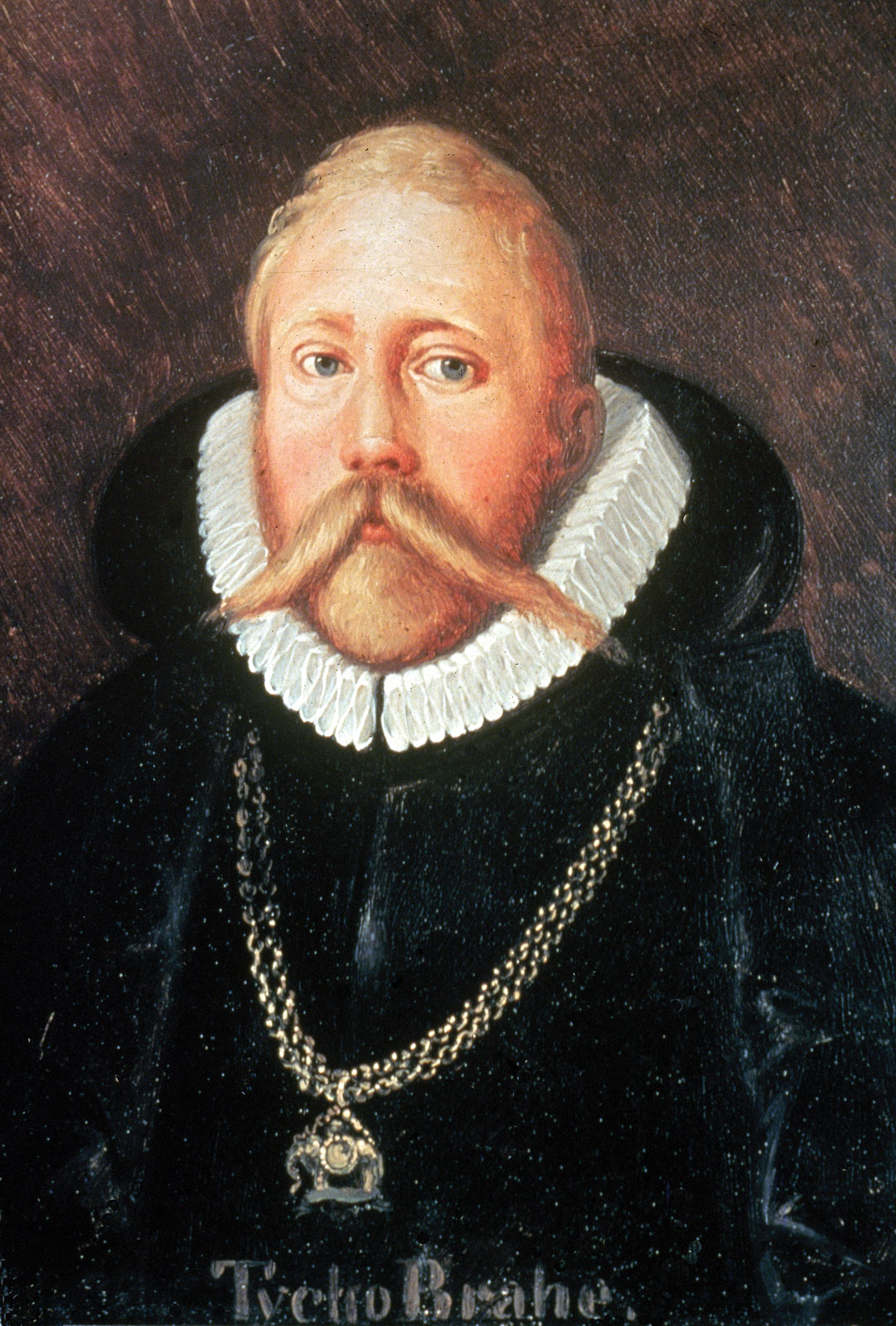
Tycho Brahe (1546–1601), a Danish noble and astronomer, made landmark pre-telescopic observations, built Uraniborg, discovered the changing heavens, and developed the Tychonic planetary model.
Overview
Tycho Brahe (14 December 1546 – 24 October 1601) was a Danish astronomer from Denmark who carried out systematic observations of the night sky before the invention of the telescope. His work combined meticulous measurement, instrument design and a distinctive cosmological model. He established one of the first purpose-built observatories, Uraniborg, and left a legacy that bridged medieval and early modern astronomy.
Image gallery
10 Images




Instruments and methods
Tycho emphasized high-quality, repeatable observations with large, precisely graduated instruments. At Uraniborg and the nearby observatory he used mural quadrants, armillary-like devices and other sighting apparatus to record positions of stars and planets with unprecedented care for their era. Without optical magnification he achieved much finer angular accuracy than typical contemporary observers, and he kept careful, systematic logs and tables.
Discoveries and challenges to the ancient view
Two of Tycho's most important findings demonstrated that the heavens were not immutable. In 1572 he recorded a bright new star now known as SN 1572 (Tycho's Nova), showing that objects could appear among the fixed stars. Observations of a comet in 1577 convinced him that such objects moved through the regions traditionally thought to be solid celestial spheres. These results helped shift natural philosophers away from the idea of an unchanging celestial realm and influenced how the wider universe and the Solar System were understood.
Cosmological model and beliefs
Tycho rejected both the Ptolemaic system and the full Copernican hypothesis. He proposed a hybrid arrangement often called the Tychonic system: the geocentric layout in which the Sun and Moon orbit the Earth, while the other planets orbit the Sun. This model preserved Earth's central place while accounting for planetary motions without requiring the Earth to move. Tycho's practice also reflected the intellectual context of his time: he combined empirical work with commitments to astrological practice and traditional cosmology.
Collaboration and legacy
Tycho employed and mentored younger astronomers, the most famous being Johannes Kepler, who after Tycho's death inherited his detailed planetary observations and used them to formulate the laws of planetary motion. Although Tycho himself consulted and produced horoscopes and accepted astrology as part of scholarly life, his disciplined records provided the empirical foundation for a later, more mathematical astronomy.
Notable facts and significance
- Founder of Uraniborg, an early scientific residence and research center for astronomy and instrumentation (Uraniborg).
- Demonstrated the changing character of the sky by documenting SN 1572 and distinguishing comets from atmospheric phenomena (comet).
- Developed the hybrid Tychonic model as an alternative to purely geocentric or heliocentric schemes (geocentric).
- Bridged observational practice and theoretical developments that enabled Kepler and later scientists to reformulate planetary theory (Johannes Kepler).
Tycho Brahe stands as a pivotal figure between medieval and modern astronomy: an accomplished observer whose records corrected inherited assumptions about the heavens and whose institutional and methodological innovations influenced how astronomical research was organized. For further reading on his life, instruments and the fate of Uraniborg, consult specialized biographies and the primary catalogues of his observations (astronomer, Denmark, telescope).
Questions and answers
Q: Who was Tycho Brahe?
A: Tycho Brahe was an astronomer from Denmark who observed the night sky before the invention of the telescope and built a large observatory called Uraniborg on the island of Hven in Denmark.
Q: What did Tycho Brahe discover about the universe outside the Solar System?
A: Tycho Brahe discovered that the universe outside the Solar System could change when he studied a supernova and a comet.
Q: Who was Tycho Brahe's assistant?
A: Tycho Brahe's assistant was Johannes Kepler.
Q: What did Tycho Brahe do with planets?
A: Tycho Brahe made very careful observations of the planets.
Q: What was Tycho Brahe's geocentric theory?
A: Tycho Brahe developed a geocentric theory that imagined the Sun and Moon orbited the Earth, but the other planets orbited the Sun.
Q: What did Tycho Brahe prove with his Nova?
A: Tycho Brahe's Nova, now called SN 1572, proved that changes did take place.
Q: What did Tycho Brahe discover about comets?
A: Tycho Brahe worked out that comets were real celestial objects, and that their orbits were different to those of the planets.
Author
AlegsaOnline.com Tycho Brahe: Danish astronomer and pioneer of precise naked-eye observation Leandro Alegsa
URL: https://en.alegsaonline.com/art/132337