
Tom Gehrels: Astronomer and Pioneer in Asteroid Research
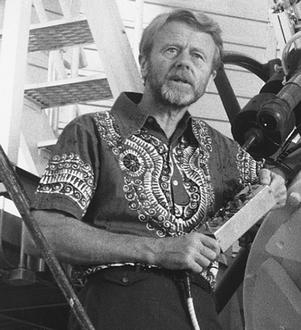
Tom Gehrels (1925–2011) was a Dutch‑born American astronomer known for discovering thousands of asteroids, leading planetary photopolarimetry on Pioneer missions, and shaping planetary science at the University of Arizona.
Overview
Tom Gehrels (1925–2011) was a Dutch‑born American astronomer and planetary scientist who played a prominent role in mid‑20th century studies of small bodies in the Solar System. He served as a professor of planetary sciences and as a research astronomer at the University of Arizona, and is widely credited with the discovery of thousands of asteroids and several comets. For a concise biography and career summary see biographical notes and his institutional profile at the University of Arizona.
Image gallery
2 Images
Major contributions
Working with collaborators and surveys of photographic plates, Gehrels contributed to the identification of more than 4,000 asteroids, including members of the Apollo and Amor groups and numerous Jovian Trojan asteroids. His discoveries and cataloguing efforts expanded knowledge of asteroid populations and orbital families; a representative list of named minor planets and comets associated with Gehrels is available via minor planet records and specialist catalogues such as near‑Earth object lists. He also reported several cometary identifications; see comet discoveries.
Methods, instruments, and missions
Gehrels combined photographic survey techniques with photometry and polarimetry to characterize small bodies. He led the Imaging Photopolarimeter experiment on the Pioneer 10 and Pioneer 11 missions, instruments designed to measure light intensity and polarization from planetary atmospheres and rings during flybys of Jupiter and Saturn. Mission summaries and instrument descriptions are summarized at instrument pages, and overviews of the Pioneer missions can be found at Pioneer 10 and Pioneer 11. His planetary observations contributed to early remote sensing studies of Jupiter and Saturn (planetary science resources).
Career and life
Born in the Netherlands, Gehrels emigrated to the United States and built a long career in academic research and teaching. He edited several influential space science textbooks and mentored students in planetary astronomy. His family included another noted astronomer, his son Neil Gehrels, who pursued high‑energy astrophysics; for details on his family and colleagues see family and colleagues. Earlier in life he took part in the Dutch Resistance during World War II, an episode recounted in historical summaries at resistance records.
Legacy, perspectives, and controversies
Gehrels left a legacy in systematic asteroid discovery, planetary instrumentation, and science education. He voiced critical perspectives on historical episodes related to rocketry and wartime practices; in the 1990s he publicly argued that Wernher von Braun had links to concentration camp labor practices during the war, a point discussed in contemporary commentary and archives (historical debates, wartime records). Contemporary readers can consult these sources to see the full context of his statements.
Notable facts and further reading
- Discoveries: more than 4,000 asteroids and multiple comets—see compiled lists at asteroid catalogues.
- Instrumentation: leader of the Imaging Photopolarimeter on Pioneer 10/11; technical summaries at instrument pages.
- Academic roles: long tenure at the University of Arizona; departmental history at UA.
- Historical involvement: member of the Dutch Resistance; further context at resistance records.
For further reading and archival material consult institutional collections and summary pages linked above. Additional overviews and curated bibliographies can be accessed through general science repositories and planetary science review sites such as trojan asteroid resources, interview transcripts, and other research collections (biographies, planetary archives, NEO databases, comet lists, mission summaries, colleague profiles, historical analyses, archival documents).
Questions and answers
Q: What did Tom Gehrels discover?
A: Tom Gehrels discovered over 4,000 asteroids, including Apollo asteroids, Amor asteroids, as well as dozens of Trojan asteroids. He also discovered a number of comets.
Q: What was the Imaging Photopolarimeter experiment?
A: The Imaging Photopolarimeter experiment was an experiment on the Pioneer 10 and Pioneer 11 satellites which explored the planets Jupiter and Saturn. It was in charge by Gehrels in the 1970s.
Q: Did Tom Gehrels have any sons?
A: Yes, one of his sons, Neil Gehrels, was also an astronomer.
Q: Was Tom Gehrels part of the Dutch Resistance during World War II?
A: Yes, he was part of the Dutch Resistance during World War II.
Q: What did Tom Gehrels say when asked what he would do if an asteroid hit Earth?
A: When asked what he would do if an asteroid hit Earth, he said "Go out there and have a look, of course."
Q: Did Tom Gehrels edit any space science textbooks?
A: Yes, he edited a number of space science textbooks.
Q: Did Tom Gehrels argue that German rocket scientist Wernher von Braun had been involved in Nazi concentration camps during World War II?
A; Yes, in 1994 he argued that German rocket scientist Wernher von Braun had been involved in Nazi concentration camps during that war.
Author
AlegsaOnline.com Tom Gehrels: Astronomer and Pioneer in Asteroid Research Leandro Alegsa
URL: https://en.alegsaonline.com/art/132095