
Tommy Flowers and the Creation of Colossus
Thomas H. Flowers (1905–1998), British engineer who designed Colossus, the first programmable electronic computer, and led wartime efforts to break the Lorenz cipher at Bletchley Park.
Thomas Harold "Tommy" Flowers (22 December 1905 – 28 October 1998) was a British telecommunications engineer whose work at the General Post Office research establishment led to Colossus, the first large-scale electronic computer to be used operationally. Flowers combined practical experience with an unconventional approach to electronics to produce machines that automated aspects of wartime codebreaking and significantly reduced the time needed to exploit encrypted German high‑level traffic.
Image gallery
4 Images


Background and career
Flowers trained as an engineer and gained degrees including a BSc and later a DSc. He spent much of his professional life at the Post Office Research Station at Dollis Hill, where he developed high-speed electronic equipment for communications. For his wartime contributions he was honoured with an OBE. He is generally described as a British telecommunications engineer, but his skills bridged electronics, mechanical design and systems engineering.
Design and technical features
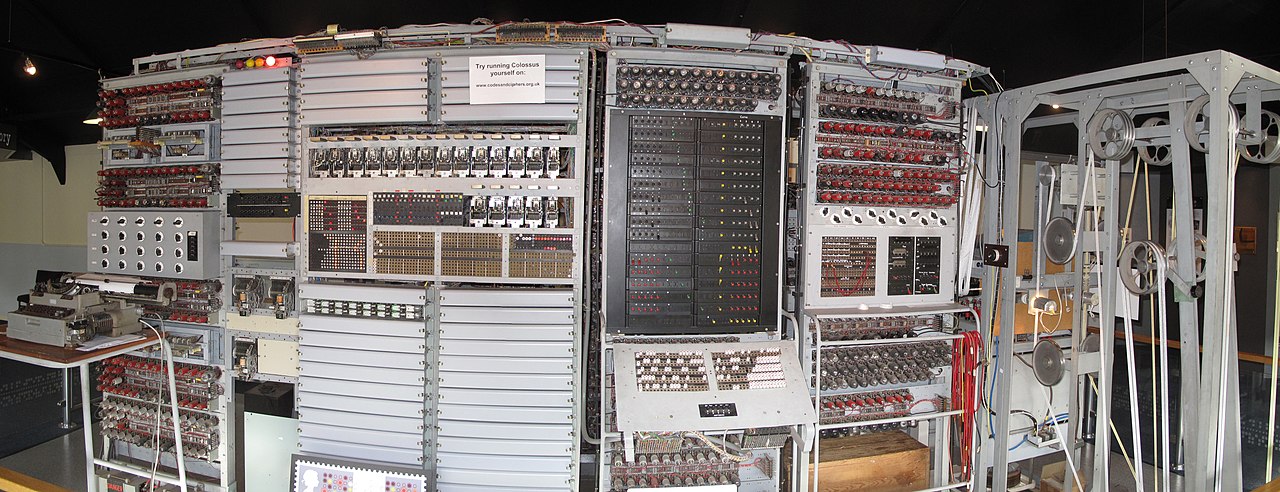
During World War II Flowers conceived and built Colossus to automate the analysis of the German Lorenz cipher (codenamed Tunny by British cryptanalysts). The first operational machine, often called Mark 1, used approximately 1,500 thermionic valves (commonly described at the time as vacuum tubes) and began trials at Dollis Hill in late 1943 before being installed at Bletchley Park in early 1944. A larger Mark 2, built with about 2,400 valves, entered service on 1 June 1944.
- Architecture: Colossus combined high‑speed electronic logic with a mechanical paper‑tape reader and optical sensors to examine ciphertext streams.
- Operation: It performed Boolean and counting operations to test hypotheses about key settings, replacing much slower, manual statistical techniques.
- Performance: By automating pattern testing the machines shortened analysis from days or weeks to hours, improving the responsiveness of intelligence reports.
Development, secrecy and wartime impact
Flowers led rapid development in an atmosphere of urgency. The machines were conceived, built and iterated within months because breaking the Lorenz traffic yielded intelligence about German strategic communications. Colossus outputs fed the work of codebreakers at Bletchley Park and supplied material that informed Allied planning, including preparations for the Normandy landings. Wartime secrecy meant Colossus remained unknown to the wider public and professional computing community for decades; many machines were dismantled after the war.
Uses, significance and legacy
Colossus is widely regarded as the first electronic computer to be used for a program-like sequence of operations, although it was purpose-built for cryptanalysis rather than general commercial computing. Its principal uses and lasting significance include:
- Accelerating cryptanalytic work on high‑level German teleprinter traffic, directly aiding Allied intelligence.
- Demonstrating the feasibility and reliability of large vacuum‑tube systems for continuous operation.
- Influencing the thinking of postwar engineers and researchers about electronic computation and automation.
Recognition and notable facts
Because of strict confidentiality the full story of Flowers and Colossus emerged only many years after the war. Subsequent accounts placed Flowers among the key pioneers of practical electronic computing. For summaries and further reading see sources on his degrees: BSc, DSc, his wartime award: OBE, biographies and institutional histories at the Post Office and Bletchley Park: career overview, wartime context, technical descriptions of Colossus and discussions of early electronic computing as the first programmable electronic computer. For additional background on the cipher work and operational site see links about the Lorenz cipher, the use of vacuum tube technology and the role of Bletchley Park.
Questions and answers
Q: Who was Tommy Flowers?
A: Tommy Flowers was a British engineer who designed the world's first programmable electronic computer during World War II.
Q: What was the name of the computer that Tommy Flowers designed?
A: The computer that Tommy Flowers designed was called Colossus.
Q: What was the purpose of Colossus?
A: Colossus was designed to help solve encrypted German messages during World War II.
Q: When was the first Mark 1 Colossus computer built and where did it run?
A: The first Mark 1 Colossus computer, with 1500 vacuum tube valves, ran at Dollis Hill in November 1943.
Q: When did the first Mark 2 Colossus go into service and where?
A: The first Mark 2 Colossus went into service at Bletchley Park on June 1, 1944.
Q: What was the significance of the Mark 2 Colossus going into service at Bletchley Park?
A: The Mark 2 Colossus immediately produced vital information for the imminent D-Day landing.
Q: When did Tommy Flowers die?
A: Tommy Flowers died on October 28, 1998.
Author
AlegsaOnline.com Tommy Flowers and the Creation of Colossus Leandro Alegsa
URL: https://en.alegsaonline.com/art/132041