
Tim Berners-Lee — Inventor of the World Wide Web
British computer scientist Sir Tim Berners-Lee created the World Wide Web, developed HTML/HTTP/URI, founded the W3C and advocates for an open, decentralized web.
Sir Timothy John "Tim" Berners-Lee is the British computer scientist widely credited with inventing the World Wide Web while working at CERN. His design integrated concepts of hypertext with networked computers to allow documents to be linked and retrieved across different systems. By defining a simple markup language together with a naming scheme and a transfer protocol, he made it possible for information to be published and discovered on a global scale.
Image gallery
10 Images






Key inventions and technical contributions
Berners-Lee proposed and implemented three foundational components that remain central to the Web: a document description language (HyperText Markup Language, HTML), a protocol for requesting and transferring resources (Hypertext Transfer Protocol, HTTP), and a system of universal names for resources (Uniform Resource Identifiers, URIs). These elements work together so that resources anywhere can be identified, addressed and linked. The combination of these simple, interoperable standards enabled the rapid growth of websites, browsers and servers.
Early life and career
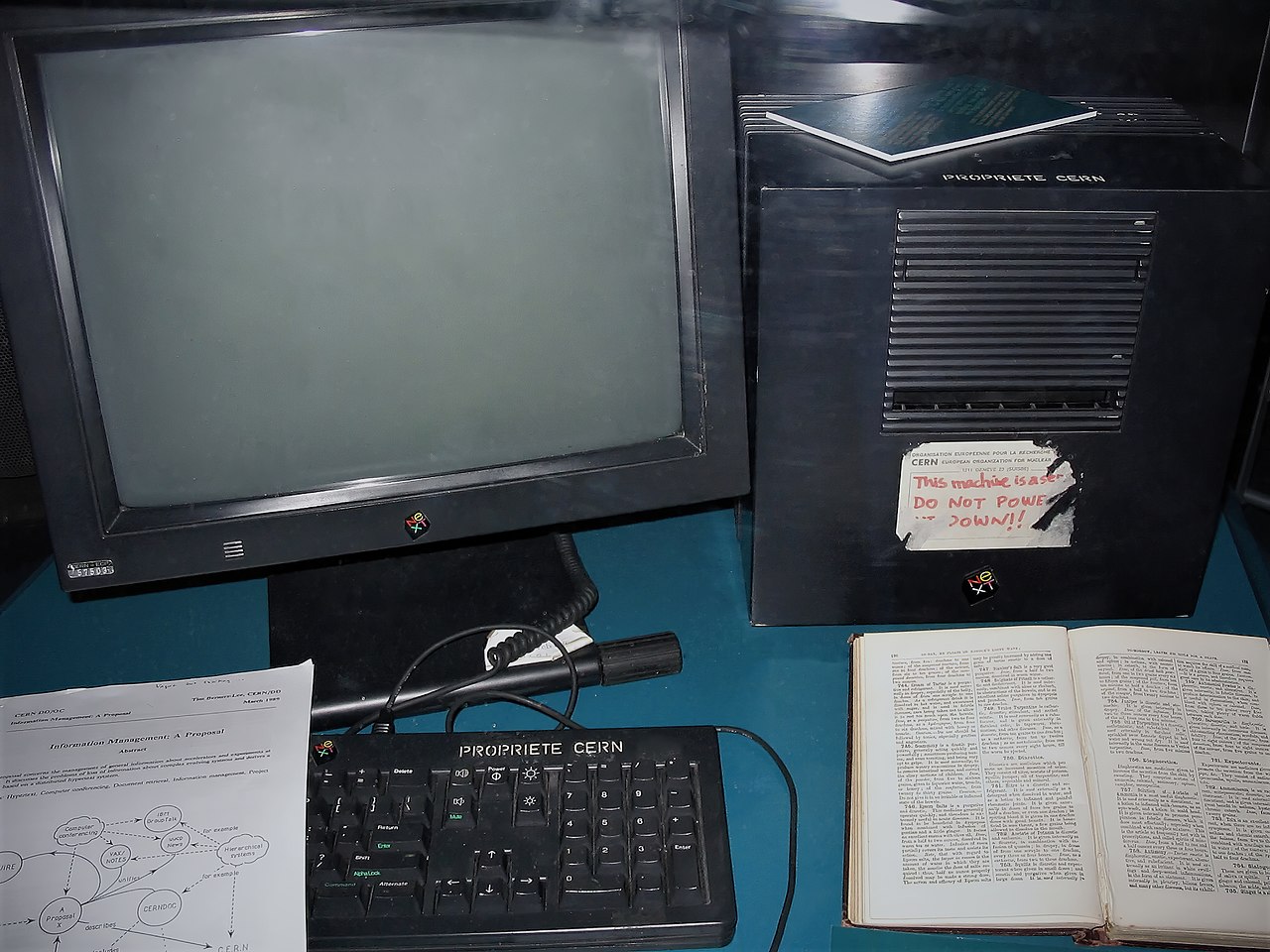
Trained in physics at the University of Oxford, Berners-Lee applied an engineer's pragmatism to problems of information sharing among researchers. While at CERN he drafted a proposal for a distributed hypertext system that would allow scientists to access and link documents held on different machines. The first successful communication between a browser and a server, and the first website, were implemented as part of this project and became publicly available in the early 1990s.
Standards, the W3C and later projects
After the initial implementation, Berners-Lee took a leading role in developing open standards for the Web. He founded and has long led the World Wide Web Consortium (W3C), an international community that develops specifications and guidelines to ensure long-term growth for the Web. Beyond standards, he has supported work in Web science, data sharing and decentralization. His later projects and advocacy include efforts to give individuals control over personal data and to build systems that enable decentralized storage and selective sharing.
Advocacy and public positions
Berners-Lee has consistently argued that the Web should remain open, universal and accessible. He made an early decision to place the core Web protocols and software into the public domain, which helped adoption and innovation. In subsequent years he has spoken about privacy, data ownership and the social implications of networked systems, supporting policies and technologies that aim to preserve freedom of expression and reduce centralization of user data.
Roles in research and advising
In addition to his work with standards, Berners-Lee has contributed to academic and collaborative initiatives. He has authored a reflective account of the Web's early years, participated in the Web Science Research Initiative and served on advisory bodies, including those connected with research into collective intelligence and the social impact of technology.
Awards and recognition
Berners-Lee has received wide international recognition for his contributions to computing and society. He has been honored by academic institutions and national orders, named in lists of influential figures, and elected to learned bodies. He has used his public profile to draw attention to ethical and governance questions about the future of the Web.
Impact and examples
The architecture he designed—linking resources by address and protocol—made possible the broad array of Web applications that followed: from simple static pages to dynamic, interactive services, search engines, e-commerce, multimedia distribution and social platforms. The open-standards approach encouraged interoperability among browsers, servers and authoring tools, enabling a global ecosystem of content and services.
Publications and further reading
Berners-Lee is the author of a widely read account of the Web's origins and future, and he maintains a public presence through talks and essays. For official biographies, honors and institutional information, see: official biography, honors and awards, professional fellowships, the World Wide Web overview, early server and projects, technical specifications, HTML resources, W3C information, academy recognitions and academic honors.
- Key organizations: World Wide Web Consortium (W3C), Web Science Research Initiative and other research and advisory groups.
- Core principles: openness, universality, decentralization and interoperability.
- Legacy: a design that enabled the rapid global spread of information publishing and new online services, while continuing to pose social and technical challenges that attract ongoing work.
For readers seeking technical introductions, historical accounts or current policy positions, the links above and related institutional resources provide starting points for further exploration of the Web’s origins and its continuing evolution.
Questions and answers
Q: Who is Sir Timothy John "Tim" Berners-Lee?
A: Sir Timothy John "Tim" Berners-Lee is the inventor of the World Wide Web and creator of HTML (Hypertext Markup Language).
Q: When was the first web page available?
A: The first web page was available on 6 August 1991.
Q: What organization does Berners-Lee lead?
A: Berners-Lee leads the World Wide Web Consortium, an organization that looks after the World Wide Web.
Q: What book did he write?
A: He wrote a book called Weaving the Web.
Q: What other positions does he hold?
A: He is a director of The Web Science Research Initiative (WSRI) and a member of the advisory board of the MIT Center for Collective Intelligence.
Q: In what year was he named one of Time Magazine's 100 Most Important People of the 20th Century? A: He was named one of Time Magazine's 100 Most Important People in 1999.
Q: What honorary degree did he receive from The Open University in 2000? A: In March 2000, he received an honorary degree from The Open University as Doctor of the university.
Author
AlegsaOnline.com Tim Berners-Lee — Inventor of the World Wide Web Leandro Alegsa
URL: https://en.alegsaonline.com/art/131918