
Thomas Morley: English Madrigalist, Theorist, and Composer
Thomas Morley (c.1557–1602) was a leading English composer of madrigals, a music theorist and organist who adapted Italian styles to English tastes and authored an influential music primer.
Overview
Thomas Morley (born in Norwich, around 1557 or 1558; died in London, October 1602) was an important English composer, organist, and writer on music. He is best known for shaping the English madrigal tradition by absorbing influences from Italian models and producing lighter, vocal pieces adapted to English tastes.
Image gallery
2 Images
Life and training
Details of Morley’s early life remain partly uncertain. Contemporary accounts and later biographies often describe him as a student within the vibrant musical world of Elizabethan England; he is frequently said to have studied with William Byrd, although direct documentary proof is limited. By the 1590s he had established himself in London as a professional musician, publishing music and contributing to the capital’s lively vernacular repertoire.
Musical style and works
Morley specialized in short vocal forms: madrigals, balletts, and ayres that mixed polyphony, clear text-setting, and dance-like rhythms. His approach favored tuneful melodies and rhythmic vitality rather than the intense chromatic experimentation of some Italian contemporaries. The song "Now is the month of Maying" exemplifies his knack for bright, accessible secular pieces that were widely performed in homes and social gatherings.
Writings, editing, and publication
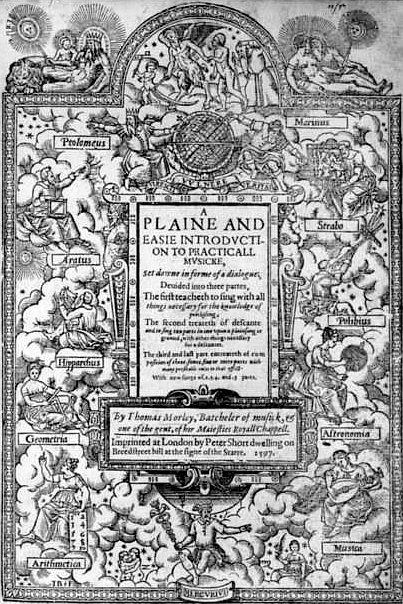
As a theorist and editor Morley made lasting contributions. His instructional book, A Plaine and Easie Introduction to Practicall Musicke (1597), explained fundamentals of notation, counterpoint, and composition for amateurs and professional musicians alike. He also compiled and edited important collections of English madrigals, most famously the anthology often known as "The Triumphs of Oriana," which celebrated courtly patronage and circulated music across England.
Notable works
- Now is the month of Maying (ballett)
- Lightly she whipped o'er the dales (madrigal)
- A Plaine and Easie Introduction to Practicall Musicke (treatise)
- The Triumphs of Oriana (editorial role)
Legacy
Morley was a central figure in the brief but intense English madrigal vogue at the turn of the 17th century, a movement that made polyphonic secular music popular among amateurs and professionals. His clear, pedagogical writing helped transmit musical technique to later generations, and his songs remain among the best-known examples of English Renaissance secular music. For further reading consult specialist histories and anthologies of Elizabethan music (madrigals) and studies of Italian influence on English composition (Italian practices).
References and online resources: Norwich biographical notes, dates and chronology, alternative birth year, London records, death notice, national musical context, composer listings, organist roles, madrigal collections, Italian sources.
Questions and answers
Q: Who was Thomas Morley?
A: Thomas Morley was an English composer, music theorist, and organist who was born in Norwich in the late 16th century.
Q: What was Thomas Morley's contribution to music?
A: Morley was the most important English composer of madrigals, and he created the tradition of the English madrigal, which became extremely popular in the late 16th century.
Q: How did Thomas Morley learn about madrigals?
A: Morley studied the madrigals created by Italian composers and adapted their style to create the English madrigal.
Q: When did the tradition of English madrigals become popular?
A: The tradition of English madrigals became extremely popular in the late 16th century.
Q: How long did the tradition of English madrigals last?
A: The tradition of English madrigals only lasted about 30 years.
Q: When did Thomas Morley die?
A: Thomas Morley died in London in October 1602.
Q: What role did Thomas Morley play in music theory?
A: In addition to being a composer, Morley was also an important music theorist who wrote several treatises on music, including "A Plaine and Easie Introduction to Practicall Musicke" and "A Treatise of Canzonets".
Author
AlegsaOnline.com Thomas Morley: English Madrigalist, Theorist, and Composer Leandro Alegsa
URL: https://en.alegsaonline.com/art/131851