
Steven Chu — Physicist, Nobel Laureate and U.S. Energy Secretary
Steven Chu (born 1948) is an American physicist and Nobel laureate known for laser cooling and optical trapping, former U.S. Secretary of Energy who advocated research-driven low-carbon energy policy.
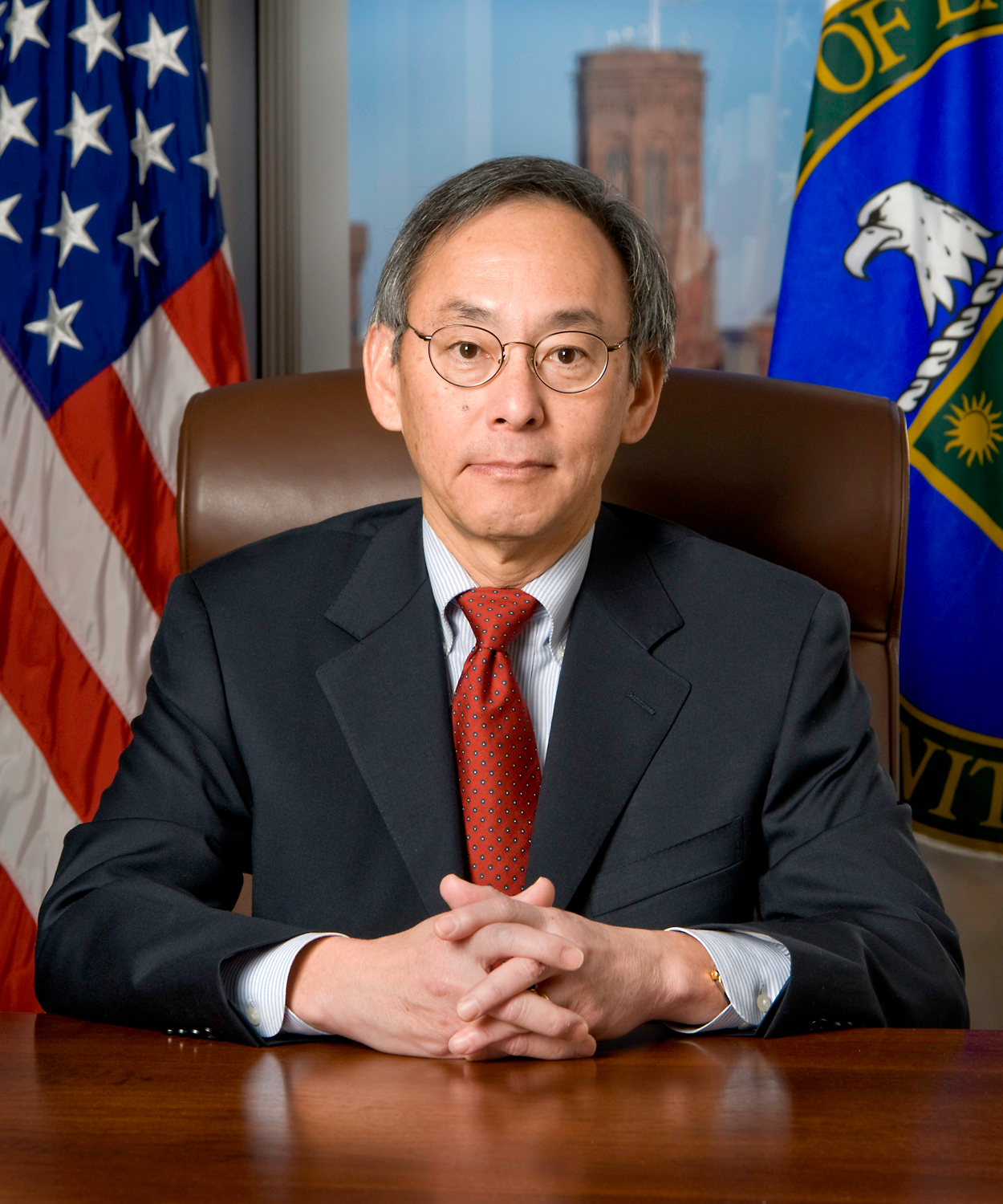
Steven Chu (born February 28, 1948) is an American physicist best known for pioneering experimental work that cooled and trapped atoms with laser light. His research, conducted while affiliated with institutions including Bell Labs, produced techniques now central to atomic physics and precision measurement. For this work he shared the 1997 Nobel Prize in Physics with Claude Cohen-Tannoudji and William D. Phillips. Later in his career Chu moved from the laboratory into academic leadership and public service, serving as the 12th United States Secretary of Energy from 2009 to 2013.
Image gallery
10 Images



Scientific contributions
Chu's laboratory helped develop and refine methods for reducing the motion of atoms using tuned laser light and magnetic fields. Approaches broadly associated with this body of work include techniques such as optical molasses and magneto-optical traps that make it possible to cool ensembles of atoms to temperatures near absolute zero. These capabilities enabled advances in atomic clocks, high-resolution spectroscopy, studies of quantum gases and Bose–Einstein condensation, and precise tests of fundamental physical theories. The control of atomic motion and internal states achieved by Chu and colleagues opened new experimental regimes in quantum optics and atomic physics.
Academic and institutional roles
Chu has held faculty appointments at major research universities, including positions at Stanford University and the University of California, Berkeley, where his interests extended into interdisciplinary collaborations with molecular and cellular biology. He served as director of the Lawrence Berkeley National Laboratory, a role in which he promoted connections between basic research, large-scale facilities and applied technology development.
Public service and energy policy
As Secretary of Energy, Chu emphasized research and development in energy efficiency, advanced materials, and low-carbon energy systems. He advocated expanded federal support for clean-energy innovation, including backing for prize and grant programs and for organizations that fund high-risk, high-reward projects. Chu argued that a portfolio approach should include expanded investment in renewable technologies as well as consideration of nuclear power where appropriate, to reduce reliance on fossil fuels and to limit the impacts of climate change. He also discussed conceptual ideas such as a "glucose economy," in which plant-derived sugars could serve as energy carriers in a future low-carbon trade system, with commodities like glucose transported in role analogous to oil in current markets.
Recognition, perspective and legacy
- Recipient of the Nobel Prize in Physics (1997) for development of methods to cool and trap atoms.
- Served in university leadership and in federal government, promoting science-based policy and investment in energy research.
- Noted as a Chinese American scientist who reached prominent leadership positions and who emphasized rigorous, data-driven responses to technological and environmental challenges.
Chu's career spans experimental physics, academic mentorship and public policy. His scientific work remains foundational in modern atomic physics and quantum manipulation, while his tenure in government sought to translate scientific insight into policy and funding priorities for energy innovation and climate mitigation. After leaving federal office he continued to engage with scientific research, education and public discussions about energy transitions and the role of science in society.
Questions and answers
Q: Who is Steven Chu?
A: Steven Chu is an American physicist who served as the 12th United States Secretary of Energy from 2009 to 2013. He is also a Nobel Prize winner in Physics.
Q: What did Steven Chu win the Nobel Prize in Physics for?
A: Steven Chu won the Nobel Prize in Physics in 1997 for his research at Bell Labs in cooling and trapping of atoms with laser light, along with his scientific colleagues Claude Cohen-Tannoudji and William Daniel Phillips.
Q: What is Steven Chu's educational background?
A: Steven Chu received his undergraduate degree in mathematics and physics from the University of Rochester and his PhD in physics from the University of California, Berkeley.
Q: What positions did Steven Chu hold before becoming the United States Secretary of Energy?
A: Before becoming the United States Secretary of Energy, Steven Chu was a professor of physics and molecular and cellular biology at the University of California, Berkeley, and the director of the Lawrence Berkeley National Laboratory. He was also a professor of physics at Stanford University.
Q: What is Steven Chu's stance on alternative energy and nuclear power?
A: Steven Chu advocates for more research into alternative energy and nuclear power. He believes the world should shift away from fossil fuels to help with climate change.
Q: What is the "glucose economy" that Steven Chu discusses?
A: The "glucose economy" is a form of a low-carbon economy in which glucose from tropical plants is shipped around like oil is today.
Q: What is Steven Chu's heritage?
A: Steven Chu is the second Chinese American to hold a post in the United States Cabinet.
Author
AlegsaOnline.com Steven Chu — Physicist, Nobel Laureate and U.S. Energy Secretary Leandro Alegsa
URL: https://en.alegsaonline.com/art/131267