
Stephen Jay Gould: Paleontologist, Evolutionary Biologist and Popular Science Writer
Overview of Stephen Jay Gould (1941–2002), his scientific contributions—especially punctuated equilibrium—career, major works, public influence, debates, and lasting legacy in evolution and science writing.
Overview
Stephen Jay Gould (1941–2002) was a prominent American paleontologist and evolutionary biologist who combined rigorous research with a talent for clear public explanation. He trained and published as a taxonomist and wrote extensively as a historian of science. Gould became widely known beyond academic circles for his essays and books that brought evolutionary ideas to general readers and for arguing about the methods and limits of evolutionary explanation in both science and society. He also defended scientific approaches against literalist alternatives such as creationism.
Image gallery
8 Images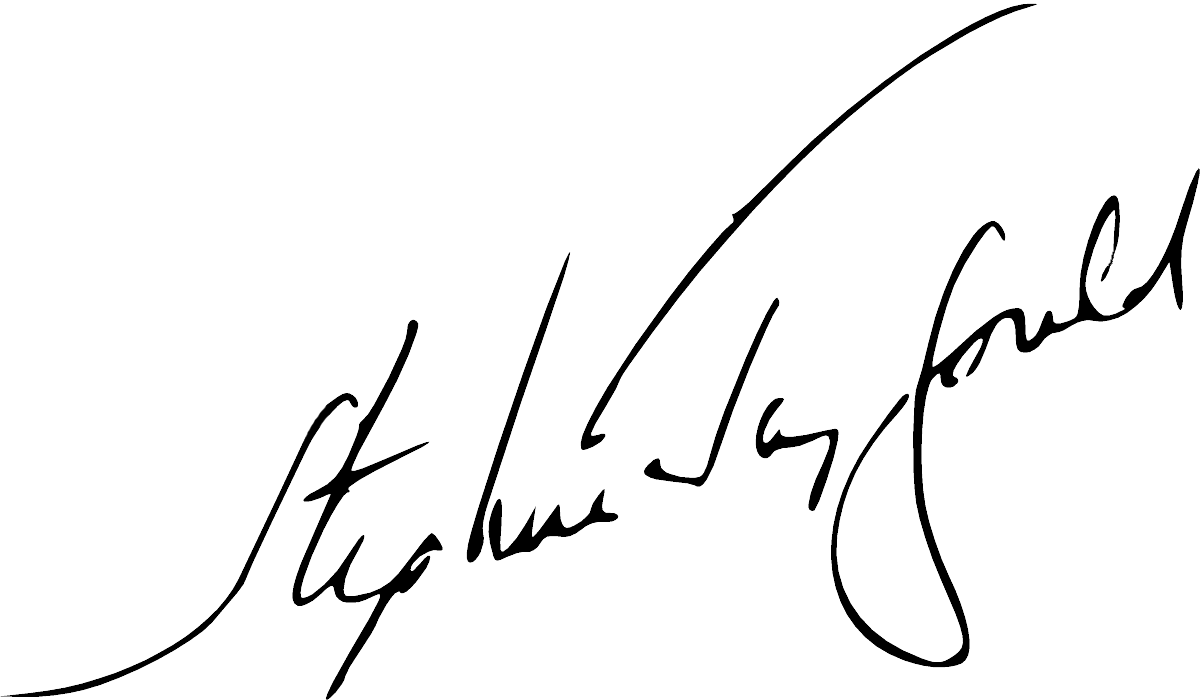


Major contributions and scientific ideas
Gould is best known for formulating, with Niles Eldredge, the idea of punctuated equilibrium. This model proposes that the history of life in the fossil record is often characterized by long spans of relative morphological stability interrupted by relatively rapid episodes of branching change. The proposal was important not principally as a rejection of Darwinian evolution but as an emphasis on the tempo and pattern seen in paleontological data. Gould also contributed to evolutionary developmental biology concepts and to the interpretation of macroevolutionary trends.
Research subjects and empirical work
Much of Gould's empirical research focused on land snails, notably the genera Poecilozonites and Cerion, which he used to study variation, speciation, and morphological change through time. He also studied the fossil record, morphological constraints, and contingency in evolution, arguing that chance and historical circumstances play major roles alongside natural selection. Gould championed careful historical and conceptual analysis of scientific concepts, often highlighting methodological pluralism rather than strict adaptationist explanations.
Career, teaching and public engagement
Gould spent much of his career at institutions where he combined research with outreach. He was a long-time educator associated with Harvard University and a curator and research associate at the American Museum of Natural History. In later years he also taught in New York at New York University. Outside of specialized journals, he became one of the most widely read authors of popular science, writing regular essay columns that were collected into books and read by broad audiences.
Writings, debates and public influence
Gould authored influential books such as Ontogeny and Phylogeny, The Mismeasure of Man, and The Structure of Evolutionary Theory. His essays in Natural History magazine and other venues explored subjects ranging from the history of ideas to contemporary scientific debates. He critiqued what he saw as overreliance on strict selectionist accounts and entered high-profile debates with advocates of sociobiology and evolutionary psychology, arguing for caution when explaining complex human behavior by simple genetic mechanisms. He also proposed the concept of "non-overlapping magisteria" to describe separate domains for science and religion, a position that shaped public conversations about science and belief.
Legacy and notable facts
- Gould combined technical scholarship with accessible prose, helping to popularize evolutionary science for generations of readers.
- His ideas about the pace of evolutionary change influenced paleontology and prompted broader discussion of macroevolutionary patterns.
- Some of his work, notably The Mismeasure of Man, sparked controversy and debate about scientific methods and the history of measurement in human intelligence research.
- Collections of his essays remain widely read, and his challenges to narrow adaptationism and biological determinism continue to inform discussions in evolutionary biology, history, and philosophy of science.
Gould's career illustrates how a scientist can shape both specialized research and public understanding. His blend of empirical study, historical perspective, and forceful but nuanced commentary left a complex legacy: substantial scientific contributions together with vigorous engagement in cultural and philosophical debates about the role of science in society.
Further reading and resources: basic introductions to his work and collections of his essays can guide readers to primary sources and critical discussions of his theories and their reception.
paleontologist | evolutionary biologist | taxonomist | historian of science | popular science | Harvard University | American Museum of Natural History | New York University | punctuated equilibrium | Poecilozonites and Cerion | evolutionary developmental biology | sociobiology | evolutionary psychology | creationism
Questions and answers
Q: Who was Stephen Jay Gould?
A: Stephen Jay Gould was an American paleontologist, evolutionary biologist, taxonomist, and historian of science. He was also one of the most influential and widely read writers of popular science of his generation.
Q: Where did he work?
A: Gould spent most of his career teaching at Harvard University and working at the American Museum of Natural History in New York. In the latter years of his life, he also taught biology and evolution at New York University near his home in SoHo.
Q: What is punctuated equilibrium?
A: Punctuated equilibrium is a theory developed by Stephen Jay Gould and Niles Eldredge in 1972 which proposes that most evolution is marked by long periods of evolutionary stability, which are punctuated by rare instances of branching evolution. It contrasts with the idea that evolutionary change is marked by a pattern of smooth and continuous change in the fossil record.
Q: What species did Gould use for empirical research?
A: Most of Gould's empirical research was based on the snail genera Poecilozonites and Cerion.
Q: What book did he write?
A: He wrote a book called Ontogeny and Phylogeny which received wide praise.
Q: What theories did he oppose?
A: He opposed strict selectionism, sociobiology as applied to humans, and evolutionary psychology.
Q: How did he campaign against creationism?
A: He campaigned against creationism through writing essays which were collected into volumes for publication.
Author
AlegsaOnline.com Stephen Jay Gould: Paleontologist, Evolutionary Biologist and Popular Science Writer Leandro Alegsa
URL: https://en.alegsaonline.com/art/131231