
Stephen Harper — 22nd Prime Minister of Canada and Conservative Leader
Stephen Harper (born 1959) is a Canadian economist, entrepreneur and retired politician who served as the 22nd prime minister (2006–2015) and leader of the Conservative Party of Canada.
Stephen Joseph Harper (born April 30, 1959) is a Canadian economist, entrepreneur and retired politician who served as the 22nd Prime Minister of Canada from 2006 to 2015. He led the Conservative movement at the federal level after the merger of two centre-right parties and presided over a government focused on fiscal restraint, national security and Arctic sovereignty. For brief public records and overview material see biographical summary and career overview.
Image gallery
10 Images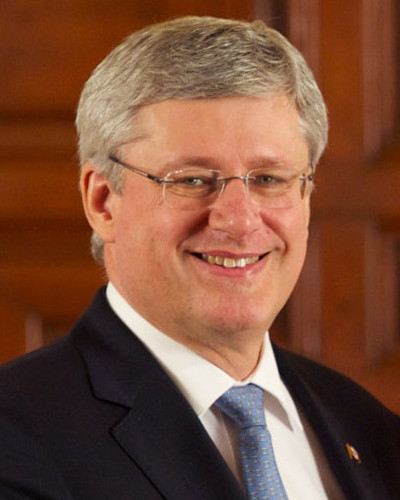


Early life, education and private career
Harper was born in Toronto, Ontario, and spent parts of his childhood and youth in several Ontario communities before establishing his long-term residence in Calgary, Alberta. He studied economics and worked in policy research and the private sector, combining academic training with experience in small-business and technology ventures. Contemporary profiles often describe him as an economist by training and as having an entrepreneurial and policy-oriented background; for concise accounts consult economic profile and entrepreneurial background. Regional biographical notes link his origins to Toronto and his later life to Calgary and other national centres (Ontario). He is married to Laureen Teskey and they have two children.
Political rise
Harper entered federal politics in the 1990s and became a prominent figure in the Conservative movement after the unification of right-of-centre parties. He served as leader of the Canadian Alliance and, following the merger that created the modern Conservative Party, became leader of the reunited party. Harper led the Conservative caucus to government in 2006, succeeding the Liberal administration of Paul Martin; contemporary records and timelines summarize this transition and his record in office at sources such as prime ministerial record and the Paul Martin profile. He represented a Calgary-area riding in the House of Commons and was re-elected multiple times; electoral and riding details are available via riding records.
Prime ministership (2006–2015)
During his nearly decade-long tenure as prime minister, Harper’s government emphasized lower taxes, control of public spending, and measures intended to strengthen national security and military capacity. His administration pursued reductions in the federal goods and services tax and introduced budgets that aimed to reduce deficits and reorganize some federal programs. The government also prioritized support for veterans, initiatives related to Arctic sovereignty and northern presence, and aspects of criminal-justice policy. For summaries of government priorities and major program decisions see policy summary and descriptions of his party platform at Conservative Party.
The Harper government engaged actively in international affairs and in hosting international meetings: Canada under his leadership hosted the Vancouver 2010 Olympic and Paralympic Winter Games and the accompanying international summits in 2010, including G8 and G20 meetings. These events were important moments for national visibility and logistical coordination; further contextual information appears at entries on Vancouver 2010 and G8/G20 summits.
- Domestic fiscal policy focused on deficit reduction and tax measures while aiming to maintain key public services.
- National-security and foreign-policy initiatives included increased attention to military readiness and Arctic claims.
- Major international events during his term contributed to Canada’s diplomatic and cultural profile.
Controversies and public debate
Like many long-serving leaders, Harper’s tenure prompted public debate and controversy on topics such as transparency in government decision-making, changes to federal institutions and approaches to environmental policy. Some critics highlighted measures they viewed as reductions in funding for certain public programs or changes to research and statistical activities, while supporters emphasized economic management and national-security priorities. Contemporary analyses and commentary present a range of perspectives; readers are encouraged to consult multiple sources for balanced coverage, including party and opposition materials at Conservative Party and Liberal Party pages.
2015 election, resignation and later life
In the 2015 federal election the Conservative Party was defeated by the Liberal Party led by Justin Trudeau; Trudeau succeeded Harper as prime minister. Harper retained his own seat in the Calgary-area riding and subsequently announced his intention to resign as party leader, arranging for an interim leader and a later leadership contest. Accounts of the election results and the party transition are available in official archives and post-election analyses at Justin Trudeau and Liberal Party references. Information about Harper’s resignation process and internal party arrangements can also be found in material indexed as policy summary and leadership transition notes.
After leaving federal office Harper moved away from day-to-day politics but remained a public figure who has contributed commentary, participated in academic and private-sector activities, and engaged in international speaking and advisory roles. Biographical and regional profiles continue to provide updates on his activities and public statements; see regional snapshots at regional profile, local connections at Ontario connection, and residential notes at Calgary.
Personal notes and legacy
Harper’s family life has been noted in public profiles: he and Laureen Teskey raised their children while maintaining residences in Ottawa and Alberta, and their children attended schools in the national capital region, a detail that has appeared alongside similar notes about other former prime ministers such as Pierre Trudeau and John Turner, and institutions such as Rockcliffe Park Public School. Scholars and commentators assess his legacy in diverse ways, frequently citing his fiscal approach, emphasis on national security and Arctic policy, and the institutional changes enacted during his government as key elements for consideration.
Further reading: For basic public records, official timelines and contemporary commentary consult the various linked profiles and archival material indicated throughout this article, including general career summaries at career overview and biographical summary.
Questions and answers
Q: What is Stephen Harper's profession?
A: Stephen Harper is a Canadian economist, entrepreneur, and retired politician.
Q: When was Stephen Harper the Prime Minister of Canada?
A: Stephen Harper was the 22nd Prime Minister of Canada from 2006 to 2015.
Q: Where was Stephen Harper born?
A: Stephen Harper was born in 1959 in Toronto, Ontario.
Q: Who is Stephen Harper married to?
A: Stephen Harper is married to Laureen Teskey.
Q: How many children does he have?
A: He has two children.
Q: What school did his children attend while he was Prime Minister?
A: His children attended Rockcliffe Park Public School in Ottawa while he was Prime Minister.
Q: What events did Canada host during his time as Prime Minister?
A: During his time as Prime Minister, Canada hosted both the Vancouver 2010 Olympics and Paralympic Winter Games, as well as G8 and G20 meetings.
Author
AlegsaOnline.com Stephen Harper — 22nd Prime Minister of Canada and Conservative Leader Leandro Alegsa
URL: https://en.alegsaonline.com/art/131225