
Spencer Perceval: British Prime Minister (1762–1812) and only UK PM to be assassinated
A concise, balanced profile of Spencer Perceval: his background, rise to the premiership, policies and controversies, assassination in 1812, and his political legacy.
Overview
Spencer Perceval (1 November 1762 – 11 May 1812) was a British statesman who served as Prime Minister. He remains the only British head of government to have been assassinated. Perceval led a government during the later stages of the Napoleonic era and a period of acute domestic and international strain, and his tenure is remembered for a mixture of fiscal conservatism, legal competence and political controversy.
Image gallery
10 Images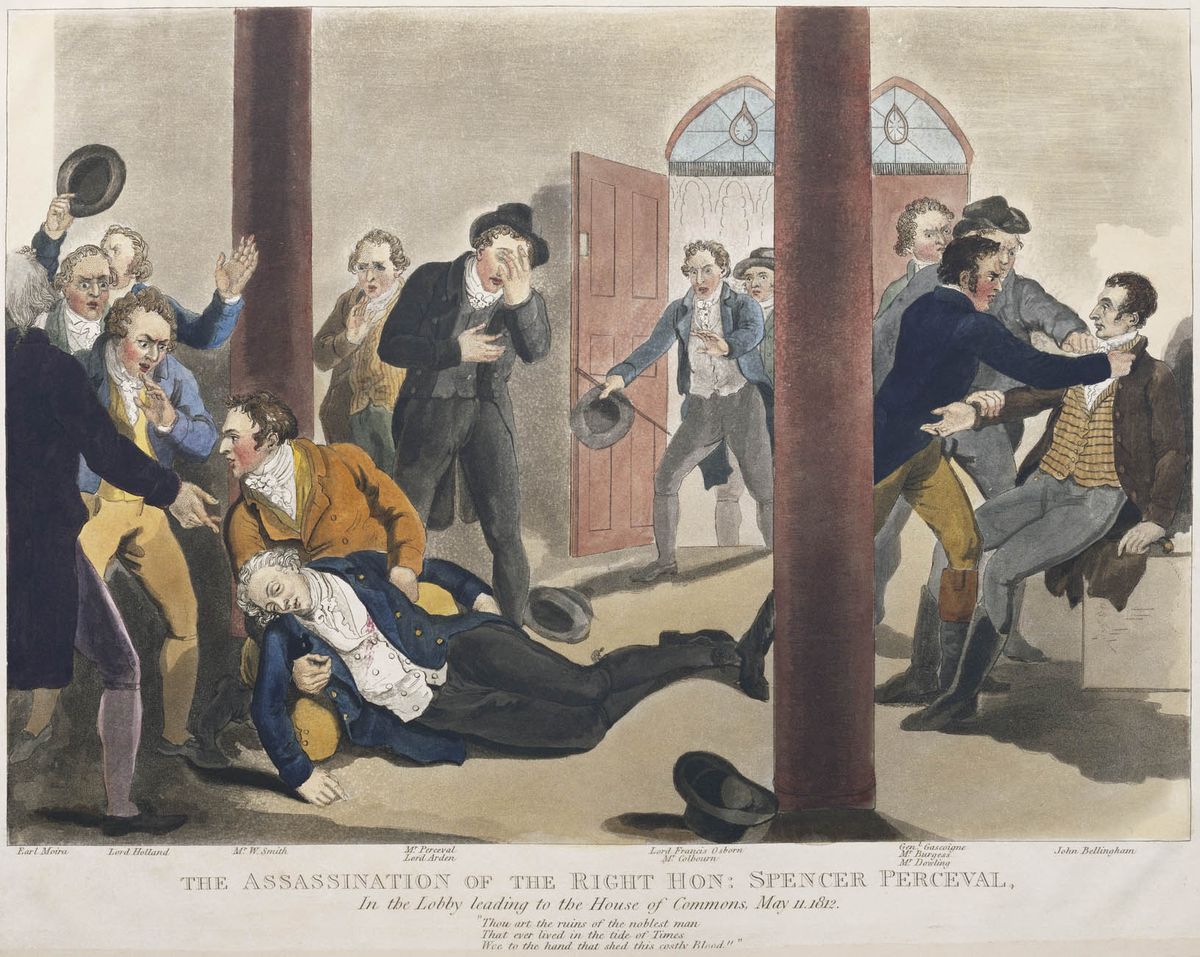




Early life and career
Perceval belonged to an aristocratic family: he was a younger son of John Perceval, 2nd Earl of Egmont, a figure who had influence at court and in naval affairs and who moved in the circles of Frederick, Prince of Wales and King George III. His father had served in the Cabinet as First Lord of the Admiralty, which helped shape Perceval's early exposure to public life. He trained in law and made his reputation as a capable barrister and parliamentarian before moving into ministerial office.
Premiership and policies
Perceval became prime minister in 1809 at a time when Britain faced war with Napoleonic France, commercial disruption and growing social tensions. His government supported measures intended to protect British trade and industry, including restrictive Orders in Council that regulated neutral shipping and trade. These measures proved contentious and contributed to commercial friction with other nations.
His administration overlapped with major political developments at home. During Perceval's period in office the bill to end the British transatlantic slave trade advanced under the moral and political campaigning of figures such as William Wilberforce. Domestically, the rise of machine-breaking and unrest—the actions associated with the Luddite movement—heightened debates about industrial change, social policy and public order.
Key moments
- Assumption of the premiership during the Napoleonic conflicts.
- Support for trade regulations that affected neutral commerce and contributed to tensions leading toward the War of 1812 with the United States.
- Oversight of a government that presided while measures to abolish the slave trade were enacted.
Assassination and aftermath
On 11 May 1812 Spencer Perceval was shot and killed in the lobby of the House of Commons by John Bellingham. The killing occurred as Perceval was on his way to answer questions in Parliament. The attacker surrendered, was tried, convicted of murder and executed shortly afterwards. Perceval's body lay at 10 Downing Street prior to burial. Bellingham's motive was personal: he sought compensation over a period of detention in Russia and blamed the British government for failing to obtain redress for him.
Political views and legacy
Perceval was a devout Anglican who believed the established church was a pillar of public order and state security. He opposed measures toward Catholic emancipation and maintained a conservative stance on constitutional and religious matters. He is buried at St Luke's Church in Charlton, southeast London.
Historians judge Perceval as a capable administrator whose time in office was dominated by wider historical forces—war, industrial change and imperial commerce—that limited what any single government could achieve. His assassination remains a singular and shocking event in British political history and has shaped how his premiership is remembered: a brief, contested administration ended by violence, leaving debates about policy and responsibility to subsequent governments.
Questions and answers
Q: Who was Spencer Perceval?
A: Spencer Perceval was a British statesman and Prime Minister. He is the only British Prime Minister to have been assassinated.
Q: What did he do while in office?
A: While in office, Perceval wrote Orders in Council against trade which became unpopular, and he passed William Wilberforce's Bill ending the slave trade.
Q: How did he die?
A: Perceval was assassinated by John Bellingham on 11 May 1812 while on his way to attend an inquiry at the House of Commons.
Q: What was Bellingham's motive for killing him?
A: Bellingham had a grievance with the United Kingdom government over his imprisonment in Russia, which he blamed them for not getting him compensation for from his employer.
Q: What religion was Perceval?
A: Perceval was an Anglican and considered Anglicanism to be essential to the security of the state. He opposed Catholic emancipation.
Q: When were Luddite riots started?
A: The Luddite riots started in winter of 1811 during Perceval's time as Prime Minister. They were also a cause of the War of 1812 with the United States of America.
Q: Where is Spencer Perceval buried?
A; Spencer Perceval is buried at St Luke's Church in Charlton, south-east London
Author
AlegsaOnline.com Spencer Perceval: British Prime Minister (1762–1812) and only UK PM to be assassinated Leandro Alegsa
URL: https://en.alegsaonline.com/art/131091