
Shinya Yamanaka — discoverer of induced pluripotent stem cells
Japanese physician-scientist Shinya Yamanaka (b. 1962) developed induced pluripotent stem (iPS) cells, showing that adult cells can be reprogrammed to a pluripotent state and transforming regenerative medicine.
Overview
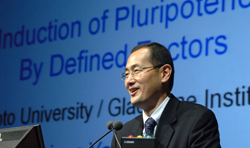
Shinya Yamanaka (born 4 September 1962 in Osaka) is a Japanese physician-scientist best known for creating induced pluripotent stem (iPS) cells. Trained as a clinician and laboratory researcher, he demonstrated that mature somatic cells can be returned to an embryonic-like, pluripotent state. This approach provided an alternative to the use of human embryonic stem cells and opened practical routes for disease modeling, drug discovery and experimental cell therapies.
Image gallery
5 Images


Early life and education
Yamanaka studied medicine and completed clinical training before focusing on basic science. His background as a physician influenced a translational emphasis in his research, seeking methods that could ultimately be applied to patient care. He combined clinical insight with molecular biology techniques to address key questions in development and cellular identity.
Discovery of iPS cells
In the mid-2000s Yamanaka's laboratory identified a small set of transcription factors that could reprogram differentiated cells to a pluripotent state. The original combination, now widely referred to as the "Yamanaka factors," comprises Oct3/4, Sox2, Klf4 and c-Myc. Initial reports showed reprogramming of mouse cells and were soon followed by demonstrations that human cells could also be induced to a pluripotent state. These reprogrammed cells, called induced pluripotent stem (iPS) cells, share many functional properties with embryonic stem cells, including prolonged self-renewal and the ability to differentiate into diverse cell types.
Technical developments and safety
Early methods used integrating viral vectors and, in some cases, oncogenic factors such as c-Myc, which raised concerns about tumorigenic risk. Subsequent work in the field focused on improving safety and efficiency by developing non-integrating delivery systems, excisable vectors, modified RNAs, proteins, small molecules and alternative factor combinations. Ongoing research addresses genetic and epigenetic stability, reproducibility across cell lines, immunogenicity and scaling for clinical-grade production.
Career, institutions and leadership
Yamanaka has held leadership and research roles at institutions in Japan and abroad. He directs the Center for iPS Cell Research and Application (CiRA) and is a professor at the Institute for Frontier Medical Sciences at Kyoto University, where much of the foundational work was developed. He has been affiliated with international centers as a senior investigator and has served in leadership roles within professional societies for stem cell research, reflecting his influence on both science and policy. He has also held an academic appointment at the University of California, San Francisco and collaborations with research groups at global institutions (research institutions).
Applications and impact
The iPS cell technique created new pathways for laboratory and clinical research. Common uses include:
- In vitro disease models derived from patient cells to study disease mechanisms and test candidate drugs.
- Screening platforms for drug discovery and toxicity testing that use human cell types relevant to particular disorders.
- Experimental cell-replacement approaches and early-stage clinical trials investigating iPS-derived tissues for conditions such as retinal degeneration and neurodegenerative diseases.
These applications aim to reduce immune rejection by using patient-derived cells and to provide human-specific models that complement animal studies. The field continues to address translational hurdles before broad clinical application.
Awards, recognition and broader significance
Yamanaka's work earned multiple major honors. He shared the Nobel Prize in Physiology or Medicine in 2012 with John Gurdon for discoveries showing that mature cells can be reprogrammed (Nobel material). Other international awards acknowledged the scientific and technological importance of reprogramming. His research built on and inspired parallel advances in stem cell biology and regenerative medicine, and stimulated discussion about ethical and regulatory frameworks for translating cell-based technologies. He has researched adult and pluripotent stem cells (adult stem cells) and remains a central figure in efforts to move iPS science toward safe, effective medical uses.
Continuing research and challenges
Current priorities in the field include increasing reprogramming efficiency, minimizing genetic and epigenetic abnormalities, developing robust differentiation protocols for specific cell types, ensuring long-term safety, and establishing clear regulatory pathways for clinical trials. Yamanaka's findings reshaped developmental biology by showing that cell identity is reversible, and they continue to influence basic research and translational strategies worldwide.
Questions and answers
Q: Who is Shinya Yamanaka?
A: Shinya Yamanaka is a Japanese physician who researches adult stem cells.
Q: What award did he receive in 2012?
A: He received the Nobel Prize in Physiology or Medicine in 2012.
Q: Who did Yamanaka share the Wolf Prize in Medicine with?
A: He shared the Wolf Prize in Medicine in 2011 with Rudolf Jaenisch.
Q: In what organization is Yamanaka the current president?
A: Yamanaka is the current president of the International Society for Stem Cell Research (ISSCR).
Q: Where is Yamanaka a professor?
A: Yamanaka is a professor at Kyoto University, the University of California, San Francisco (UCSF), and the Institute for Frontier Medical Sciences.
Q: What is Center for iPS Cell Research and Application?
A: Center for iPS Cell Research and Application is a research institute focused on stem cell research, specifically induced pluripotent stem cells (iPSCs).
Q: Who did Yamanaka win the Millennium Technology Prize with?
A: Yamanaka won the Millennium Technology Prize in 2012 together with Linus Torvalds.
Author
AlegsaOnline.com Shinya Yamanaka — discoverer of induced pluripotent stem cells Leandro Alegsa
URL: https://en.alegsaonline.com/art/130859