
Border states (American Civil War)
Union states that permitted slavery but did not secede in the American Civil War: Delaware, Maryland, Kentucky, Missouri, and later West Virginia; strategically and socially distinct, they saw divided loyalties and local violence.
Overview
The term "border states" refers to a group of U.S. states that during the American Civil War remained in the Union while still permitting slavery. These states occupied a middle ground between the Confederacy and the North: they were culturally and socially connected to the South in many ways, yet they maintained strong economic ties with the North. The most commonly listed border states are:
After separation from Virginia, the new state of West Virginia was also considered a border state. Although these states did not join the Confederacy, slavery remained legal in most of them during the war.
Image gallery
5 Images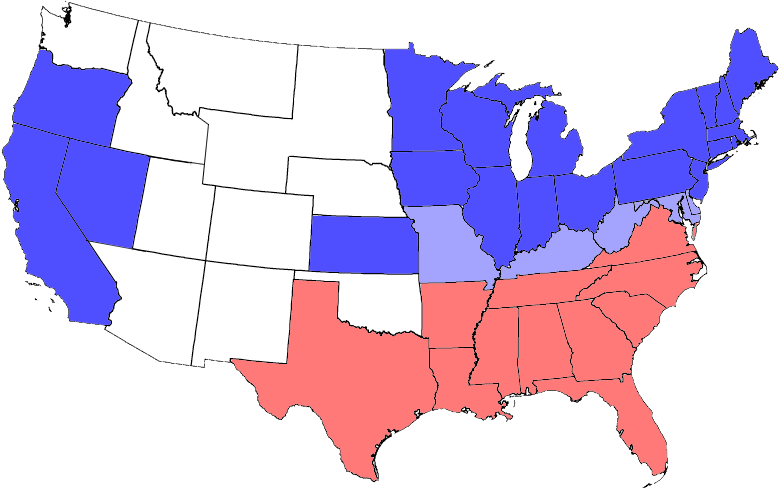


Characteristics and strategic importance
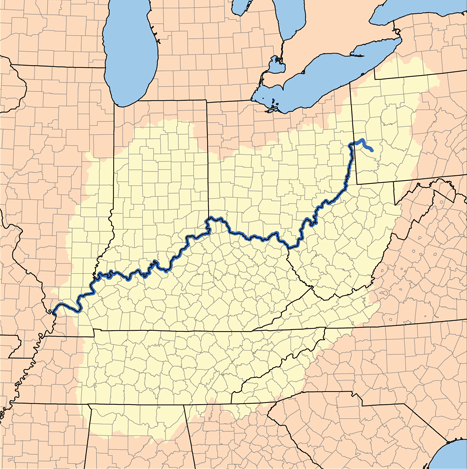
Border states occupied critical geographic positions: they controlled rivers, railways, and borderlands that were important for military movement and supply. Their public opinion and political actions affected federal strategy, including decisions about troop deployments, the enforcement of martial law in certain localities, and political efforts to keep them loyal to the Union. For example, the loyalty or neutrality of some border states helped secure the national capital and key lines of communication.
Politics, society, and divided loyalties
Within the border states, political and social loyalties were often deeply split. Many residents held Unionist sympathies while supporting slavery; others favored secession. These divisions produced competing governments, contested elections, and recruitment of soldiers for both sides. Federal authorities sometimes suspended civil liberties or imposed military rule to preserve Union control in sensitive areas.
Violence, guerrilla warfare, and local conflict
The border states experienced intense local violence. Irregular warfare, raids, and reprisals were common, especially in rural border regions where conventional armies were less present. Neighbor fought against neighbor in many communities, and lawlessness could flourish amid the chaos. The trauma and bitter feelings generated by this conflict often lasted long after major hostilities ended.
Aftermath and legacy
Because the border states did not secede, their postwar experience differed from that of the Confederate states. Slavery in these states was ultimately ended through national measures and subsequent state action, and their legal and political reintegration did not follow the same Reconstruction path imposed on former Confederate governments. Nonetheless, the social divisions, economic disruptions, and memory of wartime violence shaped their politics and communities for decades.
Notable distinctions
- Some border states hosted both Union and Confederate governments or claimants, reflecting internal splits and contestation of authority.
- Economic links to northern industry and southern agriculture created mixed loyalties that complicated recruitment and civilian support for either side.
- The term "border state" is descriptive rather than precisely legal; historians sometimes expand or narrow the list depending on context and the criteria used.
For further reading on the political maneuvers, military operations, and civilian experience in these states, consult specialized histories and primary sources that address each state's local circumstances and the broader national context. Helpful starting points include regional studies and collections of wartime documents linked to broader accounts of the American Civil War.
Related topics and resources: Maryland, Kentucky, Missouri, Delaware, West Virginia, and the neighboring state of Virginia provide case studies of how local conditions shaped wartime loyalty and postwar memory. Additional context on national politics and sectional divisions is available through broader surveys of the North and the South.
Primary-source collections and archives often include letters, newspapers, and government records that illuminate the competing loyalties and everyday experiences of civilians in border states during the conflict. For specific military, legal, and social developments consult state-focused works and edited document volumes that draw on local archives and contemporary accounts.
Questions and answers
Q: Which states were considered Border States during the American Civil War?
A: Delaware, Maryland, Kentucky, Missouri, and West Virginia.
Q: Did the Border States secede from the Union during the American Civil War?
A: No, they did not leave the Union.
Q: What were the economic ties of the Border States during the American Civil War?
A: The Border States had economic ties to the North.
Q: Were the Border States slave-holding states during the American Civil War?
A: Yes, they were slave-holding states.
Q: Did the Border States have divided loyalties during the American Civil War?
A: Yes, the war caused divided loyalties in these states.
Q: Was there guerilla warfare in the Border States during the American Civil War?
A: Yes, the Border States were the scene of often brutal guerilla warfare between neighbors.
Q: Did bitter feelings last long after the Civil war in the Border States?
A: Yes, bitter feelings lasted long after the Civil War in the Border States.
Related articles
Author
AlegsaOnline.com Border states (American Civil War) Leandro Alegsa
URL: https://en.alegsaonline.com/art/13075
Sources
- ducksters.com : "American Civil War Border States - Brothers at War"
- quod.lib.umich.edu : quod.lib.umich.edu/j/jala/2629860.0013.104/--abraham-lincoln-and-the-border-states?rgn=ma…
- history.com : "Secession"
- u-s-history.com : "Border States"
- nps.gov : "The Border States"
- nps.gov : "The Ordeal of the Border States"
- slavenorth.com : "Slavery in Delaware"
- gilderlehrman.org : "The Economics of Slavery"
- civilwar.org : "Slavery in the United States - A Brief History"
- civilwar.org : "Toward Statehood, West Virginia on the Eve of War"
- history.com : "1861, Lincoln inaugurated"
- articles.baltimoresun.com : "Fort McHenry, Lincoln Suspension of Habeas Corpus"
- quod.lib.umich.edu : "Collected Works of Abraham Lincoln. Volume 4"
- history.ky.gov : "Kentucky's Neutrality during the Civil War"
- civilwar.org : "Leonidas Polk, Lieutenant General (CSA)"