
Border Ruffians: Pro-slavery Activists in the Kansas–Missouri Conflict
Armed pro‑slavery men from Missouri who entered Kansas Territory (1854–1860) to influence slavery’s fate. Their intimidation, election fraud and raids escalated the 'Bleeding Kansas' crisis and deepened national division.
Overview
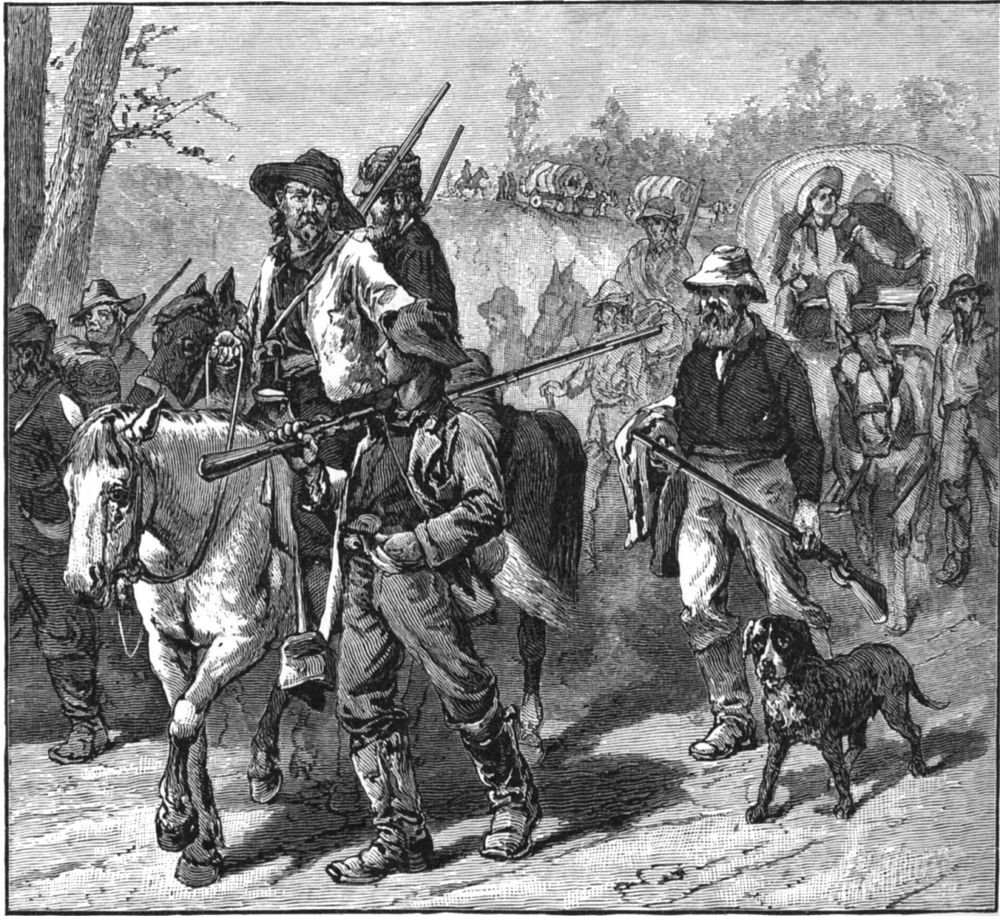
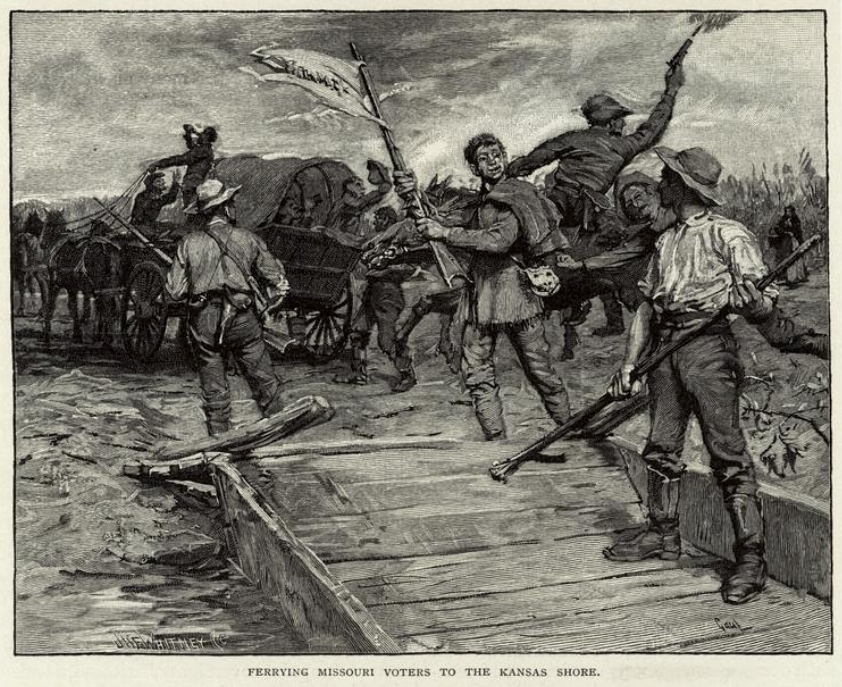
"Border Ruffians" was the name given by opponents to groups of pro‑slavery men who crossed from Missouri into the Kansas Territory between about 1854 and 1860. The term was used largely by Free‑Staters in Kansas and by Northern abolitionists. Mobilized in reaction to the opening of Kansas to settlement and the idea of deciding slavery by popular vote, these men sought to ensure Kansas would enter the Union as a slave state. Their interventions in political life and their raids on settlements made them a central element of what contemporaries called "Bleeding Kansas".
Image gallery
7 Images




Methods and activities
Border Ruffians combined political and violent tactics. In many cases they crossed the border to vote in territorial elections, sometimes in large numbers and often using intimidation or false identities. Armed groups also attacked Free‑State towns and individuals, burning buildings and disrupting meetings. This pattern of organized interference and violence included high‑profile incidents in 1856 such as the sacking of Lawrence and clashes that provoked retaliatory acts by abolitionist partisans.
Context and development
The conflict reflected deeper political choices about slavery, federal policy, and local control after the Kansas‑Nebraska legislation opened new territory to settlement. Many Missourians viewed a slave‑holding Kansas as essential to state interests and security; opponents feared the expansion of slavery and resisted by voting, organizing, and, in some cases, arming themselves. Border Ruffians were therefore both a symptom and a cause of escalating sectional hostility that spilled beyond local borders.
Impact and legacy
- They helped shape the immediate outcome of contests over whether Kansas would permit slavery by influencing territorial governance and lawmaking.
- Their actions intensified national debate and contributed to the polarization that led to the American Civil War.
- Violent episodes prompted militants on both sides — for example, forces sympathetic to John Brown — to escalate reprisals, producing incidents like the Pottawatomie response that further radicalized public opinion.
Distinctions and notable facts
Not every Missourian who entered Kansas belonged to organized bands; the label often applied broadly to armed pro‑slavery raiders and to those who voted illegally. Critics used the name to emphasize lawlessness and coercion, while supporters framed participation as defense of property and social order. The Border Ruffians illustrate how local disputes over institutions such as slavery can become flashpoints with wide political consequences — a local clash with national reverberations in the era before the Civil War.
Further reading and archived material can be found through historical collections and specialized studies of the period; primary sources document the contested elections, raids on Free‑State settlements, and contemporary commentary from both pro‑slavery and abolitionist perspectives. For more general context see broader accounts of pro‑slavery activists and their role in mid‑19th century American politics.
Questions and answers
Q: Who were the Border Ruffians?
A: Border Ruffians were pro-slavery activists from the slave-state of Missouri who crossed the state border into Kansas Territory to force the acceptance of slavery there.
Q: Why were they called Border Ruffians?
A: They were called Border Ruffians by Free-Staters in Kansas and abolitionists throughout the North.
Q: What did the Border Ruffians do in Kansas Territory?
A: Border Ruffians interfered in territorial elections and attacked Free-State settlements.
Q: What is the origin of the phrase "Bleeding Kansas"?
A: The violence caused by the Border Ruffians was the origin of the phrase "Bleeding Kansas".
Q: What were the consequences of the actions of the Border Ruffians?
A: The actions of the Border Ruffians contributed to the growing sectional tensions and helped bring on the American Civil War.
Q: When did the Border Ruffians operate in Kansas Territory?
A: The Border Ruffians operated in Kansas Territory from 1854 to 1860.
Q: Were the Border Ruffians pro- or anti-slavery activists?
A: The Border Ruffians were pro-slavery activists.
Related articles
Author
AlegsaOnline.com Border Ruffians: Pro-slavery Activists in the Kansas–Missouri Conflict Leandro Alegsa
URL: https://en.alegsaonline.com/art/13074
Sources
- skyways.lib.ks.us : "Border Ruffians - KS-Cyclopedia - 1912"
- u-s-history.com : "Bleeding Kansas: Mid 1850s - Precursor to the Civil War"
- pbs.org : "Bleeding Kansas"
- nps.gov : "Bleeding Kansas"
- www2.powayusd.com : "Abolitionism in the United States or Antislavery Movement in the United States"
- kshs.org : "Bleeding Kansas"
- civilwaronthewesternborder.org : "Border Ruffians"