
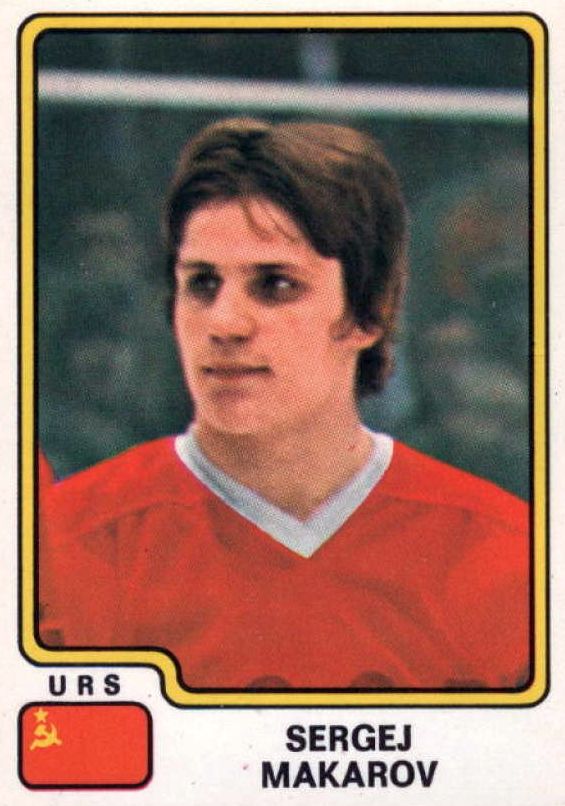
Sergei Makarov — Soviet and Russian ice hockey right winger
Soviet-era star right winger Sergei Makarov (b. 1958) was a member of the famed KLM line, two-time Olympic champion and NHL Calder Trophy winner whose arrival in North America prompted a rules change.
Overview
Sergei Mikhailovich Makarov, born 19 June 1958 in Chelyabinsk, in the Soviet Union, is a retired Russian ice hockey player who played primarily as a right wing. He rose to international prominence with the Soviet national program and later extended his career in the National Hockey League. Makarov is remembered both for his skill on the ice and for the practical effects his late move to the NHL had on rookie eligibility rules.
Image gallery
3 Images

Playing style and characteristics
Makarov combined refined puck control, high hockey IQ and a creative passing ability. He was known as a playmaker who could both set up teammates and finish scoring chances. On the Soviet teams he played with, his skating and anticipation allowed linemates to capitalize on coordinated attacks; in international play he was often a primary offensive catalyst.
Career and development
Most of Makarov's early career unfolded in the Soviet domestic system and with the national team, where he was a leading forward during the 1980s. He later joined the NHL in his early 30s and made an immediate impact. His successful transition from the Soviet leagues to the North American game helped demonstrate that experienced international stars could excel in the NHL.
Achievements and honors
- Two Olympic gold medals (as a member of the Soviet Olympic teams).
- Multiple world championship appearances and medals with the Soviet national team.
- Recipient of the NHL's Calder Memorial Trophy as top rookie after arriving from Europe; this prompted a revision of eligibility criteria for the award.
- Voted to the IIHF Centennial All‑Star Team by international experts.
Legacy and notable facts
Makarov was a key member of a celebrated Soviet forward group often grouped with teammates who formed one of the era's most productive lines, and his play influenced how NHL clubs evaluated veteran European talent. His Calder Trophy win led league officials to reconsider the definition of a "rookie," a change sometimes informally linked to his name in discussions of award rules. He remains widely cited in histories of international hockey and Soviet-era dominance.
For additional context on his origins, teams and international recognition see materials associated with ice hockey history and governing bodies such as the IIHF. Biographical and statistical records are available through many hockey archives and reference works, which document his seasons in Europe and North America.
Questions and answers
Q: Who is Sergei Makarov?
A: Sergei Makarov is a former ice hockey right wing player from Russia.
Q: When was Sergei Makarov born?
A: Sergei Makarov was born on June 19, 1958 in Chelyabinsk, Soviet Union.
Q: What is Sergei Makarov known for?
A: Sergei Makarov is known for being a two-time Olympic gold medalist in ice hockey and for being voted one of six players to the International Ice Hockey Federation's Centennial All-Star Team.
Q: What position did Sergei Makarov play in ice hockey?
A: Sergei Makarov played as a right wing in ice hockey.
Q: How many times did Sergei Makarov win the Olympic gold medal?
A: Sergei Makarov won the Olympic gold medal twice.
Q: How was Sergei Makarov voted one of six players to the International Ice Hockey Federation's Centennial All-Star Team?
A: Sergei Makarov was voted as one of six players to the International Ice Hockey Federation's Centennial All-Star Team in a poll conducted by a group of 56 experts from 16 countries.
Q: In which country was Sergei Makarov born?
A: Sergei Makarov was born in the Soviet Union, in Chelyabinsk.
Author
AlegsaOnline.com Sergei Makarov — Soviet and Russian ice hockey right winger Leandro Alegsa
URL: https://en.alegsaonline.com/art/130685