
Boomerang (roller coaster)
A widely produced shuttle coaster model by Vekoma introduced in 1984; riders traverse inversions forward and then backward on the same track.
Overview
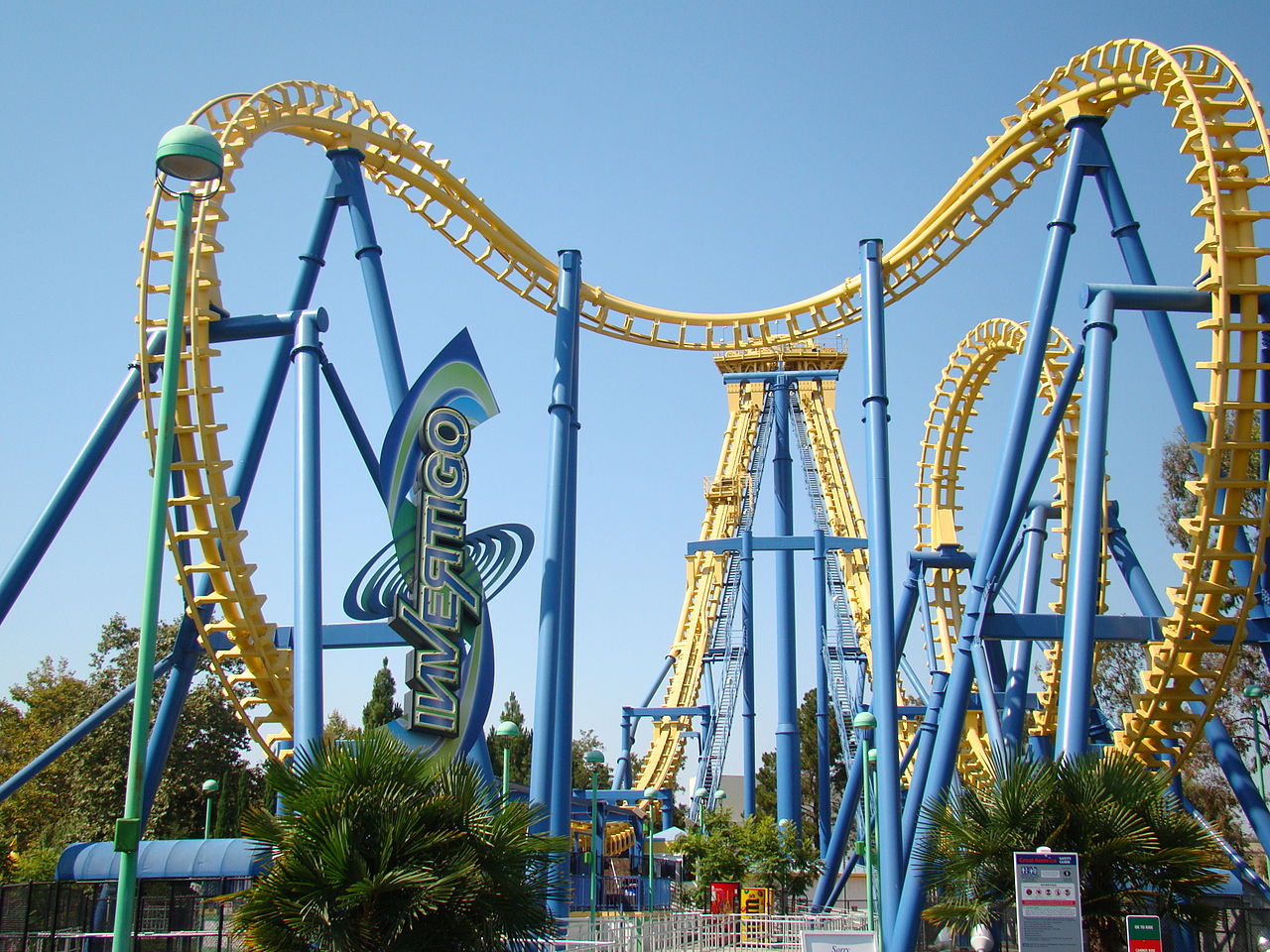
The Boomerang is a shuttle-style roller coaster model developed and built by Vekoma. Its name alludes to the returning motion of the original thrown boomerang. Rather than completing a continuous circuit, a Boomerang train is launched or pulled through a sequence of elements in one direction, reaches a high point, and then travels the same course in reverse so riders experience the layout twice.
Image gallery
6 Images




Design and characteristics
Typical Boomerang installations share several recognisable features: a single train that traverses the layout forward and backward; an initial lift or launch that gives the train its outbound energy; a compact arrangement of inversion elements (commonly a combination of a cobra roll and a vertical loop); and tall spikes at each end of the track that act as turnaround points. Trains use over-the-shoulder restraints and are sized for medium-capacity operations, making the design suitable for many regional and theme parks.
Key attributes include:
- Shuttle operation: the ride runs out and back along the same track.
- Multiple inversions encountered twice (forward and backward).
- Compact footprint, allowing installation in parks with limited space.
- Moderate throughput and relatively lower construction cost compared with large full-circuit coasters.
History and spread
The prototype Boomerang entered service in 1984 in Puebla, Mexico. Since then the model became one of the most frequently installed coaster types worldwide; by 2011 there were dozens of Boomerangs operating in parks across several continents. Its repeatable design and predictable ride dynamics encouraged many operators to add the model to their lineups during the 1980s and 1990s.
Ride experience, variants and legacy
Riders generally begin by being towed or launched from the station, pass through the station and a sequence of inversions, climb a spike where momentum is briefly arrested, and then return through the same elements in reverse. Because riders experience the course twice, the attraction delivers a pronounced sensation of intensity relative to its compact size. Over time the Boomerang inspired several variants—some manufacturers and parks have produced inverted or larger 'giant' versions and other shuttle layouts borrowing the original concept. The model remains notable for popularising shuttle coasters and for its global presence in mid-size amusement parks.
For a concise technical overview or a list of installations, consult manufacturer and park resources (manufacturer listings) or general amusement-ride catalogues (design overview).
Questions and answers
Q: What is Boomerang?
A: Boomerang is a type of roller coaster made by Vekoma.
Q: What is the origin of the name Boomerang?
A: The roller coaster was named after the original boomerang.
Q: When did the first Boomerang start operating, and where?
A: The first Boomerang began operation in 1984 at Rafaela Padilla in Puebla, Mexico.
Q: Where was the first Boomerang moved to, and when?
A: The first Boomerang was moved to Six Flags Mexico after starting operations in Rafaela Padilla in 1984.
Q: How many Boomerangs were operating as of 2011?
A: There were 41 Boomerangs operating as of 2011.
Q: How many Boomerangs are currently not operating?
A: There are two "standing but not operating" or in storage.
Q: How many Boomerangs are currently under construction?
A: One Boomerang is currently under construction.
Related articles
Author
AlegsaOnline.com Boomerang (roller coaster) Leandro Alegsa
URL: https://en.alegsaonline.com/art/13023