
Rupert Sheldrake: biologist, author, and proponent of morphic resonance
English biochemist and writer best known for the controversial hypothesis of morphic resonance and popular books critiquing materialist science. Career includes Cambridge research and work in India.
Overview
Alfred Rupert Sheldrake (born 28 June 1942) is an English author and former research scientist. He trained and worked in biochemistry and cell biology and later became known for proposing a speculative hypothesis called "morphic resonance." Sheldrake has published several popular books that challenge mainstream scientific assumptions about memory, inheritance and the nature of life, and he continues to be a prominent figure in debates at the interface of science, philosophy and spirituality.
Image gallery
1 Image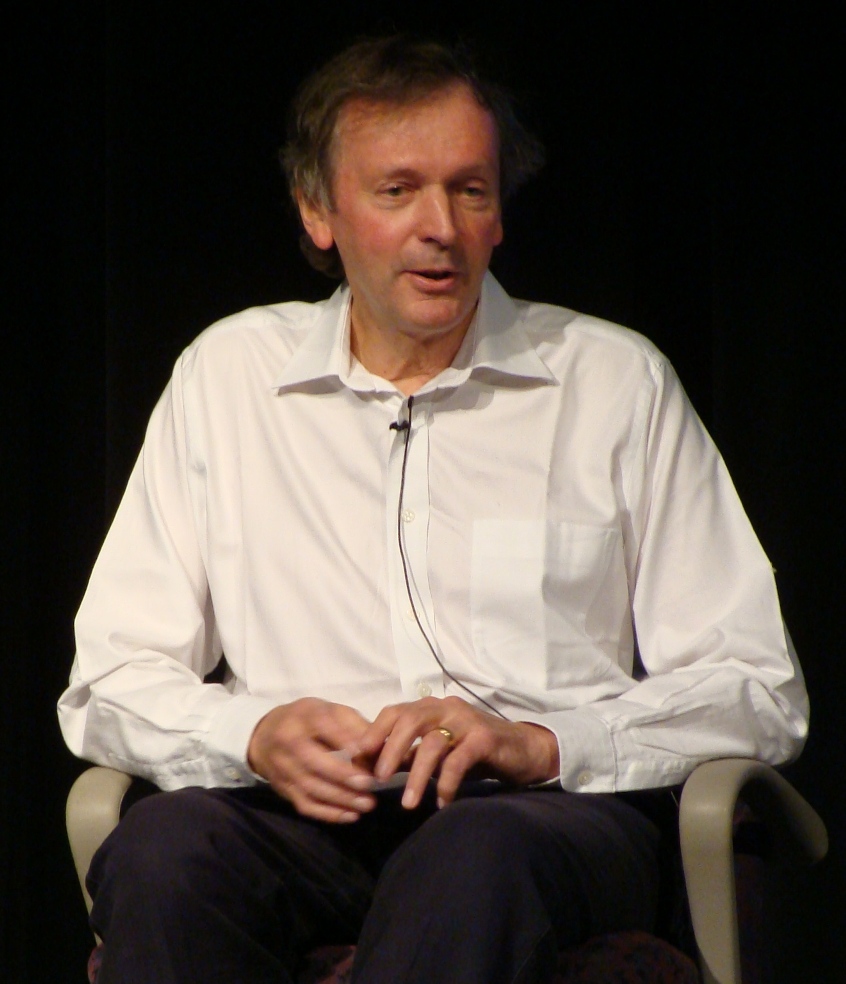
Morphic resonance: the central idea
Sheldrake's central proposal, morphic resonance, suggests that patterns of organization and behaviour in biological systems are influenced by a collective memory inherent in nature. According to this idea, once a particular form, habit or structure has occurred, it becomes easier for similar forms to arise elsewhere because they resonate with previous similar forms. Sheldrake presents this as an unconventional account of biological organization and memory that he argues complements genetic and developmental explanations.
Career and publications
Sheldrake worked as a biochemist and cell biologist at Cambridge University in the late 1960s and early 1970s and later spent time working in India in the 1970s. His first major popular work, A New Science of Life, introduced morphic resonance to a wider audience. Over subsequent decades he has written additional books and essays that address empirical claims, propose experimental tests, and criticize what he sees as restrictive assumptions in contemporary science.
- Notable themes: memory beyond the brain, non-local influences, critique of strict materialism.
- Selected works: A New Science of Life and later books that develop his themes and propose experiments.
Reception and controversies
Sheldrake's ideas have provoked strong reactions. The scientific mainstream regards morphic resonance as highly speculative and lacking established empirical support and a plausible mechanism; many scientists consider it outside the bounds of current biology. His public talks and publications have been contentious — for example, a TEDx talk he gave in 2013 was later removed from TED's official channels. Media and scientific commentators have criticized his work; as one prominent critic wrote in The Guardian, the reaction to A New Science of Life was sharply negative and dismissive (coverage and commentary).
Why it matters
Whether accepted or not, Sheldrake's work has had an impact on public discussions about the limits of reductionist science and about alternative ways of thinking about form and memory. His writings have inspired both supporters interested in exploring new hypotheses and critics who emphasize rigorous testing and falsifiability. He has also proposed concrete experiments designed to test aspects of his claims, encouraging dialogue about methodology and evidence.
Personal details
Sheldrake has described himself as an Anglican and has combined scientific interests with broader philosophical and spiritual concerns. He was married to Jill Purce. Earlier stages of his career included laboratory research at Cambridge (biochemistry and cell biology) before moving into longer-term writing and public engagement. Readers should approach his work with awareness of the debate it generates and consult a range of sources when evaluating its scientific status.
Further reading and critical perspective
- Explore primary texts by Sheldrake to understand his detailed arguments.
- Consult peer-reviewed critiques and mainstream biology texts to compare evidence and methodologies.
Questions and answers
Q: Who is Rupert Sheldrake?
A: Rupert Sheldrake is an English author, biochemist, and cell biologist.
Q: What is his theory called?
A: His theory is called "morphic resonance".
Q: When was his first book published?
A: His first book, A New Science of Life, was published in 1981.
Q: What was the topic of his TEDx talk in 2013?
A: The topic of his TEDx talk in 2013 was his book The Science Delusion, which was banned.
Q: Who criticized his book A New Science of Life?
A: Adam Rutherford, the deputy editor of a scientific journal called Nature, criticized his book A New Science of Life.
Q: What did Adam Rutherford say about the book?
A: Adam Rutherford said "don't read this book, it will make you stupider".
Q: Is Rupert Sheldrake married?
A: Yes, he is married to Jill Purce.
Author
AlegsaOnline.com Rupert Sheldrake: biologist, author, and proponent of morphic resonance Leandro Alegsa
URL: https://en.alegsaonline.com/art/130189