
Royal College of Music, London
Leading UK conservatoire founded in 1882 offering performance, composition and research programmes, home to a major instrument collection and the Britten Theatre.
Overview
The Royal College of Music is a specialist conservatoire in London where students train in performance, composition, conducting and related musical disciplines. Founded in 1882 to raise standards of musical education in Britain, the college combines practical tuition with academic study and ensemble experience so that young musicians can pursue professional careers.
Image gallery
4 Images

History and foundation
The institution was established by royal charter in 1882 and enjoyed immediate royal patronage; its president was the Prince of Wales (later King Edward VII) and the role of president has traditionally remained within the royal family. The college's early leadership included Sir George Grove and Sir Hubert Parry, figures who shaped its curriculum and reputation. The school grew quickly in the late 19th century and moved from its first premises to larger buildings near the Royal Albert Hall.
Campus, buildings and collections
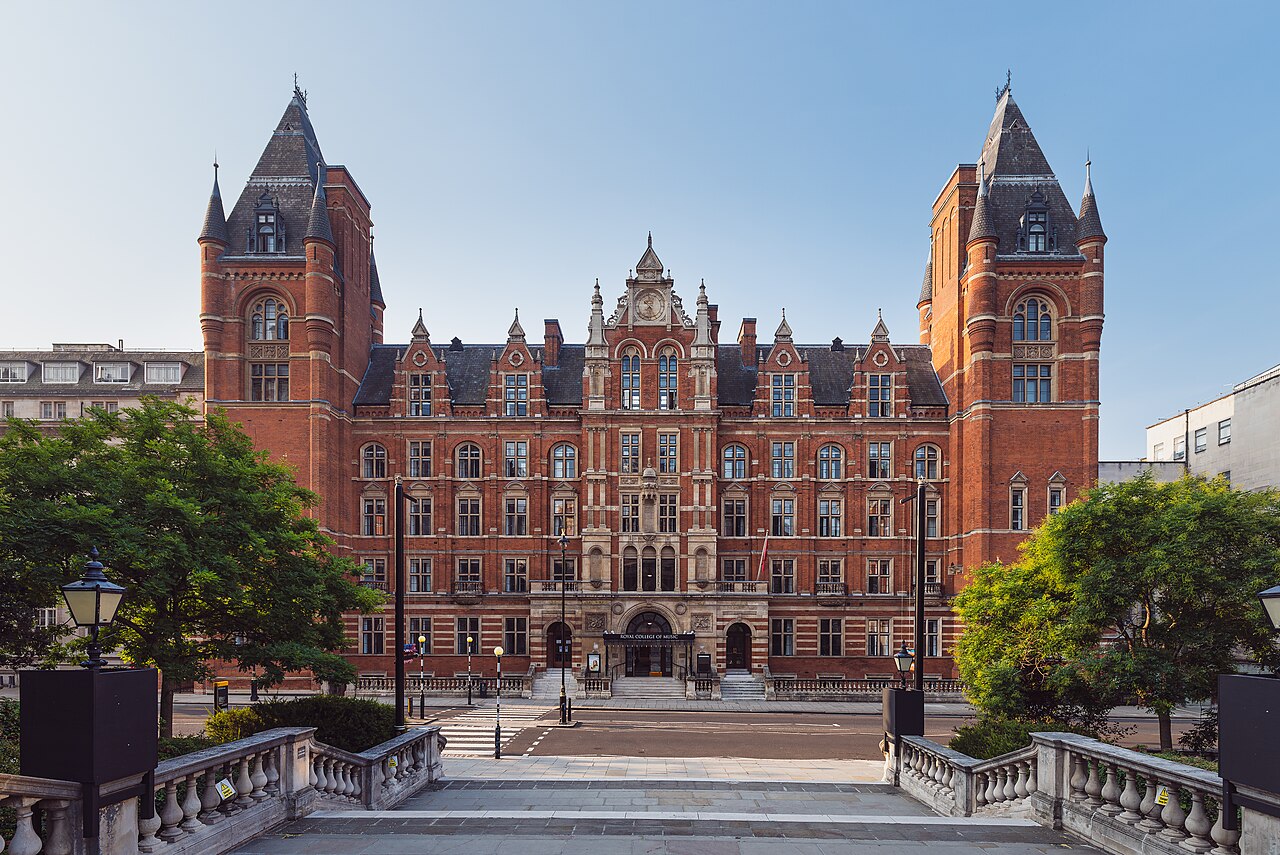
The main buildings stand on Prince Consort Road, close to the Royal Albert Hall. Over time the site has been extended and modernised to provide practice rooms, recital halls, teaching studios and technology suites. Adjacent to the college is a 400-seat producing theatre, the Britten Theatre, opened in 1986 to support staged opera and dramatic projects. The college also houses a notable museum of musical instruments, used for teaching, research and public display.
Programs, ensembles and study
The Royal College of Music offers undergraduate, postgraduate and doctoral pathways as well as diploma and certificate courses. Students can study music in areas such as solo performance, chamber music, orchestral playing, composition, historical performance and conducting. Typical components of training include one-to-one tuition, masterclasses, ensemble rehearsals and public concerts.
- Performance degrees and diplomas
- Composition and music theory
- Opera studies and theatrical production
- Research and historical performance practice
Numbers, reputation and notable features
The college has consistently attracted a compact, internationally diverse student body — in recent decades the roll has numbered several hundred students from many countries. It supports both undergraduate and large postgraduate cohorts and awards recognised degrees and professional diplomas. Many alumni have gone on to careers as soloists, orchestral players, composers and educators. The RCM is widely regarded as one of Britain's leading conservatoires, notable for its combination of high-level practical training and a rich instrument collection.
Governance, links and visiting
The institution operates under a governance model set out in its charter and maintains links with orchestras, opera companies and educational partners. Historical records note that the college was founded by a royal charter and early directors included Sir George Grove and Sir Hubert Parry. Prospective students and visitors can find information about study options, concerts and the instrument collection via the college's official channels and public programmes.
For details about admissions, concert listings and the museum collection see the college's prospectus and event pages represented here as: director and history, past leadership, and institutional information via main pages.
Questions and answers
Q: What is the Royal College of Music?
A: The Royal College of Music is a conservatory in London where young people can study music.
Q: When was the Royal College of Music founded?
A: The Royal College of Music was founded in 1882.
Q: Who was the founder of the Royal College of Music?
A: The Royal College of Music was founded by Royal charter, and the president was the Prince of Wales (later King Edward VII).
Q: Who were the first two directors of the Royal College of Music?
A: The first director of the Royal College of Music was Sir George Grove, and he was followed by Sir Hubert Parry.
Q: Where is the Royal College of Music located?
A: The Royal College of Music moved from its initial location opposite the west side of the Royal Albert Hall to its current location south of the Royal Albert Hall on Prince Consort Road in 1894.
Q: What facilities and resources does the Royal College of Music offer?
A: The Royal College of Music has a large museum of musical instruments and a 400-seater opera house, the Britten Theatre, opened in 1986. It can award degrees and diplomas in music, and composers and performing musicians can study there.
Q: Who is the current director of the Royal College of Music?
A: The director of the Royal College of Music is Dr Colin Lawson.
Author
AlegsaOnline.com Royal College of Music, London Leandro Alegsa
URL: https://en.alegsaonline.com/art/130118