
Rosa Parks (1913–2005)
Rosa Parks, an African-American civil rights activist, famously refused to give up her Montgomery bus seat in 1955. Her act helped trigger the Montgomery Bus Boycott and became a pivotal moment in the U.S. civil rights movement.

Overview
Rosa Louise McCauley Parks (1913–2005) was an African-American civil rights activist widely remembered for her refusal to surrender her bus seat to a white passenger in Montgomery, Alabama, on December 1, 1955. That act of resistance became a symbol of the struggle against racial segregation and helped catalyze the broader modern civil rights movement in the United States.
Image gallery
10 Images


Early life and activism
Parks was born in Alabama and spent her youth in the segregated South. She worked as a seamstress and became involved with the National Association for the Advancement of Colored People (NAACP) at the local level. Long before the bus incident, Parks was active in civil-rights organizing and worked quietly on legal and community efforts opposing racial discrimination.
The Montgomery bus incident and boycott
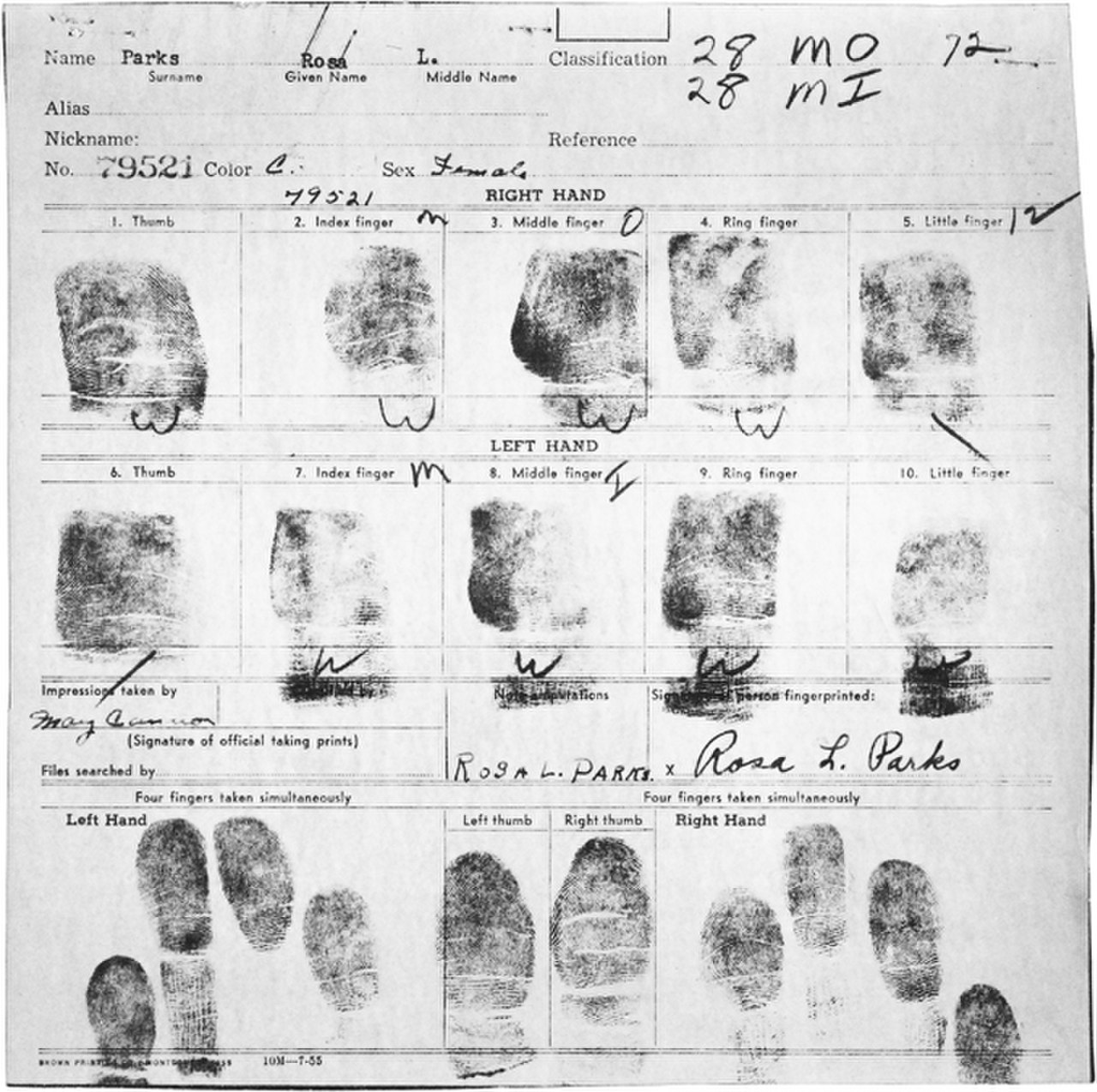
On December 1, 1955, Parks refused to give up her seat on a Montgomery city bus when a white passenger demanded it. She was arrested and charged with violating the city's segregation ordinance. Her arrest prompted local Black leaders to call for a citywide bus boycott, organized by the newly formed Montgomery Improvement Association and led by a young Baptist minister, Martin Luther King Jr.
The boycott lasted more than a year and involved mass nonviolent protest, alternative transportation arrangements, and legal challenges. In 1956 a federal court ruling found bus segregation unconstitutional, an outcome affirmed by the U.S. Supreme Court in Browder v. Gayle. The boycott demonstrated the political power of coordinated, nonviolent mass action and is regarded as an early turning point in the civil rights struggle.
Later life and legacy
After sustained harassment and economic pressure in Montgomery, Parks and her husband eventually moved to Detroit. She continued to work for civil-rights causes and later served in public roles that supported social justice and political engagement. Over the years she received numerous honors recognizing her contribution to civil rights, including the Presidential Medal of Freedom and the Congressional Gold Medal.
Notable facts and distinctions
- Parks is often called "the mother of the modern civil rights movement," a label that recognizes her symbolic role in the struggle for racial equality.
- Her refusal to give up her seat was not the first act of resistance by African Americans on public transit, but it gained widespread attention and mobilized a sustained campaign that produced legal change.
- The Montgomery Bus Boycott showed how community organization, economic pressure, and legal action could combine to dismantle discriminatory practices.
Rosa Parks remains an enduring symbol of dignity and quiet courage. Her life illustrates how an individual's steady resolve, combined with organized collective action, can prompt significant social and legal change. Her story is taught and commemorated as an example of grassroots activism that helped reshape American society in the mid-20th century.
Questions and answers
Q: Who was Rosa Louise McCauley Parks?
A: Rosa Louise McCauley Parks was an African-American civil rights activist who is best known for her refusal to move from her seat on a bus in Montgomery, Alabama on December 1, 1955. She is often referred to as "the mother of the Modern-Day American civil rights movement" and "the mother of the freedom movement".
Q: What happened on December 1, 1955?
A: On December 1, 1955, while Rosa Parks was sitting in a seat in the middle of the bus, the bus driver told her to move to the back of the bus so a white passenger could take the seat in the front. At this time, when there were no white seats for white people, black people were told to get up out of their seats. However, Parks refused and she was arrested.
Q: What organization did Parks belong to?
A: Parks belonged to local chapter of National Association for the Advancement of Colored People (NAACP).
Q: How long did the Montgomery Bus Boycott last?
A: The Montgomery Bus Boycott lasted 381 days.
Q: What change occurred after that boycott ended?
A: After that boycott ended, black people were able to sit wherever they wanted on buses.
Q: Why was Parks' refusal important?
A: Her refusal to let others treat her differently was an important symbol in the campaign against racial segregation and helped bring about much needed change in laws regarding equal treatment regardless of race or skin color.
Author
AlegsaOnline.com Rosa Parks (1913–2005) Leandro Alegsa
URL: https://en.alegsaonline.com/art/130082