
Rosalind Franklin — British biophysicist who advanced understanding of DNA
Rosalind Franklin (1920–1958), a British biophysicist, produced pioneering X-ray images and measurements that clarified DNA’s helical structure and advanced virus and coal research.
Overview. Rosalind Franklin was a British scientist whose work on X-ray diffraction and molecular structure helped shape modern molecular biology. Born in Notting Hill, London, she trained as a British biophysicist with a background in physical chemistry. Franklin combined meticulous experimental technique with quantitative analysis to reveal dimensions and arrangements of biological molecules, most notably deoxyribonucleic acid (DNA).
Education and early research. From an early age Franklin intended to pursue science. She attended rigorous secondary schooling and then read science at Newnham College in Cambridge, where she studied physical chemistry, earning advanced qualifications in that field. Early in her career she investigated the porosity and composition of coal and related carbon materials, applying X-ray and diffraction methods to problems of material structure.
Expertise and methods. Franklin became known for exacting experimental practice and for mastery of X-ray crystallography, a technique that reveals internal arrangements of atoms by recording diffraction patterns. She applied these methods to a range of biological targets, including RNA and plant and animal viruses. Her measurements produced quantitative data about spacing, periodicity and symmetry that informed models of molecular form and function, clarifying how molecules are arranged in three dimensions.
Work on DNA at King’s College and relationships with colleagues. In London Franklin joined a research group at King’s College to study DNA. Working with graduate student Raymond Gosling, and alongside colleague Maurice Wilkins, she produced high-resolution X-ray photographs and careful analyses that distinguished two distinct forms of DNA and indicated a helical architecture. One particularly clear diffraction image showed features consistent with a double helix. At the time, other researchers including James D. Watson and Francis Crick, both prominent biologists, were building structural models. Material from Franklin’s data contributed to the emerging picture of the structure of DNA, and her experimental findings were important to the final proposals published in 1953.
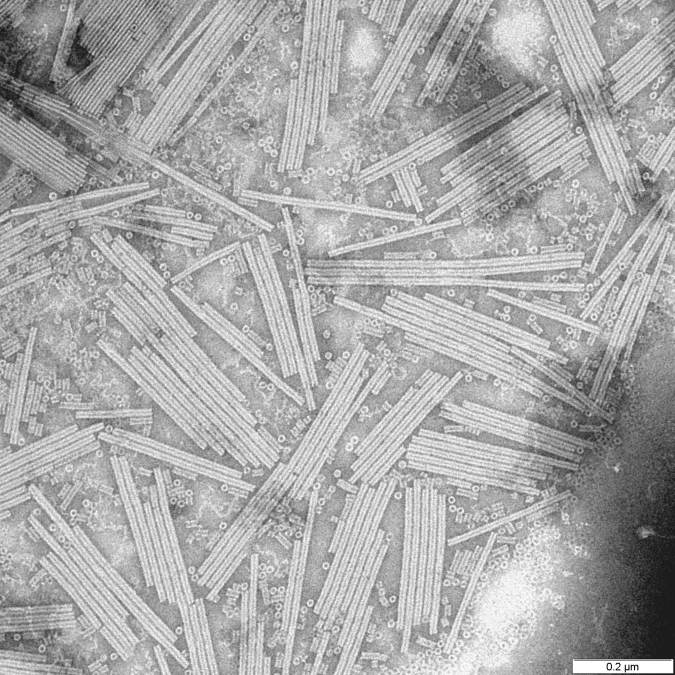
Later work and scope of research. After her period on DNA, Franklin continued to apply crystallographic and biochemical methods to study viruses. She moved to a different research institute where she led work on the architecture of the tobacco mosaic virus and other plant viruses, demonstrating how molecular assembly governs infectivity and stability. Earlier in her career she also spent time working on crystalline substances in Paris, broadening her methodological expertise.
Legacy, recognition and notable facts. Franklin died in London of ovarian cancer in 1958. Because the Nobel Prizes are not awarded posthumously, she was not among the recipients of the 1962 Nobel Prize that was given to some colleagues for work on DNA structure. Since her death, historians and scientists have repeatedly reassessed her role; she is now widely acknowledged for the precision of her measurements, the clarity of her images and the influence of her data on the development of molecular genetics.
Image gallery
9 Images


Key contributions
- Demonstrated rigorous application of X-ray crystallography to biological problems.
- Collected diffraction patterns that distinguished DNA forms and supported the double helix proposal.
- Produced quantitative measurements used by others to build accurate molecular models of the structure of DNA.
- Advanced understanding of viral structure through studies of the tobacco mosaic virus and similar systems.
- Applied chemical and physical techniques learned in places such as Paris and Cambridge to biological questions.
Franklin’s career illustrates the combination of experimental skill, quantitative analysis and cross-disciplinary training—from physical chemistry to modern molecular biology—that underpins many discoveries about how molecules carry and transmit biological information. Her story is also cited in discussions about collaboration, credit and the ways scientific contributions are recorded and recognized.
Questions and answers
Q: Who was Rosalind Franklin?
A: Rosalind Franklin was a British biophysicist who is known for helping to discover the structure of DNA.
Q: What did she study at Newham College in Cambridge?
A: At Newham College, Rosalind Franklin studied physical chemistry and received her Ph.D.
Q: What kind of research did she do?
A: Rosalind Franklin conducted research on coal, RNA, viruses, and X-ray crystallography on DNA. She also spent several years studying crystals in Paris.
Q: How did Watson and Crick use her work?
A: Watson and Crick used the X-ray pictures that Franklin created to show that DNA is shaped like a double helix in their work to discover the structure of DNA.
Q: Was she considered for the 1962 Nobel Prize in Physiology or Medicine?
A: No, because Nobel Prizes are not awarded after a person's death, so she was not considered for this prize which was awarded to Francis Crick, James D. Watson and Maurice Wilkins instead.
Q: What else did she discover besides the structure of DNA?
A: In addition to discovering the structure of DNA, Rosalind Franklin also discovered the structure of the tobacco mosaic virus a couple of years before her death.
Q: When did Rosalind Franklin die?
A: Rosalind Franklin died from ovarian cancer in 1958
Author
AlegsaOnline.com Rosalind Franklin — British biophysicist who advanced understanding of DNA Leandro Alegsa
URL: https://en.alegsaonline.com/art/130073