
Ronald A. Fisher
English statistician, geneticist and evolutionary biologist whose work established core methods in modern statistics and population genetics; scientifically influential but controversial for some social views.
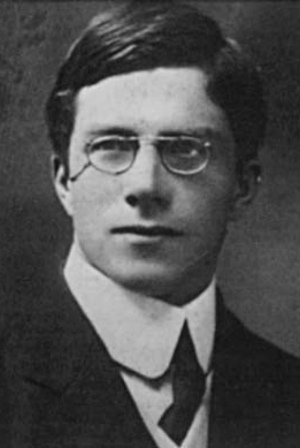
Sir Ronald Aylmer Fisher (17 February 1890 – 29 July 1962) was an English statistician, evolutionary biologist and geneticist. He forged links between mathematical statistics and biological theory and introduced methods that remain central to scientific inference. Fisher's work transformed experimental practice, population genetics and the formal study of variation, and he is widely regarded as one of the principal figures in twentieth‑century statistics.
Image gallery
10 Images



Major contributions
Fisher developed and popularized several foundational ideas. He formalized the likelihood approach and championed concepts now familiar in statistical inference, including maximum likelihood estimation and procedures for hypothesis testing grounded in p-values. He introduced the analysis of variance (ANOVA) to compare group means, and he set out practical principles of the design of experiments—randomization, replication and blocking—that guide empirical work in agriculture, medicine and other fields.
- Estimation and inference: maximum likelihood, Fisher information and methods for assessing estimator precision.
- Hypothesis testing: development of significance testing practices widely taught and debated in applied research.
- Experimental design: formal strategies for planning experiments to reduce bias and increase interpretability.
- Population genetics: mathematical models that connected Mendelian inheritance with natural selection and helped found theoretical population genetics.
Career, writings and influence
Fisher combined theoretic work with applied problems in agriculture, biology and medicine. His books and papers—many of which were influential textbooks—helped disseminate statistical methods across scientific disciplines. For concise introductions to his life and influence see accessible summaries and biographical treatments. Commentators such as Richard Dawkins have described Fisher as a major successor to Charles Darwin in developing mathematical approaches to evolution.
Examples of methods in use
Practical tools that trace to Fisher's work appear across research: Fisher's exact test for contingency tables, ANOVA for designed comparisons, and likelihood-based estimation in statistical modelling. His emphasis on experimental design underlies randomized trials and agricultural field experiments that remain standard practice.
Legacy and controversies
Fisher's technical legacy is substantial and continues to shape statistics and theoretical biology. At the same time, aspects of his public commentary and associations—especially his expressed views on eugenics and race—have provoked sustained criticism and ethical debate. Many historians and scientists now separate the evaluation of Fisher's mathematical and methodological contributions from discussion of the social impact and moral standing of his opinions.
Scholars continue to study Fisher's original papers and books to understand both his innovations and the historical context of his work. Further reading and online resources can provide a balanced view of his achievements and the controversies that surround his reputation; for introductory overviews see entries and essays linked from standard biographical pages and scholarly reviews (statistical summaries, genetics reviews).
Readers seeking detailed technical discussion may consult classic works by Fisher as well as modern historical and methodological analyses that place his ideas in contemporary perspective.
Questions and answers
Q: Who was Sir Ronald Aylmer Fisher?
A: Sir Ronald Aylmer Fisher was an English statistician, evolutionary biologist, and geneticist.
Q: What is he known for?
A: He is known for almost single-handedly creating the foundations for modern statistical science.
Q: How has his work been described?
A: His work has been described as "genius" by Richard Dawkins and as "the greatest of Darwin's successors".
Q: When was Sir Ronald Aylmer Fisher born?
A: He was born on 17 February 1890.
Q: When did he pass away?
A: He passed away on 29 July 1962.
Q: Where did Sir Ronald Aylmer Fisher live?
A: He lived in England.
Q: What type of scientist was he?
A: He was a statistician, evolutionary biologist, and geneticist.
Author
AlegsaOnline.com Ronald A. Fisher Leandro Alegsa
URL: https://en.alegsaonline.com/art/130008