
Roh Tae-woo: South Korean general and president (1988–1993)
Roh Tae-woo (1932–2021) was a South Korean army general who served as president from 1988 to 1993; his administration presided over transition to electoral democracy, the 1988 Seoul Olympics and expanded diplomatic ties.
Overview
Roh Tae-woo (4 December 1932 – 26 October 2021) was a South Korean military officer and politician who served as president from 1988 to 1993. A longtime member of a close-knit group of senior officers, he rose to national prominence during a period when the South Korean armed forces exerted strong influence over governance. Roh is remembered for agreeing to competitive presidential elections in 1987, presiding over the 1988 Seoul Summer Olympic Games, and pursuing a foreign-policy initiative that broadened Seoul's engagement with communist countries in the final years of the Cold War.
Image gallery
5 Images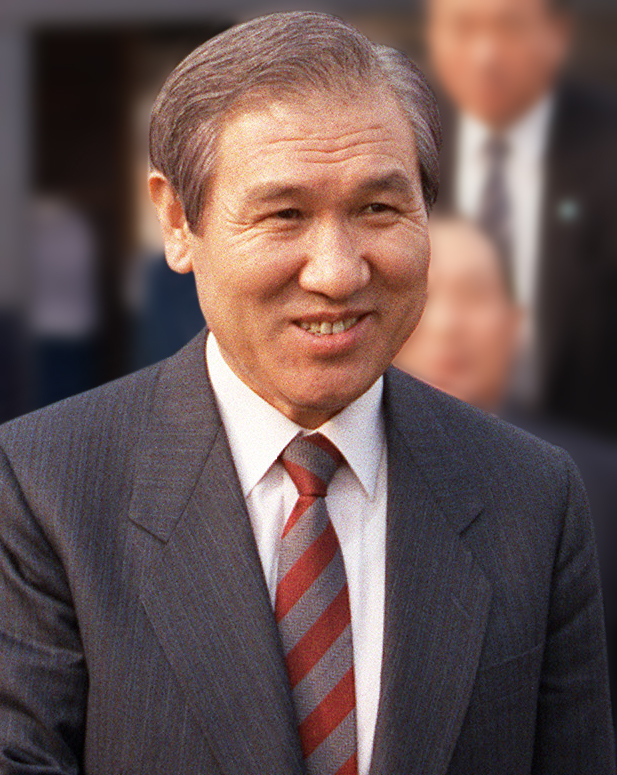


Military career and political rise
Roh built his career within the South Korean military, where internal cliques shaped promotions and politics. He was associated with a faction of senior officers that dominated the armed forces and later national politics. His connection to former general and president Chun Doo-hwan positioned Roh as a favored successor within that informal network, which produced widespread public concern about continued military influence in civilian government and helped spark mass pro-democracy demonstrations in 1987.
Presidency (1988–1993)
Roh's administration began after a concession to protesters: the government permitted direct presidential elections in 1987, and Roh won a narrow victory when the opposition vote was divided. His presidency concentrated on normalizing politics, promoting economic growth, and international engagement. Roh presided over the 1988 Seoul Olympics, a major event that showcased South Korea to the world and boosted national pride. He also pursued a diplomatic approach aimed at reducing Seoul's isolation from communist states and developing relationships with previously distant partners in Northeast Asia and beyond.
Transition, law and controversy
Roh's years in office are seen as part of South Korea's transition from decades of authoritarian-directed rule toward consolidated electoral democracy. At the same time, his tenure and earlier actions were controversial: allegations of corruption and the legacy of military intervention in politics drew scrutiny after he left office. In the years that followed, an anti-corruption campaign and judicial cases examined his and other former leaders' roles in past coups and crackdowns. These proceedings produced convictions that were later commuted, and the two former presidents were ultimately pardoned during a period of national reconciliation.
Legacy and death
Assessments of Roh Tae-woo are mixed. Supporters emphasize his willingness to accept competitive elections, the international profile raised by the Seoul Olympics, and pragmatic diplomacy that expanded South Korea's global ties. Critics highlight his association with an earlier era of military-dominated politics and the legal and ethical controversies that shadowed his later life. Roh died in October 2021 at a hospital in Seoul.
Further reading and resources
- Profile: Roh Tae-woo — Presidency overview
- Context: History of South Korea
- Military career: Roh as a general
- Political biography and offices held
- Hanahoe and factional networks
- Chun Doo-hwan and succession
- Pro-democracy movements of the 1980s
- Seoul: city context and events
- 1987 democratic reforms and elections
- Electoral campaign and candidacy details
- Opposition leaders: Kim Young-sam
- Opposition leaders: Kim Dae-jung
- Military rule in South Korea: background
- Transition from authoritarian rule
- Seoul 1988 Olympic Games
- Nordpolitik: foreign-policy orientation
- Anti-corruption issues and inquiries
- Post-presidential investigations and campaigns
- Judicial proceedings and trials
- Allegations: bribery and illicit finance
- Charges: mutiny and military insurrection
- Charges: treason and related offenses
- Sentences, commutations and outcomes
- Pardon and national reconciliation
Questions and answers
Q: Who was Roh Tae-woo?
A: Roh Tae-woo was the sixth President of South Korea from 1988 to 1993. He was a Korean general and politician, and a member of the Hanahoi.
Q: How did Roh become president?
A: Roh was hand-picked by former general and president Chun Doo-hwan to be his successor, which caused large pro-democracy rallies in Seoul and other cities in 1987. In response, Roh agreed to hold democratic presidential elections, making himself a candidate for the next election. The opposition split their votes between Kim Young-sam and Kim Dae-jung (both of whom later became presidents), which made Roh the first elected president after military rule.
Q: What were some notable accomplishments during Roh's presidency?
A: During his presidency, Roh hosted the Seoul Olympics in 1988 and implemented a foreign policy known as nordpolitik.
Q: What happened after he left office?
A: After leaving office, his successor Kim Young-sam led an anti-corruption campaign that saw both him and Chun Doo-hwan on trial for bribery. They were both found guilty of treason, mutiny and corruption in August 1996; Chun was sentenced to death (later changed to life imprisonment) while Roh's 22 1/2 year jail sentence was reduced to 17 years. Both were released from prison in early 1998 after being pardoned by then President Kim Dae Jung.
Q: When did Roh die?
A:Roh died on October 26th 2021 at the age of 88 at Seoul National University Hospital in Seoul.
Author
AlegsaOnline.com Roh Tae-woo: South Korean general and president (1988–1993) Leandro Alegsa
URL: https://en.alegsaonline.com/art/129968