
Robert Walpole, 1st Earl of Orford — Britain's first de facto prime minister
Biography and analysis of Sir Robert Walpole (1676–1745), Whig leader often regarded as Britain’s first de facto prime minister; his rise after the South Sea crisis, long administration, style and legacy.
Overview
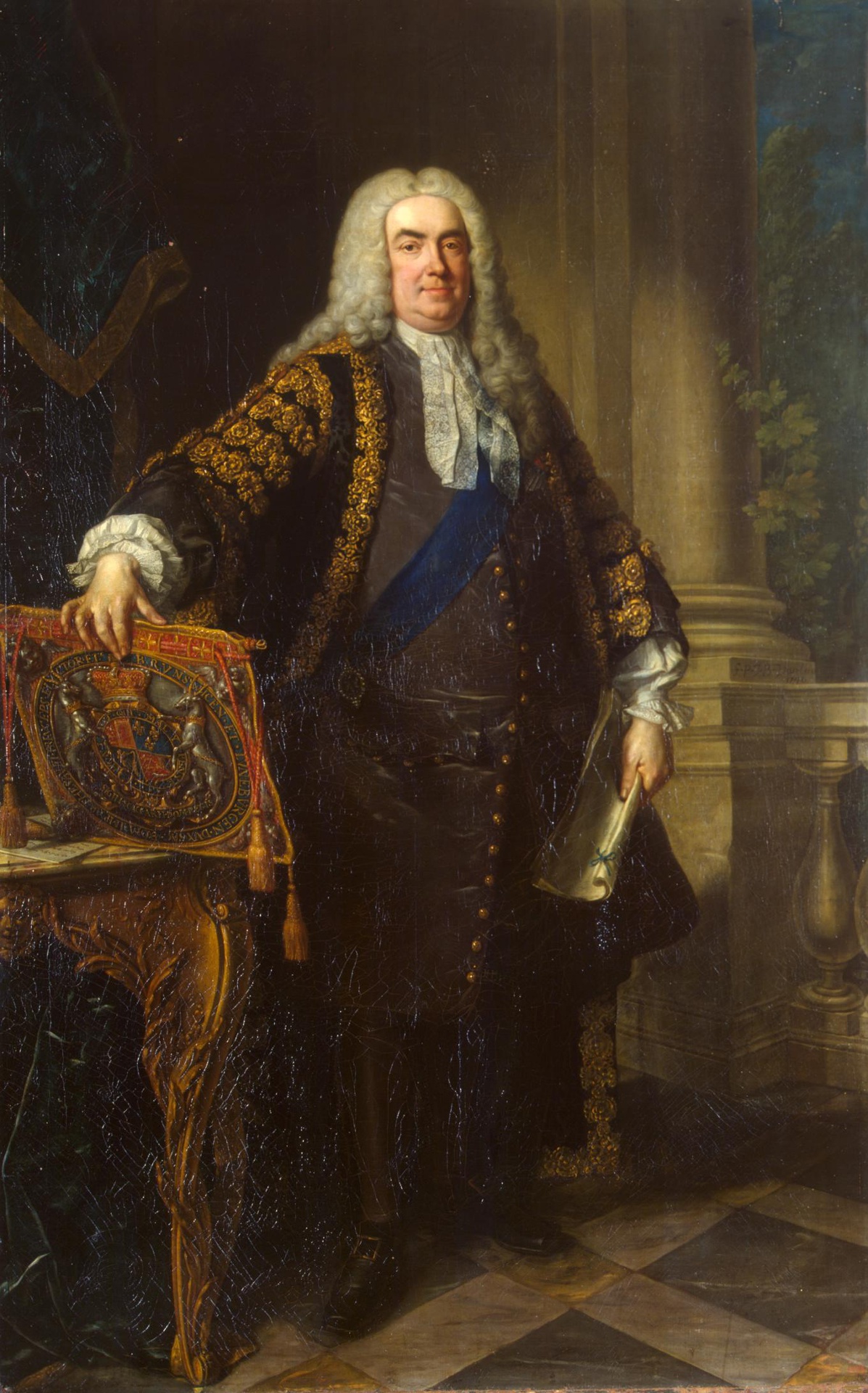
Sir Robert Walpole (26 August 1676 – 18 March 1745) is widely regarded as the first de facto prime minister of what was then Great Britain. A dominant Whig politician, he led the government through two monarchs, exercising prolonged control of the Treasury and of the House of Commons. The office of prime minister had no formal legal status in his lifetime, but Walpole's concentration of power and endurance in office established many of the conventions associated with modern British premiership.
Image gallery
10 Images




Early life and education
Walpole was born into a Norfolk gentry family at Houghton, near King’s Lynn, and is commonly associated with the county estate Houghton Hall. He received a classical education typical of the political elite of his day and pursued legal studies before entering public life. His background combined landed interests with a practical familiarity with finance and parliamentary procedure, which proved important in his later career.
Entry into politics and rise to leadership
Walpole entered Parliament in the early 18th century as a member of the Whig party. He built a reputation as an able parliamentary manager and financial operator. The political and economic turmoil that followed the South Sea Bubble of 1720 created an opening for his leadership: as ministers were discredited, Walpole consolidated support by handling questions of public credit, parliamentary business and royal patronage. By about 1721 he was the central figure of government, holding the chief Treasury responsibilities and commanding the confidence of the Commons.
Governmental role and practices
Walpole combined control of the Treasury with mastery of Commons procedure, using appointments, pensions and local influence to secure parliamentary majorities. This network of patronage and personal loyalty has been called the "robinocracy," an informal term derived from his forename, Robert. His methods reflected the political norms of the age: government relied on negotiated factional coalitions, personal ties and the distribution of office rather than formal party machines or modern administrative bureaucracy.
Policy orientation
As head of government, Walpole favored fiscal stability, the restoration and maintenance of public credit, and measures to encourage commerce and trade. He generally avoided entangling alliances and large-scale continental wars, preferring policies that protected British commercial interests and preserved peace. Critics accused him of prioritizing personal advantage and of using government patronage to sustain his power; supporters argued that his pragmatism brought stability after a period of speculation and unrest.
Key events and controversies
Walpole’s long administration faced recurrent political challenges: opposition from rival Whig factions, attacks from the Tories, and public unease over government expenditure and perceived corruption. Debates over foreign policy, particularly towards Spain and the European balance of power, intensified in the late 1730s and early 1740s. These controversies, combined with shifting court favour and a determined parliamentary opposition, culminated in his resignation in 1742.
Resignation and later years
After leaving office Walpole accepted a peerage as Earl of Orford and retired from active ministerial rule, though he retained influence through family connections and ongoing correspondence with political figures. He spent his remaining years at his Norfolk seat, promoting agricultural improvement and the arts, and died in 1745. His elevation to the peerage removed him from the Commons but did not immediately end his political relevance.
Historical assessment and legacy
Historians regard Walpole as the formative figure in the development of the chief minister's role in Britain. He established precedents for leading the Commons, coordinating ministerial business and using the Treasury as the centre of government. His long uninterrupted tenure—roughly from 1721 to 1742—remains the longest for any holder of the modern premiership. Assessments vary: some praise his stabilization of finance and avoidance of costly wars, while others emphasize the corrosive effects of extensive patronage and the personalisation of power.
Institutional and cultural impact
Walpole's administration helped to solidify the cabinet as the principal decision-making body and to shape expectations of ministerial responsibility to Parliament rather than solely to the Crown. Culturally, his wealth and taste left architectural and artistic marks, most notably in the commissioning of Houghton Hall and the cultivation of collections and gardens that reflected the period's aristocratic values.
Further reading and resources
- Surveys of British government that examine the emergence of the prime ministerial office and 18th‑century administration.
- Local and biographical works on Walpole's Norfolk origins, estate and personal life.
- Specialist studies addressing the South Sea crisis, Whig politics and patronage networks in the Walpole years.
- Articles on the office of prime minister often cite Walpole as a central and formative figure.
- Contextual accounts of 18th‑century Great Britain summarise the political, economic and international environment of his ministry.
Walpole's career illustrates how informal authority, parliamentary skill and control of finance combined in the early 18th century to produce a form of executive leadership that later generations recognised as the office of prime minister. While debates about his character and methods continue, his central place in the institutional development of British government is widely acknowledged.
Questions and answers
Q: Who was Sir Robert Walpole?
A: Sir Robert Walpole was a British politician.
Q: Why is Sir Robert Walpole important in British political history?
A: Sir Robert Walpole is important in British political history because he is regarded as the first de facto Prime Minister of the United Kingdom and he dominated the Walpole-Townshend ministry as well as the subsequent Walpole ministry, holding the record as the longest-serving British prime minister in history.
Q: When was Sir Robert Walpole born and when did he die?
A: Sir Robert Walpole was born in Houghton, Norfolk on 26 August 1676 and he died on 18 March 1745.
Q: How is Sir Robert Walpole's time as Prime Minister sometimes referred to?
A: Sir Robert Walpole's time as Prime Minister is sometimes referred to as "the robinocracy" because "Robin" is a common version of "Robert".
Q: What are some of the explanations typically offered for Sir Robert Walpole's expert handling of the political system?
A: Some of the typical explanations for Sir Robert Walpole's expert handling of the political system include his unique blending of the surviving powers of the crown with the increasing influence of the Commons.
Q: When is the period of Sir Robert Walpole's dominance usually deemed to begin and end?
A: Although the exact dates of Sir Robert Walpole's dominance are not entirely clear, the period 1721-1742 is often used as a reference point.
Q: What is W.A. Speck's assessment of Sir Robert Walpole's uninterrupted 20-year run as Prime Minister?
A: W.A. Speck wrote that Sir Robert Walpole's uninterrupted run of 20 years as Prime Minister "is rightly regarded as one of the major feats of British political history."
Author
AlegsaOnline.com Robert Walpole, 1st Earl of Orford — Britain's first de facto prime minister Leandro Alegsa
URL: https://en.alegsaonline.com/art/129839