
Book of Kells: an illustrated Insular Gospel manuscript and national treasure
A richly illuminated late 8th–9th century Insular Gospel book, celebrated for its intricate decoration, complex production, and long association with Iona, Kells and Trinity College Dublin.
Overview
The Book of Kells is a richly decorated illuminated manuscript containing the four Gospels of the New Testament. Written in Latin, its biblical text is largely drawn from the Vulgate while preserving some readings from the older Vetus Latina. Created by Irish and Scottish monastic communities around 800 AD, the manuscript is one of the finest surviving examples of Insular art and a central piece of medieval scholarship and Irish cultural heritage.
Image gallery
10 Images





Appearance and contents
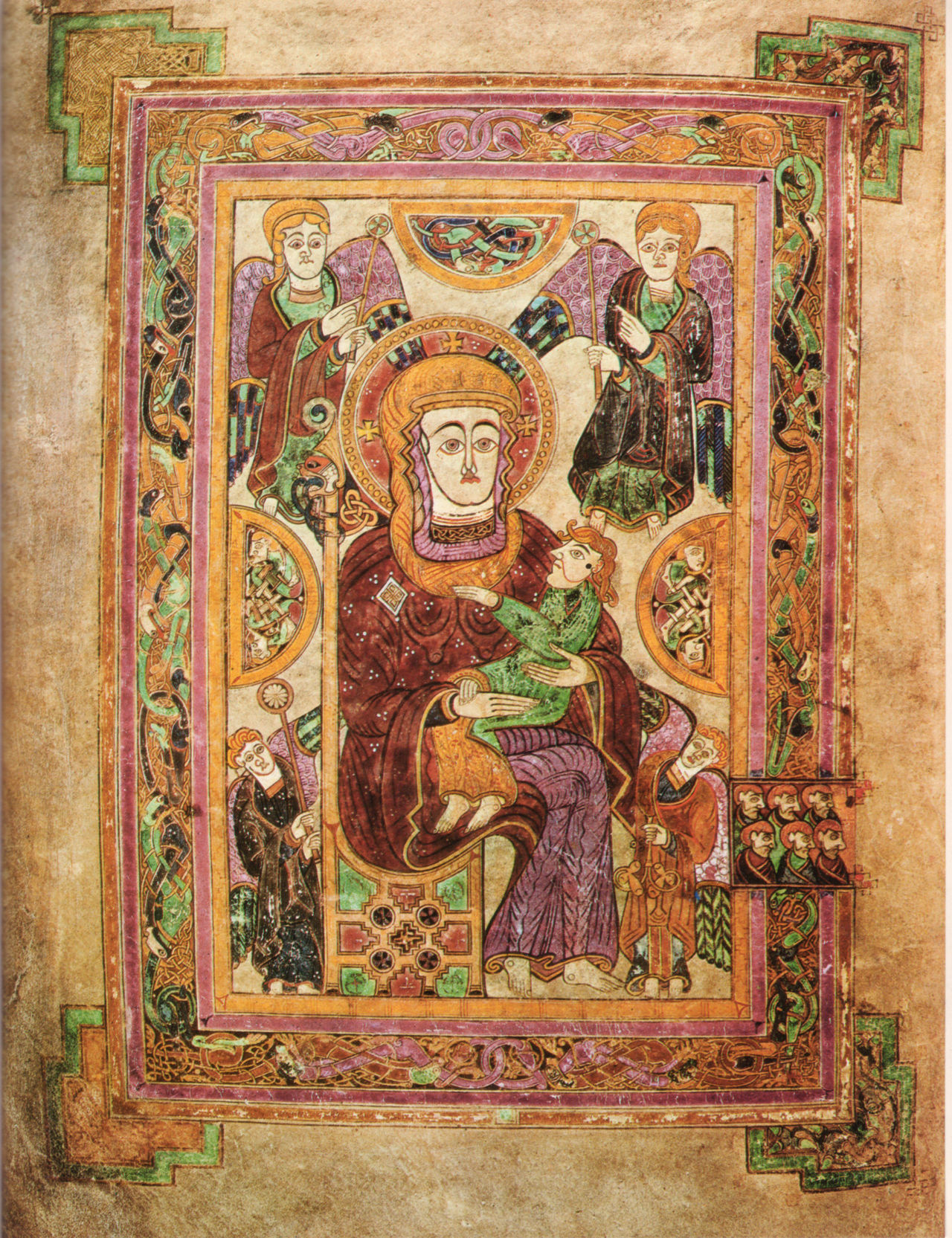
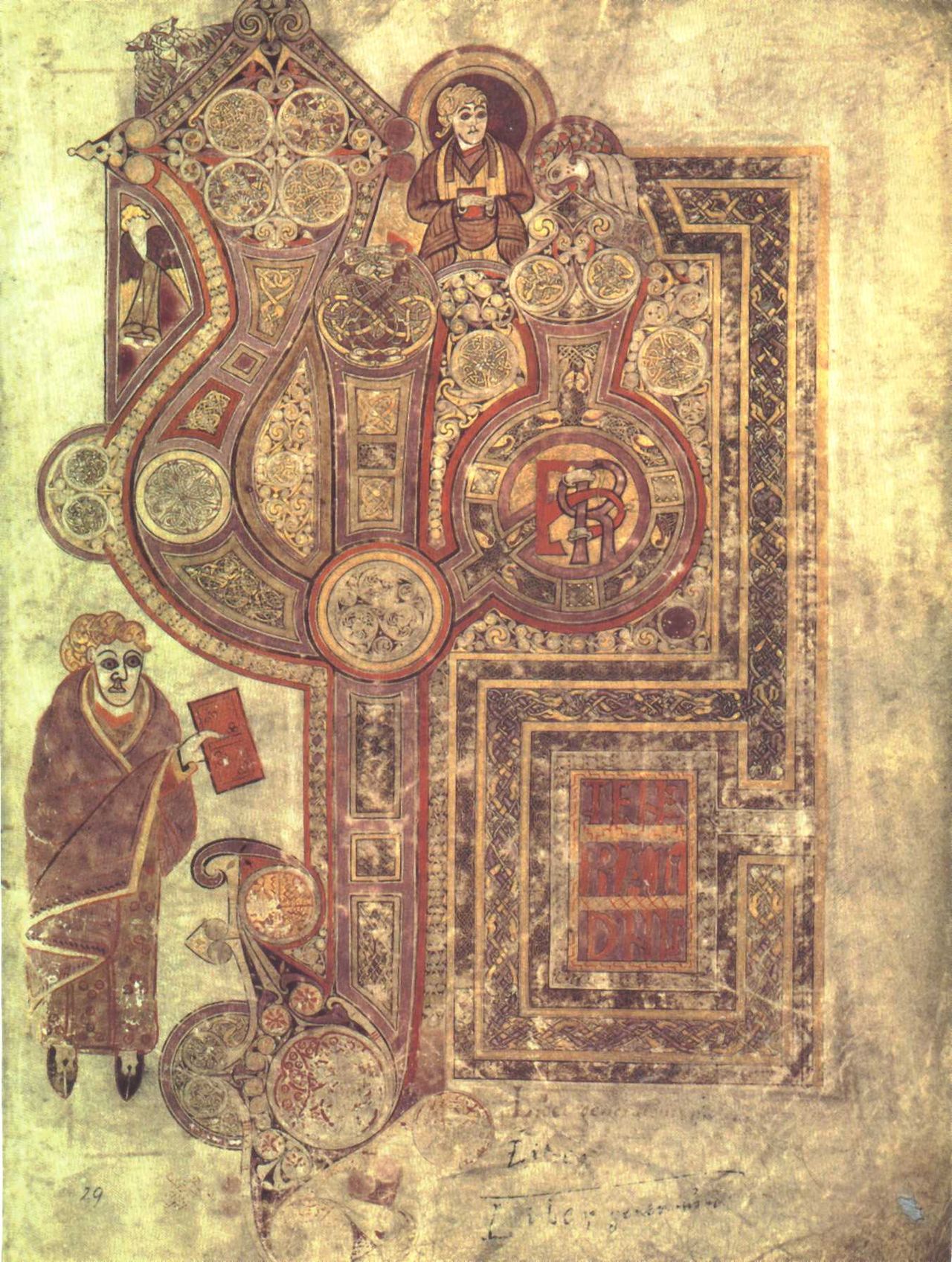
The Book of Kells is celebrated less for its length than for the density and inventiveness of its decoration. Its surviving body comprises about 340 folios, now bound in four volumes. The book contains the four Gospels with accompanying canon tables and prefatory material; interleaved with the text are major full-page illustrations, decorated incipits, and elaborate marginal ornamentation.
- Ten major full-page illustrations and numerous carpet pages and evangelist portraits give the manuscript striking visual variety.
- Text pages feature elaborate decorated initials, interlinear miniatures and dense interlace patterns derived from Insular practice.
- The written hand appears to be the work of several scribes, each with subtle differences in letter forms and layout.
Artistic character
The ornament mixes Christian iconography and distinctive Insular motifs: complex Celtic knots, spirals, animal interlace and hybrid creatures drawn in vivid colour. Many small motifs carry symbolic meaning within Christian visual language, while others display purely decorative ingenuity. This interplay of theological imagery and ornamental exuberance is a hallmark of manuscript production in the British Isles during the early medieval period and reflects monastic tastes and pedagogical aims as well as devotional practice (Christian symbolism).
Origins and history
Scholars generally accept that the book was produced in a Columban monastic milieu by Celtic monks active in the Irish Sea region. The work is usually dated to about 800 AD, though individual folios may originate from slightly different decades. Tradition associates the manuscript with the Abbey of Kells after it left the monastery of Iona, likely moved in response to Viking raids. Its survival owes much to continuous reverence by communities that guarded it for centuries before it entered institutional care.
Materials and technique
The pages are made from fine vellum prepared from calf skins, and pigments were derived from mineral and vegetal sources, some of which were imported. The palette includes reds, yellows, greens and blues applied with meticulous control over line and wash; the combination of high-quality parchment, skilled calligraphy and layered ornamentation explains why the manuscript is often called a masterpiece of Western calligraphy.
Significance and display
Beyond its artistic achievement, the Book of Kells is important for the study of early medieval art, liturgy and manuscript production. It serves as a touchstone for Insular aesthetic developments and monastic learning. Today the manuscript is preserved and exhibited at Trinity College Dublin, where the library typically shows two of the four volumes at once so visitors can view a major illustration alongside representative text pages. For readers seeking more technical or scholarly detail, specialized catalogues and facsimile editions provide high-resolution reproductions and academic commentary (four Gospels, folios).
Notable distinctions
- The Book of Kells combines textual transmission (Vulgate with older readings) and extreme ornamental refinement, a dual function as scripture and visual theology.
- Its decoration synthesizes local artistic traditions and broader Mediterranean and Anglo-Saxon influences.
- Researchers continue to debate precise workshop practices, the sourcing of pigments, and the sequence in which pages were produced, making the manuscript a continuing focus of art-historical and codicological study.
For introductions to manuscript illumination, monastic culture and the Book of Kells itself, consult general surveys and catalogue essays that contextualize its production, use and enduring cultural status as both a religious book and a national emblem (illuminated manuscript, Latin, Vulgate, Vetus Latina, scribes).
Questions and answers
Q: What is the Book of Kells?
A: The Book of Kells is an illuminated manuscript in Latin of the four Gospels of the New Testament together with some extra texts and tables. It was created by Celtic monks about 800 AD or slightly earlier.
Q: What language is the text written in?
A: The text of the Gospels is mostly taken from the Vulgate bible, and it has several passages from earlier versions of the Bible, such as the Vetus Latina.
Q: What type of art does it contain?
A: The illustrations and ornamentation of the Book of Kells are outstanding. The decoration combines traditional Christian iconography with ornate swirling motifs typical of British Isles art. Figures of humans, animals and mythical beasts, and Celtic knots and interlacing patterns in vibrant colours enliven its pages. Many minor decorative elements have Christian symbolism.
Q: How many folios (separate sheets) does it contain?
A: The manuscript today contains 340 folios (separate sheets), which are written on one side each. Since 1953, they have been bound into four volumes.
Q: What material were they written on?
A: The leaves are on high-quality calf vellum paper.
Q: How many full-page illustrations does it contain?
A: There are ten full-page illustrations contained within the manuscript's pages. Additionally, there are decorated initials and interlinear miniatures throughout its text pages that add to its beauty and vibrancy.
Q: Who wrote this book?
A:The writing appears to be done by at least three different scribes who used a variety colors gathered from many substances, some imported from distant lands for their work .
Related articles
Author
AlegsaOnline.com Book of Kells: an illustrated Insular Gospel manuscript and national treasure Leandro Alegsa
URL: https://en.alegsaonline.com/art/12977
Sources
- links.jstor.org : Announcements
- query.nytimes.com : Irelands's Book of Kells is facsimiled
- littlemuseum.ie : littlemuseum.ie