
Book of Joshua: overview, structure, themes, and historical context
An encyclopedic overview of the Book of Joshua: its narrative, composition theories, major themes, sections, historical questions, and its role in Judaism and Christianity.
The Book of Joshua is an ancient book contained in both Jewish and Christian scriptures. In the canonical ordering of the Hebrew Bible it begins the collection known as the Former Prophets; in many Christian arrangements it is the sixth book of the Old Testament. The work narrates Israel's entry into the land described as the Promised Land, a series of military campaigns and settlements, and the allocation of territory to the tribes of Israel. It closes with speeches attributed to Joshua, a covenant renewal, and his death.
Image gallery
10 Images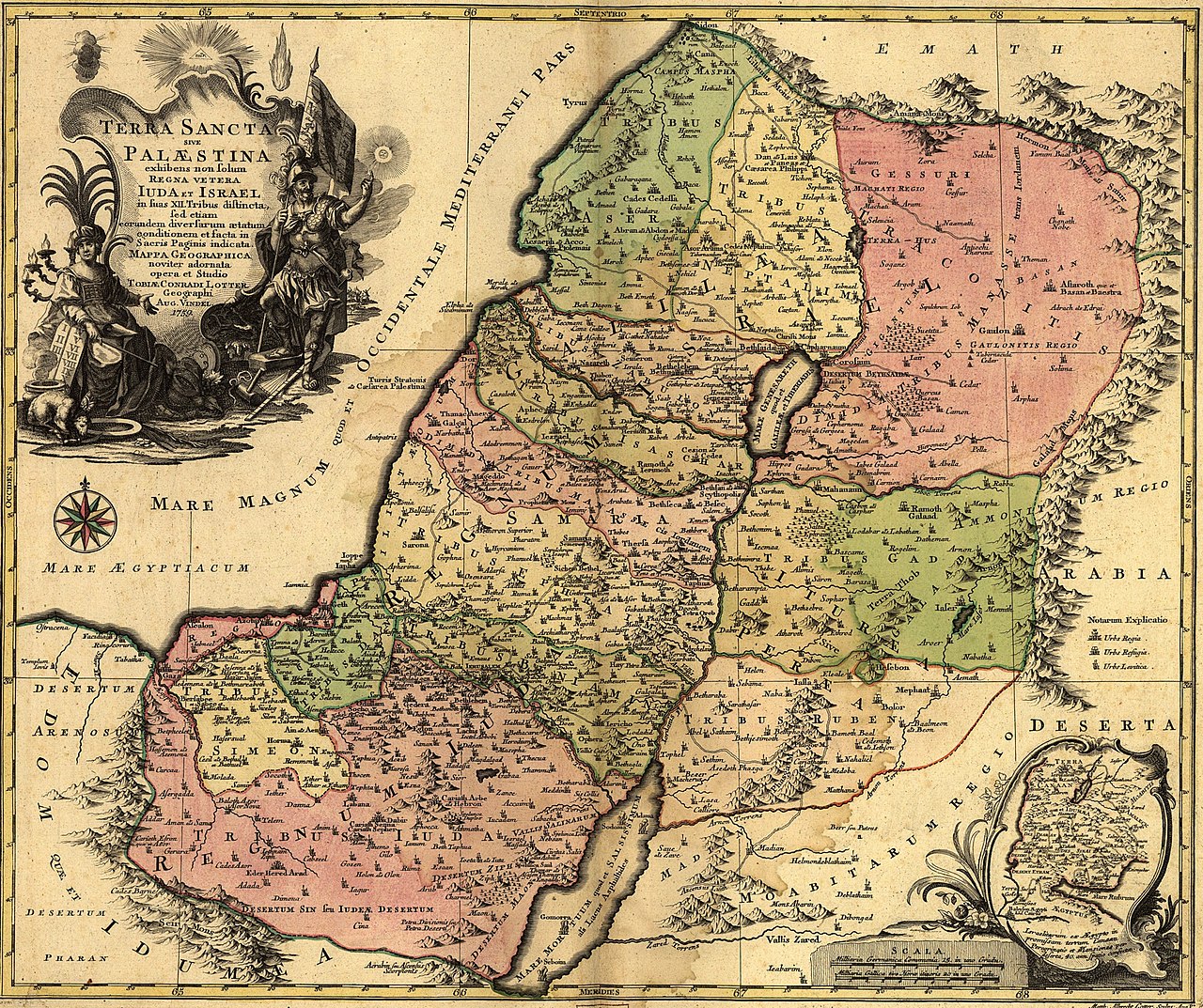


Contents and structure
The book has a clear narrative arc that scholars commonly divide into major sections. Early chapters set the scene: leadership is transferred to Joshua after Moses, the people cross the Jordan River, and the camp at Gilgal is established. The next portion records campaigns that include the fall of Jericho and battles in southern and northern Canaan. Later material treats the distribution of land among the tribes, arrangements for Levitical towns and cities of refuge, and concludes with Joshua's farewell and covenant renewal at Shechem.
- Introductory transition and preparations (Joshua 1–5)
- Conquest narratives (Joshua 6–12)
- Territorial allotment and settlement (Joshua 13–21)
- Final speeches, covenant renewal, and death of Joshua (Joshua 22–24)
Authorship and date
Traditional Jewish and some Christian accounts ascribe the book to Joshua himself or to an immediate eyewitness tradition. Modern critical scholarship generally treats the Book of Joshua as part of a larger Deuteronomistic history, a collected and edited body of material shaped by theological concerns. Many scholars propose that the narratives reached something like their present form in the first millennium BCE, with substantial editorial activity during the late monarchic period or in the exilic and post-exilic centuries. Opinions vary, and dating remains a scholarly judgment rather than a settled fact.
Themes and literary features
Central themes include covenant fidelity, the relationship between divine command and human obedience, the promise of land, and the dynamics of leadership and communal identity. The work employs repetition and formulaic phrases—such as the frequent notice that "the LORD gave" a city into Israel's hands—and preserves lists of place names and tribal boundaries that anchor the narrative in geography. Episodes like the fall of Jericho, the sun standing still in one battle narrative, and the formal allotments have attracted close attention for their theological symbolism and literary shape.
Historical and archaeological considerations
The historicity of many events in Joshua has been debated for decades. Archaeologists and historians examine settlement patterns, material culture, and texts to assess how the biblical account corresponds to the archaeological record. Some features of the narrative align with population movements and settlement processes in the highlands of ancient Canaan; other elements—large-scale rapid conquest as depicted in parts of the text—remain contested. Scholarly approaches range from treating Joshua as a reflection of real social memories to seeing it primarily as a theological and ideological composition formed in later centuries.
Religious importance and later reception
Within Jewish and Christian traditions the Book of Joshua has played multiple roles: as a historical source, a theological text about God's promises and commands, and a model of leadership and covenant responsibility. It is cited in liturgy, sermon literature, and theological reflection. Interpretations have varied across time and communities, influencing views about land, law, and the relationship between divine providence and human action.
For further introductory resources and scholarly discussions see canonical context, comparative studies at biblical studies portals, historical summaries at academic overviews, archaeological syntheses at archaeology resources, theological reflections at theological libraries, and commentary collections at commentary series. For debates about composition and dating consult articles referenced at scholarship surveys, and for reception history see treatments at reception studies and liturgical references. Introductory timelines and teaching materials are available at educational summaries.
Note: This article summarizes broad scholarly perspectives and religious traditions; specialized research can provide more detailed and technical analyses of language, manuscript evidence, and archaeological data.
Questions and answers
Q: What is the Book of Joshua and where does it fall in the Christian Bible and the Hebrew Tanakh?
A: The Book of Joshua is the sixth book of the Christian Bible and the Hebrew Tanakh.
Q: Who is believed to have written the Book of Joshua?
A: Although it is not clear who wrote the book, most of the Jewish tradition believes it was Joshua, son of Nun.
Q: What does the Book of Joshua cover in the history of Israel?
A: The Book of Joshua covers the history of Israel from their arrival in the Promised Land to the Babylonian captivity.
Q: When were the events described in the Book of Joshua believed to have occurred?
A: The events described in the Book of Joshua are believed to have occurred around 1200 BC, so the book could not have been written before that time.
Q: When was the Book of Joshua believed to have been written according to some scholars?
A: Some scholars believe that the Book of Joshua was written much later, perhaps in 550 BC, at the time of the Babylonian exile, when there was a desire to remember and retell their own history.
Q: Is it known who wrote the Book of Joshua?
A: It is not clear who wrote the book.
Q: What is the significance of the Book of Joshua in the Tanakh?
A: The Book of Joshua is the first of the books of the Tanakh (Old Testament) that covers the history of Israel.
Tags
Related articles
Author
AlegsaOnline.com Book of Joshua: overview, structure, themes, and historical context Leandro Alegsa
URL: https://en.alegsaonline.com/art/12975