
Roberto Eduardo Viola
Argentine Army general who served briefly as de facto president in 1981 during the country's military dictatorship; his short rule was marked by internal military conflict and continuing human rights controversies.
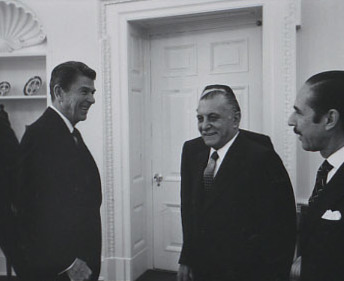
Roberto Eduardo Viola (13 October 1924 – 30 September 1994) was an Argentine Army general who served as the de facto president of Argentina for part of 1981. His tenure lasted under a year and took place within the broader period known as the National Reorganization Process, the military regime that governed Argentina from 1976 to 1983.
Image gallery
4 Images


Early life and military career
Viola was a career military officer who rose through the Argentine Army's ranks in the mid-20th century. Like many officers of his generation, he held senior command and staff positions before becoming one of the junta's leading figures. His professional background and alignment with the ruling military institutions were key factors in his elevation to the presidency following leadership changes within the junta.
Presidency: context and actions
Assuming power in March 1981, Viola led a government that faced deep economic difficulties, political isolation, and the legacy of the state's campaign against political dissent known as the "Dirty War." His administration attempted limited changes within an authoritarian framework, but any measures—economic, administrative or political—were constrained by factional rivalries among the services and by entrenched security policies. Human rights organizations and many voters continued to hold the regime responsible for widespread abuses carried out during the preceding years.
Downfall and immediate aftermath
Viola's capacity to govern was undercut by disputes within the military establishment. He was removed from power in December 1981 in a move engineered by other senior officers; his departure reflected the instability and competition that characterized the junta in its later years. He was succeeded by another military leader who would, within a short time, confront further crises that would hasten the regime's collapse.
Legacy and historical assessment
Historians and commentators treat Viola's short rule as part of the final phase of the dictatorship, a moment when the regime's internal divisions and the impact of its repressive policies became increasingly apparent. After the return to civilian rule in 1983, leaders of the military governments were the subject of investigations and legal actions; Viola was among the former officials whose role during the dictatorship was scrutinized. Assessments of his tenure tend to emphasize its brevity and the limited room he had to change course within an authoritarian system.
Key points
- Born: 1924; Died: 1994.
- Served as de facto head of state for less than a year in 1981.
- Presidency occurred during the National Reorganization Process and the broader context of the Dirty War.
- Removed by other military leaders amid internal disputes; later faced scrutiny after the return of democratic government.
Author
AlegsaOnline.com Roberto Eduardo Viola Leandro Alegsa
URL: https://en.alegsaonline.com/art/129675