
Richard Stallman: GNU, free software activism, and copyleft
Overview of Richard Stallman's life, technical contributions (GNU, Emacs, GCC), the GNU General Public License and copyleft, and his role as a political advocate for software freedom.
Overview
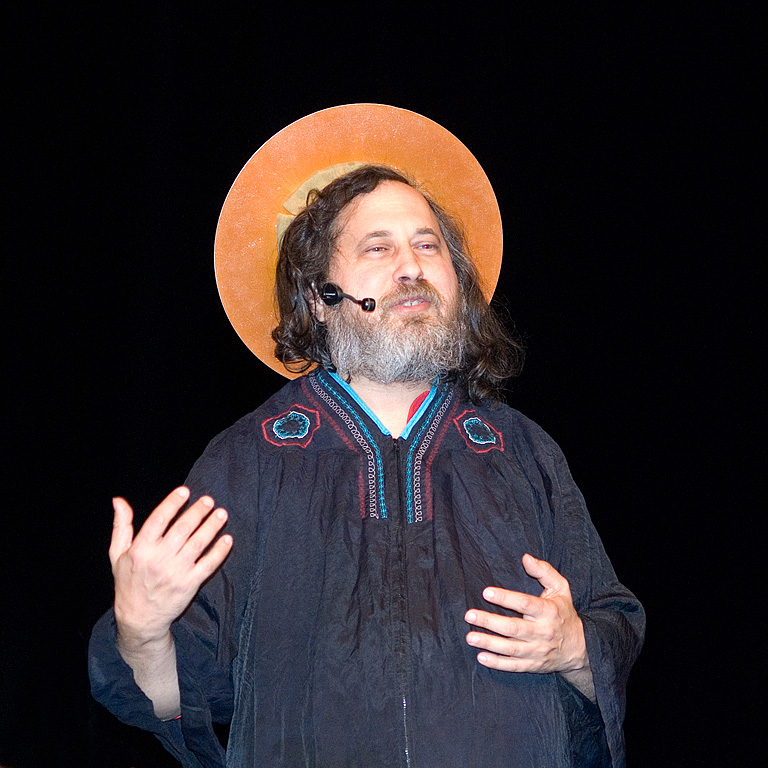
Richard M. Stallman (born 1953) is an American programmer, software freedom advocate and the primary founder of the free software movement. He launched the GNU project to create a complete free operating system and established the Free Software Foundation to advance its goals. Stallman articulated the principles of software freedom that guided later licenses and projects and is widely associated with the idea of copyleft and the GNU General Public License.
Image gallery
7 Images


Early life and approach to computing
Stallman became known early in his career as a skilled programmer and as a hacker in the original, technical sense of the word: someone curious about and creative with complex computer systems. He worked at research institutions and contributed to software tools while criticizing practices that restricted users' ability to read, modify and share programs. His technical temperament and ethical stance led him to combine programming work with public advocacy.
Major technical contributions
Stallman's work produced tools and infrastructure that remain important in free software ecosystems. Prominent contributions include:
- GNU Emacs — a powerful, extensible text editor and environment created by Stallman that influenced editor design and customization.
- GNU Compiler Collection (GCC) and the GNU Debugger (GDB) — foundational development tools for compiling and debugging programs.
- The GNU General Public License (GPL) — a legal instrument that grants user freedoms while using copyright to keep software free; it introduced and popularized the copyleft concept.
Philosophy and activism
From the mid-1990s onward, Stallman devoted increasing time to public campaigning and education about software freedom, explaining why users should be able to run, study, share and improve software. He has spoken and written extensively about the ethical implications of proprietary software and campaigned against practices he views as threats to user control, including restrictive licensing, software patents and expansions of copyright law. His public role mixes technical explanation with normative claims about rights and society.
Practical impact and organization
Stallman's initiatives created institutions, licenses and reference implementations that others could adopt. The free software movement he helped found influenced projects, companies and educational programs worldwide. The Free Software Foundation continues to steward campaigns and legal work, while funding and fellowships have supported Stallman and related activities; he has described maintaining a modest lifestyle sustained in part by these arrangements and fellowships.
Legacy, distinctions and debate
Stallman's legacy combines lasting technical artifacts and a distinctive ethical framework for computing. The GPL and copyleft have shaped licensing models and inspired many free and open source projects. At the same time, his positions and public statements have provoked debate within the wider technology community over tactics, terminology and social issues. Regardless of those debates, his role in articulating and institutionalizing the concept that software can be a matter of freedom remains central to contemporary discussions about software, rights and governance.
For additional perspectives and resources, see materials on the origins of the mid-1990s shift in advocacy, summaries of the free software philosophy, critiques of proprietary software, analyses of copyright and patent policy, and historical notes on early hacker culture and practice.
Questions and answers
Q: Who is Richard Stallman?
A: Richard Stallman is the founder of the free software movement, the GNU project, and the Free Software Foundation. He is also a famous hacker.
Q: What are some of the software programs that Richard Stallman created?
A: Richard Stallman created GNU Emacs, the GNU C Compiler, and the GNU Debugger.
Q: What is the GNU General Public License (GNU GPL or GPL)?
A: The GNU General Public License (GNU GPL or GPL) is the most used free software license, and was pioneered by Richard Stallman. It introduced the concept of the copyleft.
Q: How does Richard Stallman spend most of his time nowadays?
A: Since the mid-1990s, Richard Stallman has spent most of his time as a political campaigner, talking about free software and campaigning against proprietary software, software idea patents and expansions of copyright law. The time that he still spends on programming is spent on GNU Emacs.
Q: What type of support does Richard Stallman currently receive?
A: Richard Stallman is currently supported by various fellowships.
Q: Does Richard Stallman live an extravagant lifestyle?
A: No, Richard Stallman maintains a modest standard of living.
Q: Why is Richard Stallman a notable figure?
A: Richard Stallman is a notable figure because of his work towards pioneering the free software movement, his creation of widely used software programs, and his continued activism for free software and against proprietary software and copyright laws.
Author
AlegsaOnline.com Richard Stallman: GNU, free software activism, and copyleft Leandro Alegsa
URL: https://en.alegsaonline.com/art/129555