
Richard Rogers: Architect of High‑Tech Public Buildings
Overview of Richard Rogers (1933–2021), the Italian‑British high‑tech architect known for exposed-structure designs like the Centre Pompidou and Lloyd's, his firm, awards and influence.
Richard Rogers (1933–2021) was an Italian‑British architect celebrated for advancing high‑tech and functionalist approaches to public buildings and urban projects. Born in Florence, he combined engineering clarity, bold color and exposed structural systems to make building services an explicit part of a structure's appearance. Later in life he was elevated to the peerage as Baron Rogers of Riverside and received major prizes for his contribution to architecture.
Image gallery
10 Images




Design characteristics
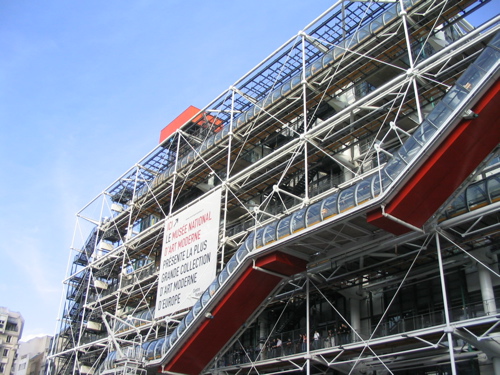
Rogers's work is identified by an emphasis on flexibility, visible structure and mechanical systems, and the use of modern materials such as steel and glass. He often placed circulation and services on the exterior to free internal space, used bright color coding to distinguish systems, and sought legible, modular solutions that allow buildings to adapt over time. His approach married technical rationality with concern for public life and the urban context.
Notable works
- Centre Pompidou, Paris — a highly visible early project completed with a young Renzo Piano that made building services a central aesthetic feature.
- Lloyd's building, London — a landmark corporate headquarters that exposes lifts and ducts on the façade to maximise floor plate flexibility.
- Millennium Dome (now The O2), London — a large‑scale public structure developed for the turn of the millennium.
- International projects such as airport terminals and civic buildings, including collaborative work on Madrid’s Terminal 4 and the Welsh Parliament building in Cardiff.
Career and practice
Rogers trained in Europe and the United States and later established a practice in London that grew into Richard Rogers Partnership and then Rogers Stirk Harbour + Partners. The firm combined multi‑disciplinary engineering and architectural teams to deliver complex public and commercial projects. Rogers was also an advocate for urban design, public space and sustainable planning, arguing that architecture should serve social as well as technical needs.
Awards and public life
Among many honours, Rogers won the Pritzker Architecture Prize and held memberships in professional academies. He accepted public roles and was an outspoken commentator on how cities could be made more liveable and resilient. For biographical and official context see notes on his early nationality and profiles that describe his British affiliation as well as his Italian roots in biographical summaries. He was born in Florence and died in London.
Legacy and influence
Rogers helped popularise high‑tech architecture and influenced generations of architects who treat structure, services and circulation as expressive elements. His buildings provoked debate—praised for technical daring and sometimes criticised for their sculptural brutality—but they remain important case studies in how architecture can reveal the workings of modern life while addressing urban and environmental challenges.
Author
AlegsaOnline.com Richard Rogers: Architect of High‑Tech Public Buildings Leandro Alegsa
URL: https://en.alegsaonline.com/art/129546