
Richard J. Roberts (British molecular biologist)
British biochemist and molecular biologist awarded the 1993 Nobel Prize for discovering introns and RNA splicing; worked at Harvard, Cold Spring Harbor and New England Biolabs; knighted in 2008.
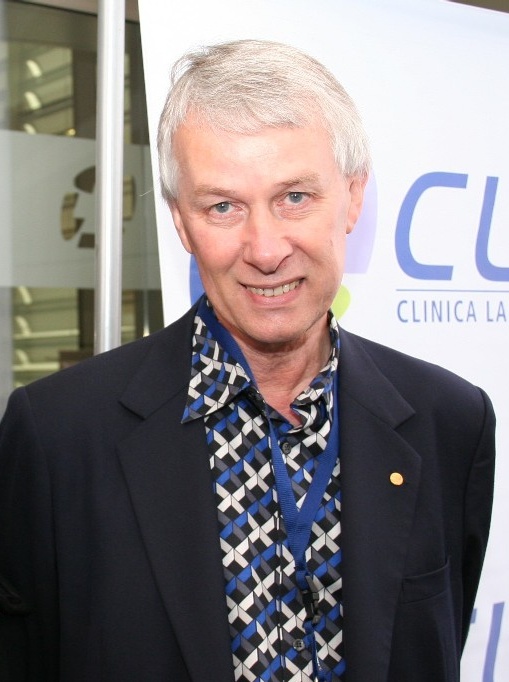
Richard John Roberts (born 6 September 1943 in Derby) is a British scientist known for foundational work in molecular biology. Trained as a biochemist and molecular biologist, he rose to international prominence after a discovery that altered the basic picture of how genes are organized in higher organisms. He is often referenced with the honorific FRS and the title Sir after being knighted.
Image gallery
3 Images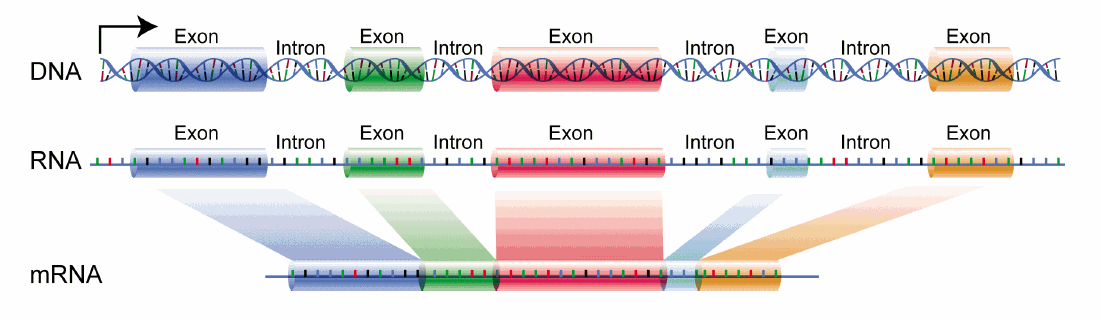

Major discovery
In the late 1970s Roberts discovered that, contrary to earlier expectations, many genes in eukaryotes are interrupted by noncoding segments called introns. He showed that precursor messenger RNA is processed by removing these introns and joining the remaining pieces (exons) in a process called RNA splicing. That finding, for which he shared the 1993 Nobel Prize in Physiology or Medicine with Phillip Sharp, revealed that a single stretch of DNA can give rise to different mRNA products through alternative splicing and thus expand protein diversity.
Career and affiliations
Roberts has held positions in major research centres and academic institutions. His appointments have included work at Harvard University, laboratory research at Cold Spring Harbor Laboratory, and roles connected to biotechnology firms such as New England Biolabs. Over decades he combined basic research with involvement in applied molecular techniques and reagents used across genetics laboratories.
Impact and importance
The recognition that genes may be split into coding and noncoding parts reshaped genetics, genomics and biomedical research. Understanding introns and splicing is central to interpreting gene expression, diagnosing inherited disorders, and developing therapies that target RNA processing. Roberts' work is taught as a core concept in molecular biology courses and underpins much of modern genomics.
Distinctions and public roles
- Recipient of the Nobel Prize for physiology or medicine (1993) shared with Phillip Sharp.
- Fellow of scientific societies and widely cited researcher in molecular genetics; recognized by peers for the discovery of introns and splicing.
- Associated professionally with institutions including Harvard University, Cold Spring Harbor and companies such as New England Biolabs.
Roberts' contribution remains a cornerstone of how scientists understand gene structure and regulation. For more on his work and legacy consult specialist histories of molecular biology or institutional pages that describe Nobel laureates and major advances in gene research; see institutional and biographical resources linked from major scientific organizations for authoritative accounts.
Terms and affiliations mentioned: biochemist, laboratory research, molecular biologist, and the city of birth Derby. Additional institutional links and references appear above to aid navigation: genes, eukaryotes, introns, and recognition details via knighthood.
Questions and answers
Q: Who is Sir Richard John Roberts?
A: Sir Richard John Roberts is a British biochemist and molecular biologist.
Q: What did Sir Richard John Roberts receive the Nobel Prize for?
A: Sir Richard John Roberts received the Nobel Prize in Physiology or Medicine in 1993 for discovering that genes in eukaryotes are not contiguous strings but contain introns.
Q: Who did Sir Richard John Roberts share the 1993 Nobel Prize with?
A: Sir Richard John Roberts shared the 1993 Nobel Prize with Phillip Sharp.
Q: How does intron splicing affect proteins?
A: Intron splicing can occur in different ways, yielding different proteins from the same DNA sequence.
Q: Where has Sir Richard John Roberts worked?
A: Sir Richard John Roberts has worked at Harvard University, Cold Spring Harbor Laboratory, and New England Biolab.
Q: When was Sir Richard John Roberts knighted?
A: Sir Richard John Roberts was knighted in the 2008 Birthday Honours.
Q: When and where was Sir Richard John Roberts born?
A: Sir Richard John Roberts was born on 6 September 1943 in Derby, United Kingdom.
Author
AlegsaOnline.com Richard J. Roberts (British molecular biologist) Leandro Alegsa
URL: https://en.alegsaonline.com/art/129543