
Rembrandt Harmenszoon van Rijn (1606–1669) — Dutch Golden Age painter
Leading Dutch painter and printmaker of the 17th century; renowned for portraits, etchings, dramatic use of light and psychological insight in biblical and genre scenes.
Overview
Rembrandt Harmenszoon van Rijn was born in Leiden on 15 July 1606 and died in Amsterdam on 4 October 1669. He is widely regarded as one of the foremost Dutch artists of the 17th century and a central figure of the Dutch Golden Age. His work spans painting, printmaking and drawing, and is celebrated for psychological depth, dramatic handling of light and a wide range of subject matter. During his career he was acclaimed both for official and private portraiture, and for large narrative compositions.
Image gallery
4 Images


Early life and training
Rembrandt received artistic training in Leiden and later in Amsterdam. Early in his career he attracted attention for portraiture and portraits of civic figures. His teachers included local masters whose instruction grounded him in techniques of composition, drawing and the traditional use of chiaroscuro. By the 1630s he had established a successful studio in Amsterdam and attracted commissions from patrons across the Dutch Republic.
Major works and subjects
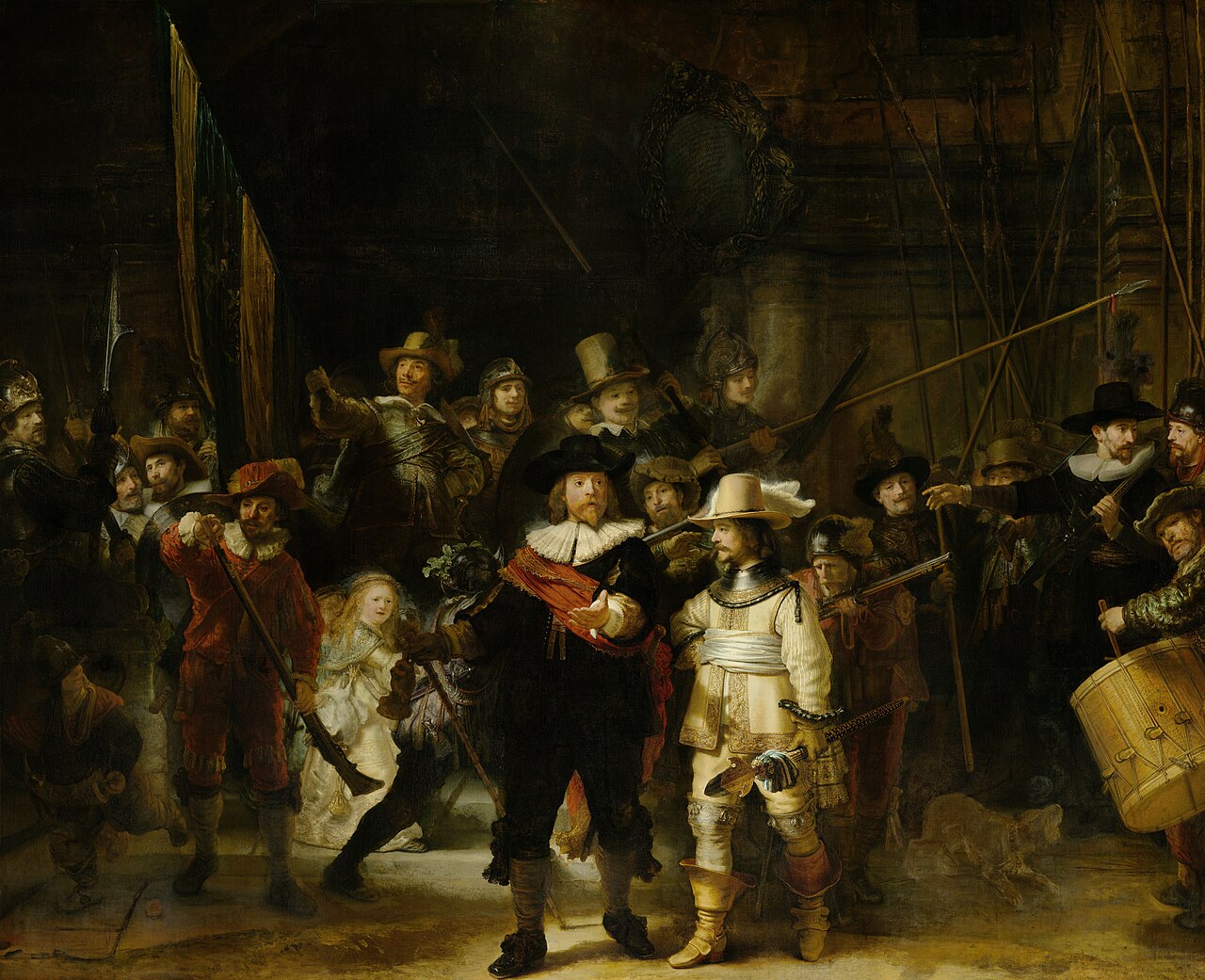
Rembrandt painted a wide range of subjects: intimate portraits of patrons, group portraits for civic institutions, biblical and historical scenes, and numerous self-portraits that document his appearance and condition across decades. Notable works often cited include The Night Watch (a famous group portrait), The Anatomy Lesson of Dr. Nicolaes Tulp, and deeply reflective biblical compositions such as The Return of the Prodigal Son. His paintings frequently explore human emotion, moral complexity and the effects of light on form.
Style and technique
Rembrandt's approach combined a powerful handling of light and shadow with varied surface treatments. He is often associated with a personal use of chiaroscuro that creates dramatic focus and sculptural modeling. In later years his brushwork grew freer and more textural, using layered paint to suggest skin, fabric and the play of light. His focus on facial expression, gesture and hands made portraits especially resonant as studies of character.
Etching and printmaking
Beyond painting, Rembrandt was a master etcher and a prolific printmaker. His prints demonstrate inventive composition, expressive line and a wide tonal range, and they were widely collected in his lifetime. He used etching and drypoint to experiment with mood and detail, producing impressions that vary substantially in tone and effect depending on the inking and printing. These prints circulated his reputation across Europe during and after his life.
Workshop, pupils and influence
Rembrandt ran an active studio where he trained many pupils who later became important painters. Through teaching, prints and the distribution of his works, he influenced artistic practice in the European context and left a lasting mark on subsequent generations. Art historians place him as a major figure in art history for his technical innovations and his sustained interest in the human subject.
Self-portraits and portraiture
Rembrandt's self-portraits are among his most studied works: painted and drawn images across his life form a continuous, surprisingly candid record. These self-portraits serve as a visual biography in which the artist examined age, status and feeling without affectation. His commissioned portraits of patrons and contemporaries likewise probe personality, often revealing subtle psychological complexity.
Subjects from scripture and narrative
Scenes from the Bible were a major source of Rembrandt's narrative work. He favored episodes that allowed intense human interaction and moral reflection, and he frequently reinterpreted familiar stories to emphasize empathy, suffering and reconciliation. His biblical paintings are noted for their immediacy and for treating sacred stories as human dramas rather than distant spectacles.
Personal life and later years
Rembrandt's life combined periods of professional success with personal loss and financial difficulty. He experienced the deaths of family members and later faced declining patronage and money problems that led to insolvency proceedings. Despite these hardships he continued to work productively, producing etchings, drawings and paintings that are regarded as among his most profound achievements.
Legacy, collections and study
Rembrandt's reputation remained strong in subsequent centuries. His paintings and prints are central holdings of major museums and continue to be the subject of scholarly research, conservation and public exhibitions. His house in Amsterdam is preserved as the Rembrandt House Museum, and many important works are held in national collections where they inform study of technique, attribution and the artist's workshop practices. For further reading and museum resources consult specialized catalogues and institutional publications.
Rembrandt's lasting importance lies in the combination of technical mastery, inventive composition and a persistent interest in human emotion. His art continues to be admired for its capacity to convey personality and to transform familiar subjects into intimate, psychologically rich scenes.
Leiden · Amsterdam · Dutch · artist · European · art history · portraits · self-portraits · Bible
Questions and answers
Q: Who was Rembrandt Harmenszoon van Rijn?
A: Rembrandt Harmenszoon van Rijn was a famous Dutch painter and artist.
Q: How is Rembrandt viewed in European art history?
A: Rembrandt is generally considered one of the greatest painters and printmakers in European art history, and the most important in Dutch history.
Q: During what period did Rembrandt make his contributions to art?
A: Rembrandt made his contributions to art during a period of Dutch history known as the Dutch Golden Age.
Q: Did Rembrandt face any challenges during his later years?
A: Yes, after his success as a young portrait painter, he faced personal tragedy and financial hardships in his later years.
Q: Were Rembrandt's etchings and paintings popular during his lifetime?
A: Yes, Rembrandt's etchings and paintings were popular throughout his lifetime.
Q: Did Rembrandt teach other Dutch painters?
A: Yes, for twenty years he taught nearly every important Dutch painter.
Q: What is Rembrandt's greatest creative work?
A: Rembrandt's greatest creative work is seen in his portraits of his contemporaries, self-portraits and illustrations of scenes from the Bible.
Author
AlegsaOnline.com Rembrandt Harmenszoon van Rijn (1606–1669) — Dutch Golden Age painter Leandro Alegsa
URL: https://en.alegsaonline.com/art/129374