
Priscilla Mullins Alden — Mayflower passenger and early Plymouth settler
Priscilla Mullins Alden (c.1602–c.1685) sailed on the Mayflower, married John Alden in Plymouth Colony, helped establish Duxbury, and became a literary figure through Longfellow's poem.
Overview
Priscilla Mullins Alden (born about 1602; died about 1685) was one of the women who crossed the Atlantic aboard the Mayflower. She reached the shores of New England in the famous 1620 voyage, leaving from England bound for North America. Priscilla is remembered both for her role among the earliest settlers of the Plymouth community and for her later depiction in American literature.
Image gallery
6 Images


Early life and the Mayflower
Details of Priscilla's early years in England are sparse; contemporary records identify her as a member of the Mullins family that joined the Mayflower company. The winter after arrival was severe and many passengers, including several members of her family, died. Surviving as a young woman in a struggling colony placed her among the small number of female colonists who shaped domestic and social life in Plymouth.
Marriage, family, and Duxbury
In Plymouth Colony Priscilla married John Alden, who had come as a ship's cooper and remained to settle. Their marriage, recorded in the early 1620s in Plymouth Colony, produced a large family—contemporary accounts and genealogies generally attribute ten or eleven children to the couple. John and Priscilla were early founders of the nearby settlement of Duxbury, which became the center of their household and where they spent most of their adult lives.
Later life and legacy
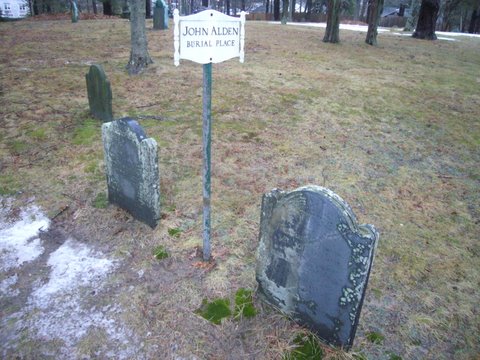
Priscilla is believed to have died around 1685. Her grave is traditionally marked in the Myles Standish Burial Ground in Duxbury, a site associated with many first-generation colonists. Although she led a relatively quiet domestic life by contemporary standards, her memory persisted in family histories and local tradition, partly because many New England families trace descent from the Aldens.
In literature and popular memory
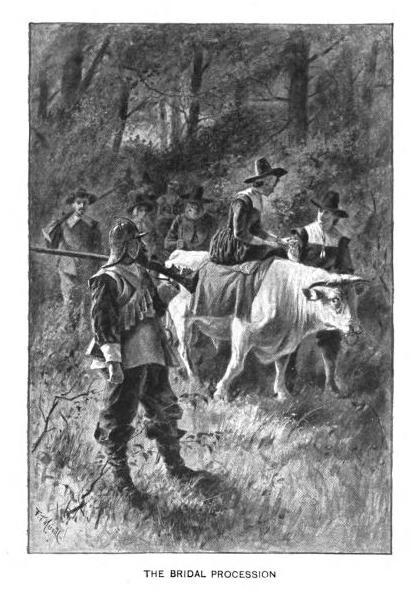
Priscilla's name entered wider American culture through Henry Wadsworth Longfellow's 1858 narrative poem, The Courtship of Miles Standish, which dramatizes a romantic triangle between Priscilla, John Alden and Myles Standish. The poem is a work of fiction based on oral traditions and family lore rather than documentary evidence, and it helped create enduring images of Priscilla as emblematic of early colonial womanhood.
Notable facts
- Priscilla was one of the few young women who survived the first harsh years of the Plymouth settlement.
- Her marriage to John Alden linked two families that became prominent in Plymouth and Duxbury.
- Longfellow’s poem popularized a romanticized story whose historical accuracy remains doubtful.
Taken together, the historical record and later storytelling make Priscilla Mullins Alden a figure who illustrates both the lived experience of early New England colonists and the ways later generations constructed founding myths.
Questions and answers
Q: Who was Priscilla Mullins Alden?
A: Priscilla Mullins Alden was a passenger on the Mayflower in 1620 and later married John Alden, settling in Plymouth Colony and founding Duxbury.
Q: When did Priscilla Mullins Alden marry John Alden?
A: Priscilla Mullins Alden married John Alden in Plymouth Colony in 1623.
Q: How many children did Priscilla Mullins Alden have?
A: Priscilla Mullins Alden bore John Alden ten or eleven children.
Q: Where is Priscilla Mullins Alden buried?
A: Priscilla Mullins Alden is buried in the Myles Standish Burial Ground.
Q: What is Priscilla Mullins Alden known for?
A: Priscilla Mullins Alden is known for being the heroine of Henry Wadsworth Longfellow's 1858 poem, The Courtship of Miles Standish.
Q: What is the significance of Duxbury in relation to Priscilla Mullins Alden?
A: Priscilla Mullins Alden and her husband, John Alden, founded Duxbury, which is located north of Plymouth.
Q: When did Priscilla Mullins Alden die?
A: Priscilla Mullins Alden died in 1685.
Author
AlegsaOnline.com Priscilla Mullins Alden — Mayflower passenger and early Plymouth settler Leandro Alegsa
URL: https://en.alegsaonline.com/art/129027