
Pope Pius V (Antonio Ghislieri)
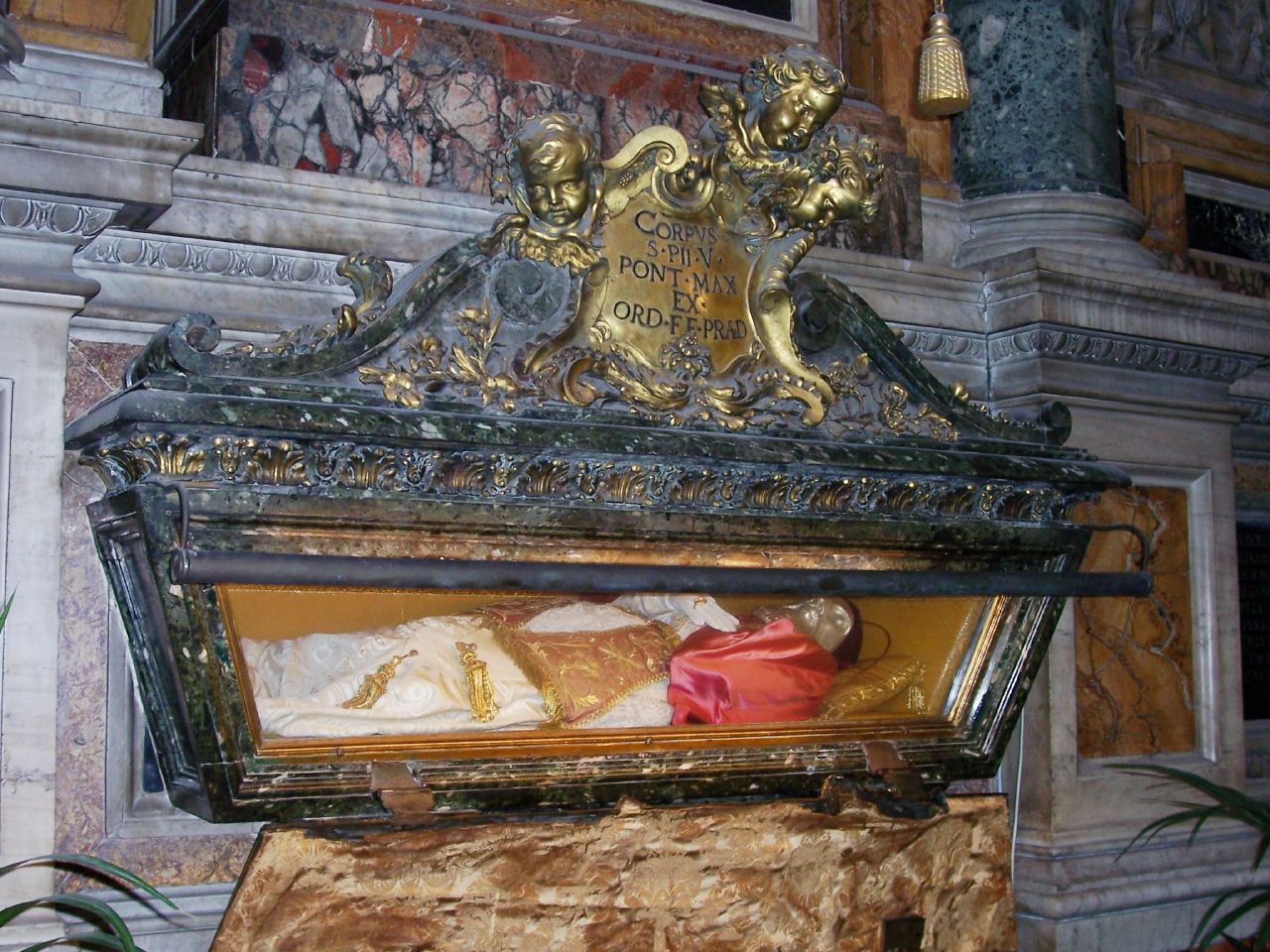
Pope Pius V (1504–1572), born Antonio Ghislieri, was a Dominican friar who led the Catholic Church 1566–1572. He enforced Tridentine reforms, standardized the Roman Rite, opposed Protestantism, and is venerated as a saint.
Overview
Pope Pius V, born Antonio Ghislieri in 1504, served as head of the Roman Catholic Church from 1566 until his death in 1572. A member of the Dominican Order, he is remembered for energetic implementation of the Council of Trent's reforms, strict personal austerity, and efforts to counter the spread of Protestantism. He is venerated as a saint in Catholic tradition and remains a significant figure in the church's post-Reformation era.
Image gallery
7 Images



Early life and career
Ghislieri was born in what is now northern Italy and entered the Order of Preachers (Dominicans) as a young man. He served as a theologian, teacher and inquisitor, gaining a reputation for moral rigor and administrative competence. His background in the Dominican tradition shaped his emphasis on discipline, doctrinal clarity and liturgical simplicity once he became pope.
Pontificate and reforms
As pope, Pius V prioritized implementing the decrees of the Council of Trent. He reformed the clergy by enforcing standards of residence and education, promoted seminaries for priestly training, and sought to reduce corruption and laxity. He issued authoritative liturgical books that standardized practice across much of the Catholic world; his edition of the Roman Missal, promulgated to promote uniform celebration of the Mass, had long-lasting influence.
Foreign policy and notable acts
Pius V was active in the political and military affairs of his time. He sanctioned the formation of a Christian naval alliance, the Holy League, to resist Ottoman expansion; the naval victory at Lepanto in 1571 was celebrated widely in Catholic Europe. He also took a firm stance against Elizabeth I of England, issuing a papal condemnation that had important political and religious repercussions. He encouraged devotion to the Rosary and established liturgical commemorations tied to these events.
Legacy and sainthood
Pius V's legacy is mixed: admired by many for restoring ecclesiastical discipline and liturgical unity, criticized by others for severity and intolerance toward dissent. His decisions helped shape the Counter-Reformation Catholic Church and the rites used in worship for centuries. He was later recognized by the church as a saint in acknowledgment of his piety and reforming zeal; information on his cult and commemoration appears in Catholic hagiography and liturgical calendars.
Key facts
- Birth name: Antonio Ghislieri.
- Religious order: Order of Preachers (Dominicans).
- Pontificate: 1566–1572; known for enforcing Tridentine reforms and issuing a standardized Roman Missal.
- Notable actions: support for the Holy League and public opposition to Protestant rulers.
- Sainthood: venerated as a saint by the Roman Catholic Church.
Questions and answers
Q: Who was Pope Pius V?
A: Pope Pius V was an Italian priest of the Roman Catholic Church and the 226th Pope from 1566 to 1572.
Q: What was Pope Pius V's birth name?
A: Pope Pius V's birth name was Antonio Ghislieri, and from 1518, he was called Michele Ghislieri.
Q: What is Pope Pius V known for?
A: Pope Pius V is known as a saint of the Catholic Church.
Q: When was Pope Pius V born, and when did he die?
A: Pope Pius V was born on January 17, 1504, and he died on May 1, 1572.
Q: What was Pope Pius V's religious order?
A: Pope Pius V was a member of the Dominican Order of Friars Preachers, commonly known as the Dominicans, and his religious title was O.P.
Q: How long did Pope Pius V serve as Pope?
A: Pope Pius V served as the 226th Pope from 1566 to 1572.
Q: Is Pope Pius V a significant figure in Catholic history?
A: Yes, Pope Pius V is a significant figure in Catholic history, known for his important reforms and advocacy for Catholicism during the Counter-Reformation.
Author
AlegsaOnline.com Pope Pius V (Antonio Ghislieri) Leandro Alegsa
URL: https://en.alegsaonline.com/art/128925