
Pope Innocent X (Giovanni Battista Pamphilj)
Pope from 1644 to 1655, known for his Roman administration, influence of Olimpia Maidalchini, opposition to the Peace of Westphalia, and notable artistic patronage (Velázquez portrait, Villa Pamphilj).
Overview
Pope Innocent X (born Giovanni Battista Pamphilj; 6 May 1574 – 7 January 1655) led the Catholic Church from 1644 until his death in 1655. A member of the Roman nobility, he had a long career in the curia and was elevated to the cardinalate before being chosen as pontiff. His pontificate fell during a turbulent mid‑17th century marked by the closing stages of the Thirty Years' War and shifting alliances among European powers.
Image gallery
5 Images

Government and diplomacy
Innocent X steered the papal state through delicate diplomatic waters. He was critical of the Peace of Westphalia settlement that ended the Thirty Years' War and raised concerns about the treaty's consequences for ecclesiastical authority; the Vatican issued formal protests during his reign. His relations with the major Catholic courts—especially Spain and France—shaped much of his foreign policy and appointments.
Administration and influence
The pope is often remembered for the strong influence exerted by his relatives and close associates. Members of the Pamphilj family received prominent positions, and his sister‑in‑law Olimpia Maidalchini emerged as a powerful and controversial figure at court. Contemporary observers criticized this pattern as nepotism, a common feature of many early modern papacies. For context on ecclesiastical ranks and offices see clerical roles and Roman curial explanations.
Patronage and cultural legacy
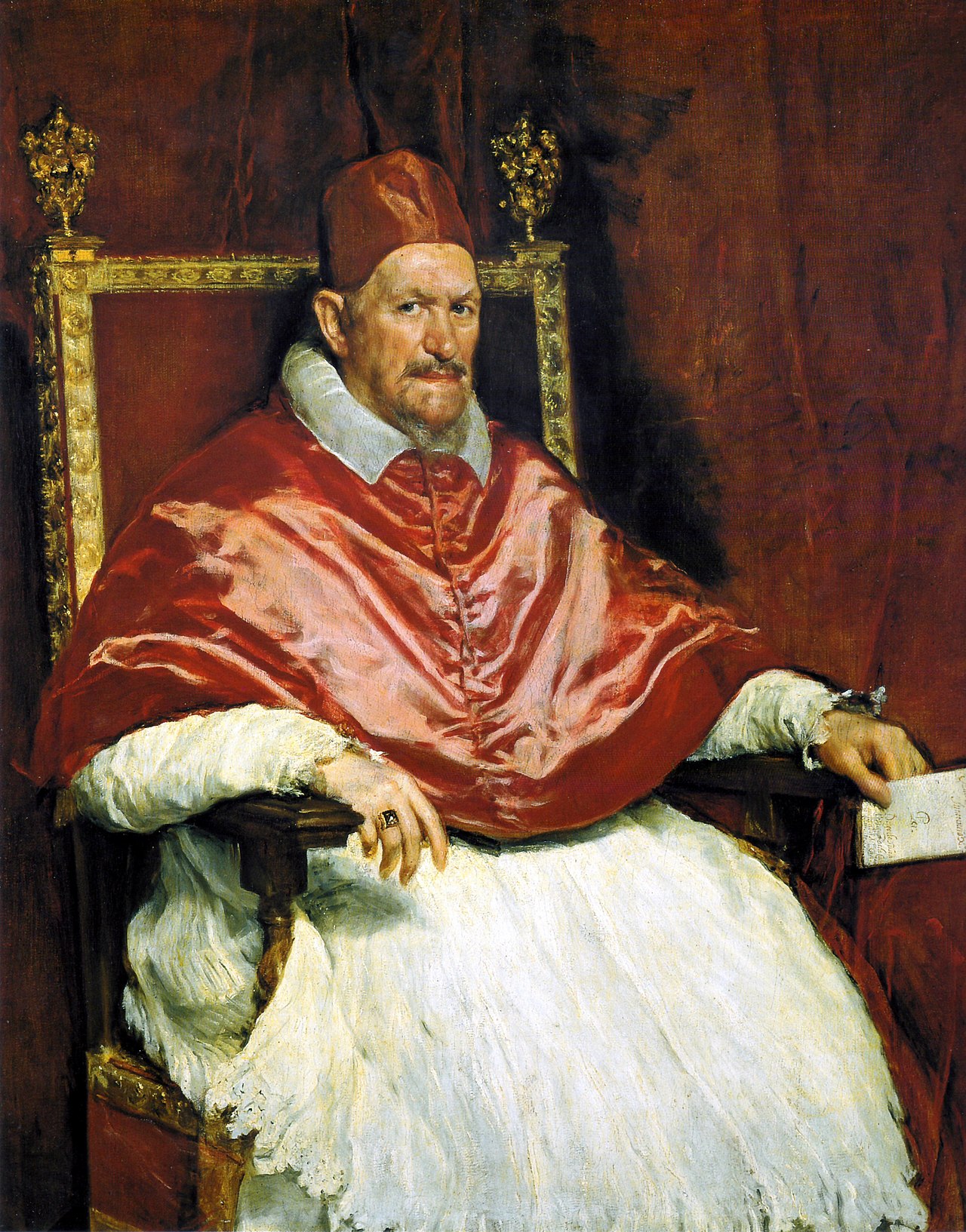
Innocent X was a notable patron of the arts and building projects. His family commissioned and developed urban palaces and gardens in Rome; the Villa Pamphilj and Palazzo Pamphilj remain associated with his name. The pope was immortalized in a celebrated portrait by Diego Velázquez, which has influenced later perceptions of his personality and papal image. For lists of pontiffs and related resources see papal lists and collections of imagery at art and archives.
Notable facts
- Reign: 1644–1655, overlapping the end of the Thirty Years' War.
- Known for family promotion and the political role of close associates.
- Issued formal objections to the diplomatic settlement of Westphalia.
- Left an enduring artistic and architectural legacy in Rome.
Historians regard Innocent X as representative of an era when papal authority had to be balanced against rising nation‑states; his pontificate is therefore studied for its mixture of spiritual leadership, worldly diplomacy, and visible patronage of arts and architecture.
Questions and answers
Q: Who was Pope Innocent X?
A: Pope Innocent X was an Italian cleric of the Roman Catholic Church who served as the 237th Pope from 1644 to 1655.
Q: What was Pope Innocent X's birth name?
A: Pope Innocent X's birth name was Giovanni Battista Pamphilj.
Q: When was Pope Innocent X born?
A: Pope Innocent X was born on May 6, 1574.
Q: When did Pope Innocent X serve as Pope?
A: Pope Innocent X served as Pope from 1644 to 1655.
Q: What was Pope Innocent X's Latin name?
A: Pope Innocent X's Latin name was Innocentius Decimus.
Q: How many Popes were there before Pope Innocent X?
A: Pope Innocent X was the 237th Pope of the Roman Catholic Church.
Q: When did Pope Innocent X pass away?
A: Pope Innocent X passed away on January 7, 1655.
Author
AlegsaOnline.com Pope Innocent X (Giovanni Battista Pamphilj) Leandro Alegsa
URL: https://en.alegsaonline.com/art/128891