
Pope Gregory XI (Pierre Roger de Beaufort)
Pope from 1370 to 1378 who ended the Avignon residency by returning the papacy to Rome; his death precipitated the Western Schism that split the Church.
Overview
Pope Gregory XI (born Pierre Roger de Beaufort, 1331–27 March 1378) served as head of the Roman Catholic Church from 1370 until his death in 1378. A French cleric from the Beaufort family, he was the last pontiff of the Avignon period, notable for his decision to move the papal court back to Rome after nearly seven decades in France. His pontificate was brief but consequential: the policies and tensions of his time contributed to the crisis that followed his death.
Image gallery
5 Images

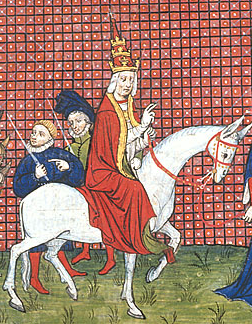


Early life and rise
Born into a family with strong ecclesiastical connections, Pierre Roger de Beaufort advanced rapidly within the Church. He was created cardinal in his youth and held important curial responsibilities before his election to the papacy in 1370. His formation combined the administrative experience typical of high medieval prelates with close ties to French political and clerical networks.
Papacy and return to Rome
Gregory XI inherited the long-standing practice of the papal court residing at Avignon. During his reign he confronted political instability in Italy and mounting appeals for the pope to be present in Rome to assert spiritual and temporal leadership. Influenced by reforming figures and by the complex diplomatic situation in Italy, he formally transferred the papal seat back to Rome in 1377, ending what is conventionally called the Avignon Papacy.
Policies, challenges and death
As pope he sought reforms in the Curia and worked to strengthen papal authority among the Italian city-states, while also managing relations with the monarchs of France and other European powers. His return to Rome did not resolve long-standing rivalries and economic strains. Gregory XI died in March 1378; the contested elections and political pressures that immediately followed his death opened the path to the Western Schism, a split in loyalties between competing claimants in Rome and Avignon.
Legacy and historical significance
Gregory XI is remembered chiefly for ending the Avignon residency and restoring the papacy to Rome, an act with lasting symbolic and practical consequences for the medieval Church. Historians view his reign as a turning point: it closed an era of French-dominated residence but set the stage for the schism that would fracture ecclesiastical unity for decades. His papacy is therefore important for understanding late medieval Church politics, reform efforts, and the interplay between spiritual authority and secular power.
Further resources
Questions and answers
Q: Who was Pope Gregory XI?
A: Pope Gregory XI was a French cleric of the Roman Catholic Church who served as the 202nd Pope from 1370 until his death.
Q: What was his birth name?
A: Pope Gregory XI's birth name was Pierre Roger de Beaufort.
Q: How long did he serve as the Pope?
A: Pope Gregory XI served as the Pope for 8 years, from 1370 until his death in 1378.
Q: Where did he live during his time as the Pope?
A: Pope Gregory XI was the seventh and last of the popes who lived in Avignon, France.
Q: What was his role in the Roman Catholic Church?
A: As the Pope, Pope Gregory XI was the head of the Roman Catholic Church and responsible for leading and guiding its members.
Q: What was his nationality?
A: Pope Gregory XI was French.
Q: When did he pass away?
A: Pope Gregory XI passed away on March 27th, 1378.
Author
AlegsaOnline.com Pope Gregory XI (Pierre Roger de Beaufort) Leandro Alegsa
URL: https://en.alegsaonline.com/art/128879