
Pope Gregory V (Bruno of Carinthia)
Pope Gregory V (c.972–18 Feb 999), born Bruno of Carinthia, was the first German pontiff. He served from 3 May 996 to 18 February 999 and played a notable role in the Ottonian-era relationship between emperor and papacy.
Overview
Pope Gregory V, born Bruno of Carinthia about 972, was elected to the papacy on 3 May 996 and served until his death on 18 February 999. He is commonly identified as the first German pope and led the Roman Catholic Church during a brief but turbulent period. Contemporary sources note his close association with the imperial court that influenced his elevation.
Image gallery
3 Images

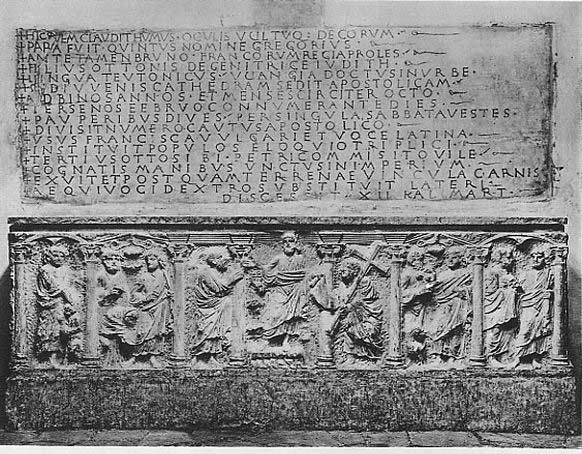
Background and election
Bruno was a cleric of noble origin who rose through church ranks in northern Italy and Bavaria, areas linked with the imperial household. His election was strongly backed by the young emperor, whose support secured Bruno's consecration at an unusually early age. On taking the throne of St. Peter he chose the name Gregory V.
Pontificate and actions
Gregory V's pontificate is marked by efforts to reinforce papal authority while accommodating imperial interests. He confirmed privileges for a number of dioceses and acted in concert with the emperor on matters of church governance. His administration was short and focused more on political stability than on sweeping doctrinal reform.
Conflict and antipope
Almost immediately Gregory faced a violent reaction in Rome. A local aristocratic faction opposed to imperial influence set up a rival claimant on the papal throne. The usurpation forced Gregory to seek military and political help from the emperor, who intervened and restored him to Rome. The episode illustrated the fragile balance between local Roman power and imperial authority in this era.
Death and legacy
Gregory V died in February 999 after a pontificate of less than three years. Historians treat his reign as characteristic of the Ottonian age: a papacy closely tied to imperial patronage, vulnerable to Roman factionalism, yet important for consolidating earlier patterns of cooperation between pope and emperor. He remains notable chiefly for being an early German pope and for the political crisis that marked his time in office.
Notable points
- Reigned from 3 May 996 to 18 February 999 as the 139th Pope.
- Elevated with imperial support and struggled against a Roman aristocratic revolt.
- His short tenure highlights the tensions of church–state relations around the year 1000.
Questions and answers
Q: Who was Pope Gregory V?
A: Pope Gregory V was a German priest of the Roman Catholic Church who served as the 139th Pope from May 3rd, 996 to February 18th, 999.
Q: What was Pope Gregory V's original name?
A: Pope Gregory V's original name was Bruno of Carinthia.
Q: When did Pope Gregory V serve as Pope?
A: Pope Gregory V served as Pope from May 3rd, 996 to February 18th, 999.
Q: How long was Pope Gregory V Pope for?
A: Pope Gregory V served as Pope for three years.
Q: How is Pope Gregory V also known?
A: Pope Gregory V is also known as Bruno of Carinthia.
Q: What was Pope Gregory V's background?
A: Pope Gregory V was a German priest of the Roman Catholic Church.
Q: What was Pope Gregory V's birth year?
A: Pope Gregory V was born around 972.
Author
AlegsaOnline.com Pope Gregory V (Bruno of Carinthia) Leandro Alegsa
URL: https://en.alegsaonline.com/art/128875