
Pope Benedict IX
Italian pope of the 11th century from the Tusculum family, notable for multiple nonconsecutive terms, charges of corruption, and his role in prompting later church reform.
Overview
Benedict IX (c. 1012–c. 1056), born Theophylactus of Tusculum, was a controversial figure who held the office of Pope in several nonconsecutive periods during the mid‑11th century. A member of the powerful Tusculan kindred, he came to power as a very young man and his pontificate is often cited as an example of the intense secular influence over the Roman Catholic Church that prompted later reform movements.
Image gallery
5 Images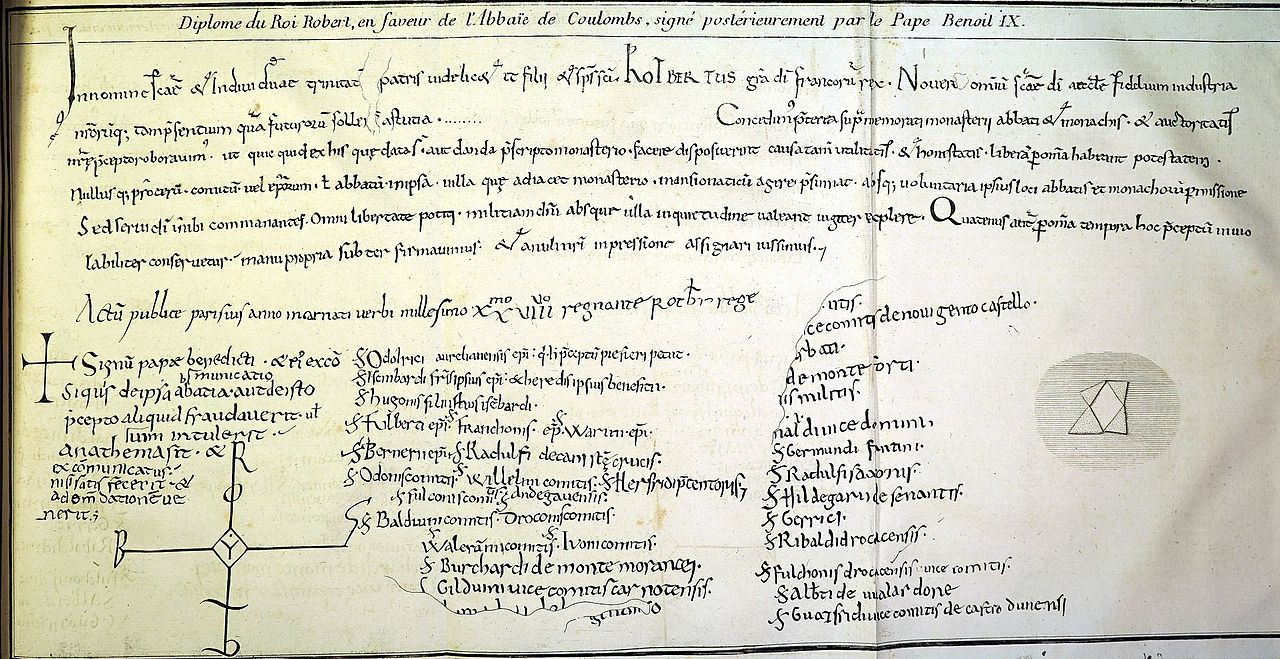
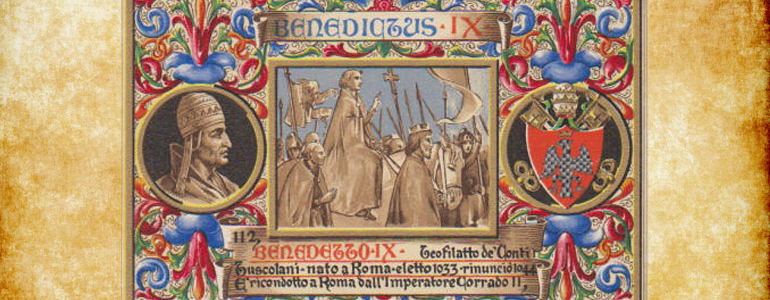


Background and family
Theophylactus belonged to the Tusculani, a noble Roman clan that dominated papal politics in the first half of the 11th century. Through family connections and local power he was elevated to the papal throne in 1032. Contemporary and later accounts stress his youth at accession and the degree to which local aristocratic interests shaped his selection and actions as pope.
Papacy and controversies
Benedict IX's time as pope is unusual in medieval history because he is recorded as holding the office on three separate occasions (commonly given as 1032–1044/45, briefly in 1045, and again in 1047–1048). His tenure was marked by accusations of immoral behavior, political violence, and the profiting from church offices. Facing opposition in Rome, he was driven out and at one point is widely reported to have yielded or transferred the papacy to his godfather, John Gratian (who took the name Gregory VI). These events contributed to a crisis that drew the attention of the German king Henry III and led to the synod of Sutri in 1046, which removed multiple claimants and paved the way for reformist appointments. Benedict later returned from exile and briefly reclaimed the city in 1047–1048 before being expelled again and replaced.
Legacy and significance
Benedict IX is often remembered less for doctrinal contributions than as an emblem of the corruption and secular pressures that beset the medieval papacy. His chaotic pontificate helped justify the reforming efforts that culminated in the Gregorian reforms later in the 11th century. He is also frequently cited as one of the youngest men to serve as pope. Accounts differ about his final years; many traditions place his death around 1056 and suggest he spent his last years away from Rome, possibly in monastic life.
Notable facts
- One of the few popes with multiple nonconsecutive terms in the 11th century.
- Associated in sources with the alleged sale or transfer of the papal office to John Gratian.
- His pontificate intensified calls for clerical reform and stricter limits on secular influence.
- For further reading on the period and its implications see general works on 11th‑century Church reform and the Council of Sutri (1046), and related papal history: secondary sources.
Questions and answers
Q: Who was Pope Benedict IX?
A: Pope Benedict IX was an Italian priest of the Roman Catholic Church.
Q: What was Pope Benedict IX's birth name?
A: Pope Benedict IX's birth name was Teofilatto or Theophylactus of Tusculum.
Q: How long was Pope Benedict IX Pope for?
A: Pope Benedict IX was Pope for a total of 13 years, from 1032 to 1045, and again in 1047-1048.
Q: How is Pope Benedict IX listed in the official list of Popes?
A: Pope Benedict IX is listed as the 146th Pope in 1032 to 1045 and as the 148th Pope in 1045. In 1047-1048 he was the 151st Pope.
Q: When was Pope Benedict IX born?
A: The exact birth date of Pope Benedict IX is not given, but he was born around 1012.
Q: When did Pope Benedict IX die?
A: The date of Pope Benedict IX's death is not mentioned in the given text.
Q: What was Pope Benedict IX's homeland?
A: Pope Benedict IX was born in Tusculum, Italy.
Author
AlegsaOnline.com Pope Benedict IX Leandro Alegsa
URL: https://en.alegsaonline.com/art/128841