
Pope Anastasius III (d. 913)
Pope from 911 to 913 whose short, little-documented pontificate is typical of the Saeculum obscurum, when powerful Roman nobles strongly influenced the papacy.
Overview
Anastasius III (Latin: Anastasius Tertius; died June 913) was bishop of Rome and head of the Catholic Church from 911 until his death. Contemporary documentation of his life and actions is sparse, and modern accounts characterize his reign as short and largely overshadowed by the turbulent politics of early 10th-century Rome. He is traditionally numbered among the early medieval popes and is normally listed as the 121st occupant of the see of Peter.
Image gallery
3 Images
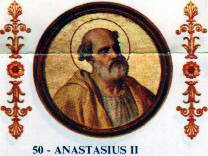

Historical context
The period in which Anastasius III served is commonly called the Saeculum obscurum because surviving papal acts and records from Rome are limited and secular aristocratic families exercised strong influence over church affairs. The papal office retained its spiritual responsibilities, but elections, personnel decisions and many practical matters of governance were frequently shaped by local nobles and powerful Roman households.
Pontificate
Anastasius III was elected after the death of his predecessor, Sergius III (who reigned 904–911), and died in June 913, to be succeeded by Lando. Few specific acts, decretals or literary works from his pontificate have survived or can be securely attributed to him. Where records exist for popes of this era they often record liturgical duties, confirmations of clergy and routine administrative business; for Anastasius the documentary footprint is minimal, so historians generally treat his reign as one of continuity rather than significant reform.
Relations and influence
Although nominally the leader of the Roman Catholic Church, Anastasius III appears to have operated in a context where local secular leaders affected ecclesiastical appointments and the selection of popes. The limited evidence means it is difficult to assess his personal policy priorities or the degree of his independence. He is therefore most often discussed as an example of a papacy constrained by contemporary political structures.
Sources and historiography
Scholars reconstruct Anastasius III’s life and pontificate from fragmentary annals, later papal catalogues and occasional references in medieval chronicles and the Liber Pontificalis. Because primary material is so limited, later assessments are cautious and emphasize uncertainty; modern narratives place him within broader discussions of papal authority in the early Middle Ages rather than celebrating distinctive achievements. For basic reference and lists of succession see general papal lists and compiled chronological summaries, while introductory accounts of the era explain the political forces that shaped Rome at the time.
- Name: Anastasius III (Anastasius Tertius)
- Reign: 911–June 913
- Characterization: Short, little-documented pontificate
- Context: Saeculum obscurum; strong noble influence
- Primary references: fragmentary annals, medieval papal catalogues
For brief contextual information on clerical careers during this period see sources on the Roman clerical milieu and institutional histories of the church in early medieval Italy. Careful readers should note that many details about Anastasius III remain uncertain because surviving evidence is limited and often indirect.
Questions and answers
Q: Who was Pope Anastasius III?
A: Pope Anastasius III was an Italian clergyman of the Roman Catholic Church and the 121st Pope from 911 until his death in 913.
Q: What was the birth name of Pope Anastasius III?
A: The birth name of Pope Anastasius III is unknown.
Q: When did Pope Anastasius III die?
A: Pope Anastasius III died in June 913.
Q: What is the significance of Pope Anastasius III?
A: Pope Anastasius III served as the 121st Pope of the Roman Catholic Church for two years.
Q: How long did Pope Anastasius III serve as Pope?
A: Pope Anastasius III served as Pope for two years, from 911 until his death in 913.
Q: Where was Pope Anastasius III from?
A: Pope Anastasius III was from Italy.
Q: What was the Latin name of Pope Anastasius III?
A: The Latin name of Pope Anastasius III was Anastasius Tertius.
Author
AlegsaOnline.com Pope Anastasius III (d. 913) Leandro Alegsa
URL: https://en.alegsaonline.com/art/128838